Filhote de dogue alemão ao lado de cama grande e fita métrica, mostrando a escala do porte adulto

Image credit: Acervo pessoal: DogWise

Breeds10 min readPublished on August 24, 2026

Great Dane puppy: what to check before bringing one home

Bringing a Great Dane puppy home is not just “picking a big, beautiful breed.” The real point is this: within a few months you will live with a giant dog, growing strength, and handling needs that do not fit every routine, apartment, or budget. If the decision is based only on how cute the puppy looks, frustration rises quickly — for the family and for the dog.

Before you buy or adopt, assess real space, ongoing cost, time for socialization and training, nutrition suited to large breeds, and what changes when the body grows faster than the young dog’s emotional control. This text is educational and helps structure that decision; it does not replace a conversation with a veterinarian or an individual assessment of the animal.

The official breed page at the American Kennel Club on the Great Dane makes the commitment of size, weight, and strength clear. Use sources like that as a general reference and combine them with local guidance in Brazil.

What changes when the puppy is a giant breed

A Great Dane puppy still seems “manageable” in the first weeks. The issue is the curve: growth is intense, and what you hold in your arms today soon becomes a youngster that can pull, knock things over, and take the whole sofa. Training “after he grows” is usually too late for basic leash manners, waiting, and household manners.

Space is not only square meters. It includes clear hallways, flooring that is not a skating rink, room to stretch out, and a safe path to walks. In an apartment, check the elevator, neighbors, condo rules, and how you will handle toilet breaks on rainy or sick days.

Transport changes too. Crate, car, and vet visits must fit the expected adult size. If crate adaptation is still hard, the article on a puppy crying in the travel crate helps you build steps without forcing.

Costs that do not show up in the puppy ad

The purchase price is only the start. Giant breeds raise spend on food, gear (collar, harness, bed, gates), dewormers and parasite preventives at the correct dose, and veterinary procedures that scale with weight. Surgery, imaging, and hospital stays often cost more than for small dogs — not because of “luxury,” but because of material volume, anesthesia, and handling.

Keep a buffer for surprises. A healthy puppy today may need orthopedic, skin, or digestive follow-up tomorrow. People who enter the breed without a financial cushion often cut what they should not: diet quality, routine checkups, or training support.

Ask the breeder or adoption contact for parental health history, tests already done, and what they recommend following with a vet. Be wary of anyone who avoids paperwork, blocks a visit to the environment, or pushes an immediate sale.

Nutrition: controlled growth, not “as fast as possible”

In large and giant breeds, the goal in puppyhood is not to accelerate growth at any cost. Unbalanced feeding, excess calories, or DIY supplements can overload a skeleton still forming. The safe approach is easy to say and hard to improvise: a food (or diet plan) suited to stage and size, amounts per label and vet guidance, and periodic weight and body-condition checks.

Splitting the daily portion into more than one meal is a common professional recommendation for many dogs, including deep-chested ones, as a way to organize feeding. Do not treat that as an absolute guarantee against digestive emergencies: watch the dog and discuss the best arrangement with your veterinarian.

Avoid impulsive brand hopping. If you are unsure about food formats in hot weather or acceptance, the piece on wet or dry food on hot days helps with practical handling — always remembering that a large-breed puppy has specific formula needs.

Do not offer fatty leftovers, cooked bones, or “homemade boosts” without guidance. What feels like kindness can become gastroenteritis or imbalance. Calcium supplements and miracle “joint” products without a prescription are a classic risk at this stage.

Exercise: energy is fine; excess impact is not

A Great Dane puppy needs to move, explore, and play. That does not authorize long runs, repeated sofa/car jumps, endless stairs, or “athlete training” before musculoskeletal maturity. Excess impact on forming joints is one of the most common mistakes well-meaning guardians make.

Prefer short, supervised sessions on stable footing with toys suited to size. Light walks and sniffing games are usually more sustainable than chasing a ball to exhaustion. Watch for limping, reluctance to climb, pain when limbs are touched, or a sudden drop in drive: that needs veterinary assessment, not “more exercise to tire him out.”

Adults of the breed, according to kennel-club educational materials, often do well with regular walks without extreme daily sports — but the puppy is not a miniature adult. Match expectations to age.

Filhote de dogue alemão em passeio curto com guia, em ritmo calmo de adaptação
Image credit: Acervo pessoal: DogWise

Training and socialization: now, while handling is still easier

Because many individuals are sociable and eager to please, Great Danes often respond well to consistent positive reinforcement. Even so, size multiplies any training gap. Pulling on leash, jumping on guests, or resource guarding becomes serious when the body weighs dozens of kilos.

Start early: name, harness contact, sit, wait, release, calm walking. Avoid harsh corrections; fear slows progress. If the puppy already pulls on the way home, leash-handling ideas — such as those in the article on a dog that pulls only on the way back — should be adapted to size without becoming a tug-of-war.

Socialization is not “expose to everything at once.” It is introducing people, sounds, surfaces, and other dogs gradually, with safe distance and positive reinforcement. Avoid crowded daycares or chaotic parks before veterinary guidance on vaccines and sanitary risk. After vaccination, watch recovery calmly; the text on what to expect in the 48 hours after the V10 vaccine helps separate mild signs from emergencies.

Health: what to ask the veterinarian (without inventing checklists)

Giant breeds concentrate orthopedic, cardiac, and digestive concerns that a veterinarian must contextualize for the individual — lineage, parental tests, environment, and history. Do not use internet lists as a diagnosis. Ask for a preventive plan: deworming, parasite control, vaccines, growth assessment, and warning signs for an early return visit.

A deep chest often appears in guidance about gastric dilatation-volvulus risk in large dogs. That does not mean every Great Dane will have the problem, nor that home measures fully prevent it. It means it is worth discussing with your vet: meal timing, post-feeding handling, what to watch in acute abdominal discomfort, and when to seek emergency care.

If you notice breathing effort, fainting, persistent cough, lameness, loss of appetite, repeated vomiting, a distended abdomen, or intense pain, treat it as urgent. Do not wait for it to “pass with tea” or social-media advice.

Home, family, and lifestyle: an honest filter

Children and Great Danes can live well together with supervision. A puppy plays with its whole body; one bump can knock over a small child. Teach the family to respect rest, the food bowl, and “enough” signals. Never leave interaction without a responsible adult.

If the house is empty for many hours, plan enrichment, a reliable walker, or a support network. A bored giant youngster destroys more than a tired, trained adult. Barking, destruction, and anxiety are not “drama”: they are signs of mismatch between needs and routine.

Toxic plants, accessible trash, cables, and swallowable objects need puppy-proofing. Size increases reach: what was “too high” for a small dog may be muzzle-height in a few months.

How to evaluate a breeder or rescue with criteria

Good signs: an environment clean enough for health, puppies with the dam when possible, transparency about temperament and health, a clear contract, after-sale support, and responsible breeding/neutering guidance when applicable. Bad signs: emotional pressure, missing invoices or documents, puppies handed over too early without veterinary criteria, or absolute promises (“never gets sick,” “never barks,” “fits any apartment”).

Ask to see adults from the line. Adults show size, energy, and typical temperament better than a cute puppy photo. Visit more than once if you can. Bring someone experienced with you.

Adopting a young or adult large dog is also a valid path — sometimes more predictable in temperament than a puppy. Assess handling history and whether your setup can handle the dog of today, not only tomorrow.

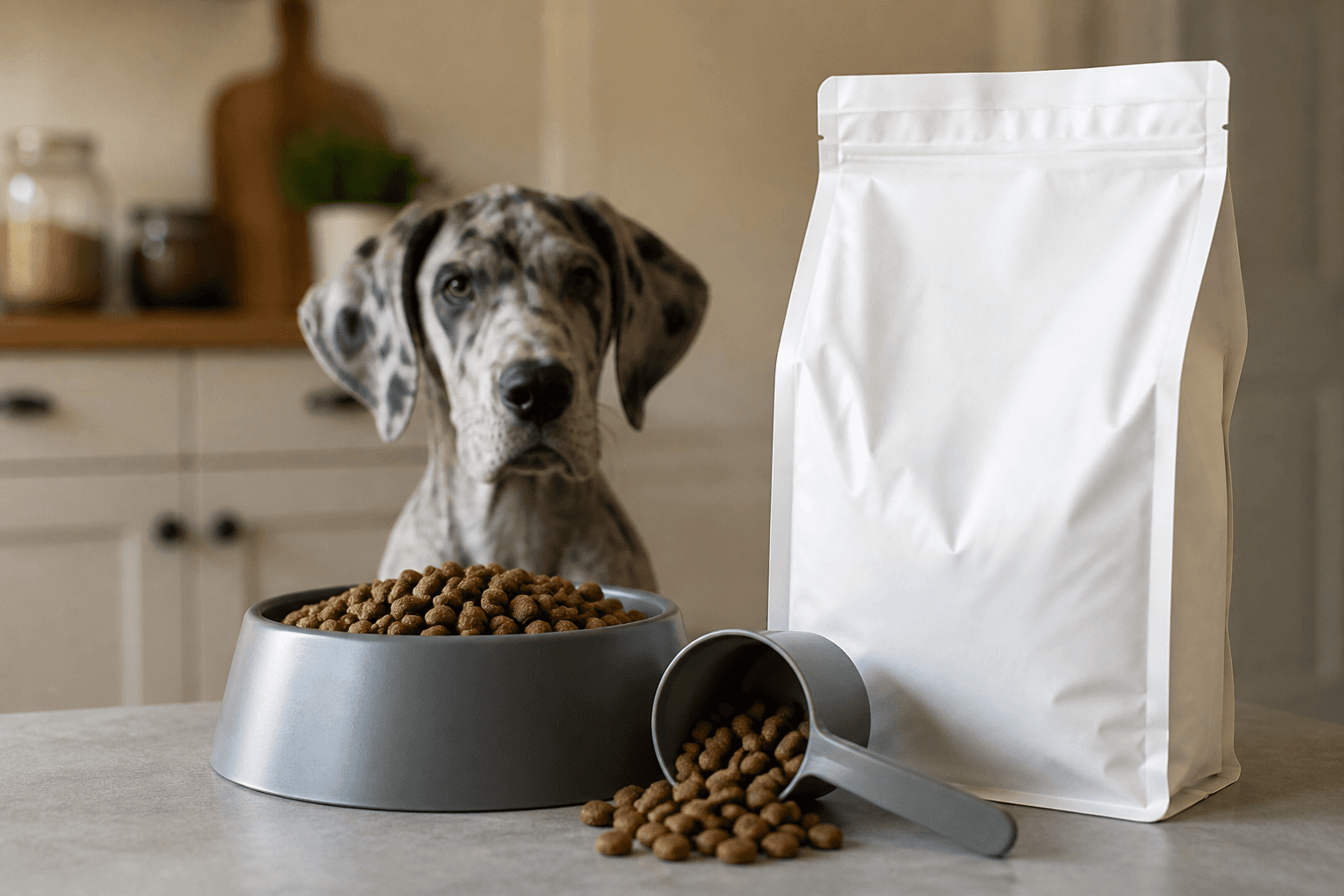
Comedouro e porção de ração para filhote de raça grande com o cão ao fundo
Image credit: Acervo pessoal: DogWise

Routine for the first weeks at home

Define a rest area, a feeding spot away from chaos, and predictable walk and toilet times. Avoid a crowd of visitors on day one. Let the puppy sniff, explore with supervision, and sleep. Social exhaustion breeds irritability and accidents.

Prepare a kit: suitable harness, quality short leash, mats or a hygiene plan, stable bowls, sturdy toys without small parts. Replace the harness as the dog grows; gear that is too tight marks skin and interferes with gait.

Log weight, appetite, stools, and behavior in a simple notebook. That helps the veterinarian see trends. Photograph the puppy in a similar pose every two weeks: the visual size change often surprises people who are not tracking it.

When the breed is not the right choice (and that is fine)

If you need a compact, cheap-to-keep dog, fly often, live in minimal space with no walk routine, or lack patience for early training, a Great Dane puppy is probably a poor fit. Recognizing that prevents surrender and suffering.

There are excellent companions in medium and small sizes, and there are adult Great Danes that need homes. The responsible decision is the one that remains after the photo excitement fades.

Frequently asked questions

Can a Great Dane puppy live in an apartment?

It can if there is real indoor space, toilet management, daily walks, and compatible neighbors/rules. A small apartment with no routine often creates conflict. Judge the expected adult, not only today’s puppy.

Will he stay calm “because he is giant”?

Size does not guarantee temperament. Many adults are affectionate and steady, but youngsters can be clumsy and intense. Training and socialization matter more than breed lore.

Can I run with the puppy to burn energy?

Avoid long runs and repeated impact while the skeleton is still developing. Prefer controlled activity and ask your veterinarian when to increase exercise.

Do I need large-breed puppy food?

Plans for large/giant-breed puppies are often discussed to support more controlled growth. The final choice should be made with your veterinarian and the label — not ads alone.

How long until he “stops growing”?

Height gain is usually marked through the first months up to about a year and a half, with muscle filling afterward. Lines and individuals vary; your veterinarian tracks your dog’s curve better than a generic internet average.

Is it true giant breeds live shorter lives?

Kennel clubs and breed health materials discuss a typically shorter lifespan than many small breeds, plus care that affects quality of life. Take that seriously in family and veterinary planning, without invented blog numbers.

Conclusion

A Great Dane puppy can be an extraordinary companion — if the decision accounts for adult size, ongoing money, space, controlled-growth nutrition, exercise without excess impact, and early training. Use serious sources such as the AKC breed page, talk with a veterinarian and transparent breeders/rescues, and only proceed if your household can handle the dog he will become, not just the puppy that still fits in your arms today.