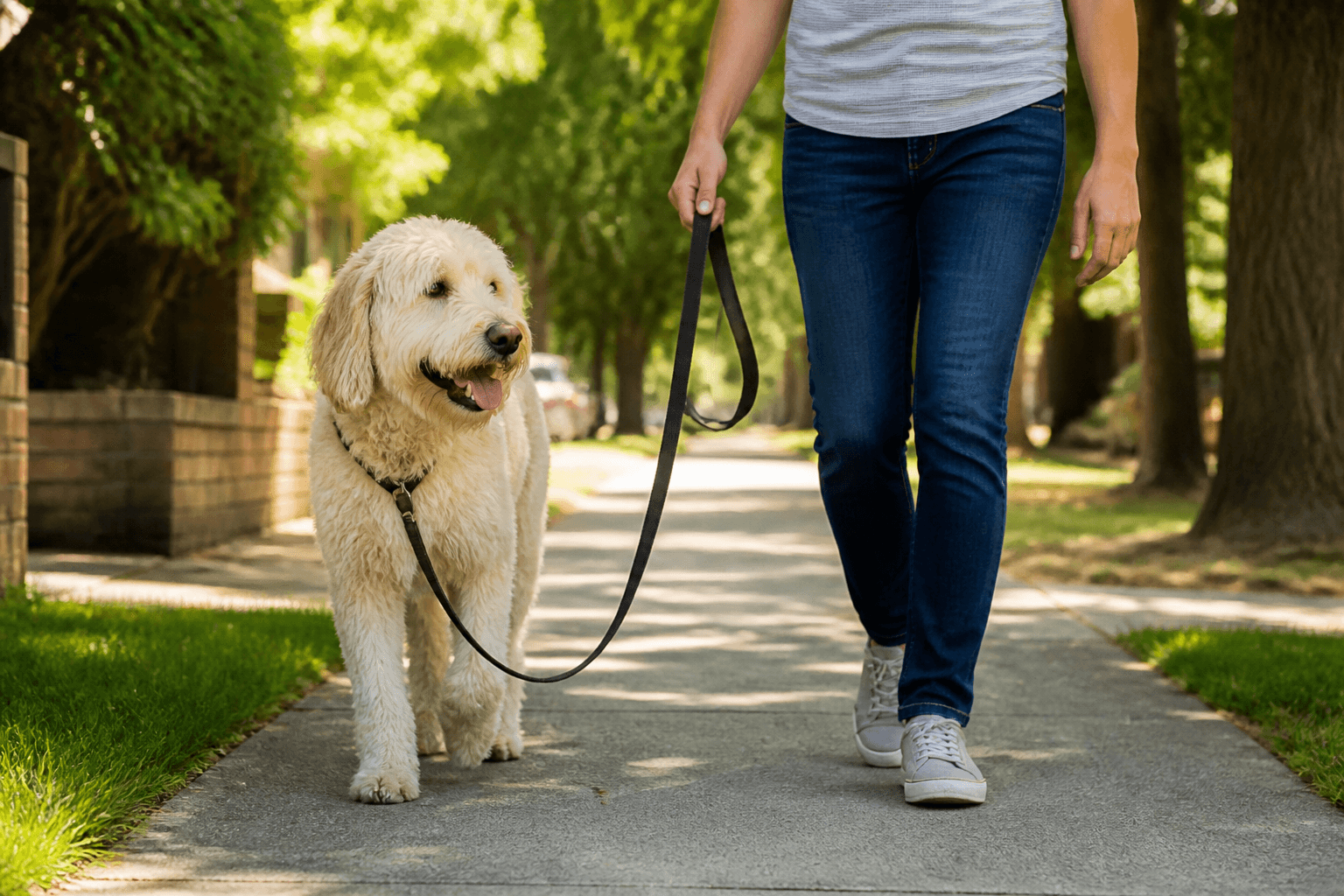
Cão caminhando com guia frouxa ao lado do tutor em uma calçada

Image credit: Acervo pessoal: DogWise

Training9 min readPublished on August 17, 2026

Dog pulls the leash only on the way back: why does it happen

When the dog walks well on the way there and only pulls on the way back, he has probably learned that a certain direction quickly leads to something important. It could be water, food, rest, reunion with someone or simply distance from an environment that makes you uncomfortable. Treating the behavior as disobedience ignores the most useful information: the change happens at a predictable point and in a predictable direction.

Training starts with figuring out what “back” means to that dog. Next, it's worth making the transition less obvious, rewarding steps with a loose guide and adjusting the duration and difficulty of the walk. Stopping like a statue can help in some moments, but it alone does not resolve rush, fear, heat, fatigue or a routine in which arrival always unlocks the biggest prize.
Locate the transformation point

Instead of rating the entire ride as good or bad, mark where the leash first becomes tense. Is it when the tutor turns the corner? When can you see the gate? After an encounter with dogs? When exiting a busy street? The place offers clues about motivation.

Take three or four comparable tours and write down route, time, weather, duration and events. Observe posture, tail, breathing, direction of ears and interest in sniffing. A dog excited to arrive may alternate pulling with glances at the destination. An uncomfortable dog may walk low, watch its surroundings, refuse food and try to leave quickly.

Don't assume the lap starts at half the distance. For the dog, it can start when it recognizes a smell, a sidewalk or the owner's gesture when changing the hand leash. Identifying this marker allows you to train before acceleration.

Four explanations that ask for different answers

Arrival predicts something valuable

If the meal is served immediately after the ride, rushing home may have been reinforced many times over. The same goes for opening the backyard door, meeting a person or receiving a toy. You don't need to pull these things out, but varying the sequence reduces the certainty that pulling shortens the path to the prize.

The ride got tiring

Excessive distance, hot floor, fast pace, age and conditioning influence. The dog may rush the return because he wants to finish. Adjusting the route and time is fairer than demanding a technical walk when he is already exhausted.

There is fear or overload

Traffic, dogs behind bars, construction and open spaces can make the street difficult. In this case, forcibly reducing speed can prolong an aversive experience. First choose the easiest route and time; then teach skills in a tolerable context.

The tension itself became a standard

The dog pulls, the owner follows and both arrive faster. Each repetition strengthens the chain. Even without a big reward at the door, moving forward is rewarding because it brings you closer to your destination. Training needs to offer another efficient way to continue.

Change the geometry of the lap

Avoid straight-line routes with a single turn that announces “it’s home now”. Take small, safe circuits, cross the street when appropriate, include a sniffing break, and go a few meters beyond your usual spot before returning. The intention is not to confuse the dog, but rather to weaken a rigid trigger.

On some days, go for a short walk that ends before fatigue sets in. In others, stop close to home, do a quiet activity and walk a few meters again. The finish stops being an inevitable race and becomes part of a variable sequence.

Safety comes first: don't make sudden changes of direction on a busy street and don't use the leash to pull your neck. Plan maneuvers where there is space and visibility.

Teach loose leash out of difficult time

Start in a calm place. Reward the dog when the leash forms a curve and he follows a smooth change in direction. Take a few steps, mark the hit with a short word you already know and deliver the reward next to the desired position. Then, release it to sniff.

Sniffing can be part of the payment, not a hindrance. Walking a few steps without tension can lead to an interesting tree. This makes cooperation relevant on the tour itself, without relying solely on food.

The American Kennel Club training guidelines can supplement general teaching principles. Avoid any technique based on pain, fright or shock; it can momentarily reduce signals and increase discomfort associated with the street.

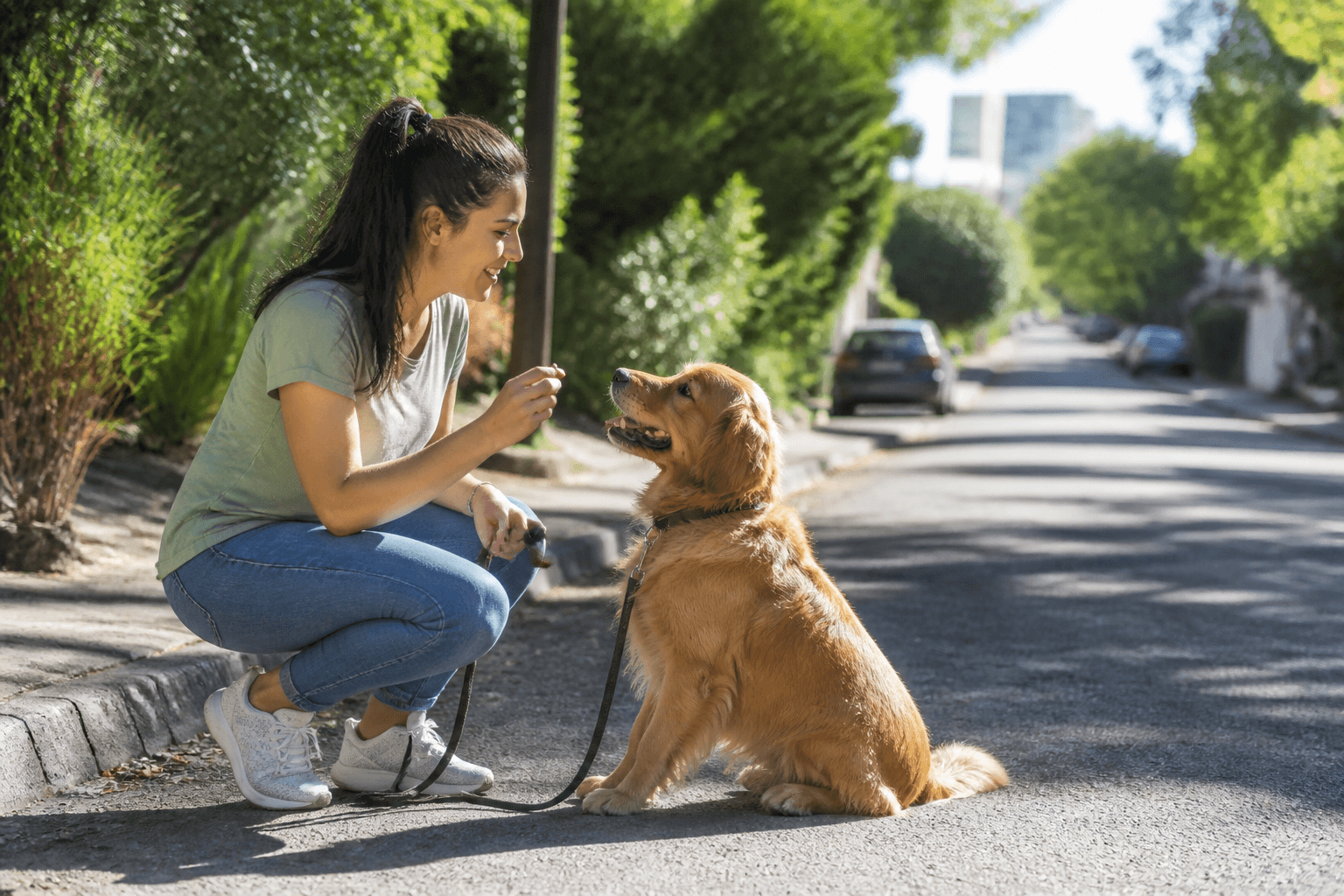
Tutor recompensando o cão durante uma pausa no caminho de volta
Image credit: Acervo pessoal: DogWise

Intervene before the guide stretches

When you get close to the mapped point, reduce the difficulty. Get attention once, reward a calm step, and allow a pause. If you wait until the dog reaches the end of the leash, it will be more difficult to regain connection.

If the guide becomes tense, stop moving forward without jerking. As soon as there is slack or the dog orients towards you, resume. If this happens with every step, the environment or distance is too difficult. Move away from the trigger, take a shorter route or exit safely; a whole walk of frustration is not a good workout.

Teaching self-control in other contexts also helps with communication. The article about teaching the command “leave” without shouting shows how to create a voluntary response without making the loud voice an obligatory part of the signal.

Rearrange arrival home

If possible, don't always offer the meal the second the door opens. Enter calmly, put away your leash, provide water and wait for a brief transition before the next activity. This should not become a punishing wait; it's just a less explosive routine.

Reward final approach with loose leash before opening the gate. If the dog pulls and the door opens, the opening confirms the strategy. Expect a minimum of loosening compatible with your training level, without requiring prolonged immobility on the sidewalk.

In buildings, train the entrance, elevator and hallway separately. Sometimes the pull attributed to the “return” is concentrated in these last environments. Breaking down the route reveals where to practice.

Equipment helps, but doesn’t teach itself

Well-adjusted harness and appropriate length guide offer handling without concentrated pressure on the neck. Check friction in the armpits, gaps and zippers. Extendable guides can maintain constant tension and make it difficult to notice loosening; assess whether they make sense locally.

No accessory eliminates motivation, fear or fatigue. Avoid chokes, locks and features that squeeze or cause pain. If the dog is strong enough to compromise safety, look for a trainer who uses methods without coercion and helps in person.

A two-week plan with no magic promise

For the first few days, just map out the acceleration point and shorten the ride to finish with energy available. At home or in a quiet area, practice short steps on a loose leash. Then, take the skill to the beginning of the lap, before the most difficult section.

Alternate rewards: food, permission to sniff, keep walking, and calm access to the door. Increase a few meters at a time. If there is a worsening, review the weather, route and events, rather than concluding that the dog is “testing limits”.

The period is used to organize observation, not to guarantee a cure in fourteen days. Some patterns change quickly; others rely on treating fear, pain, or conditioning.

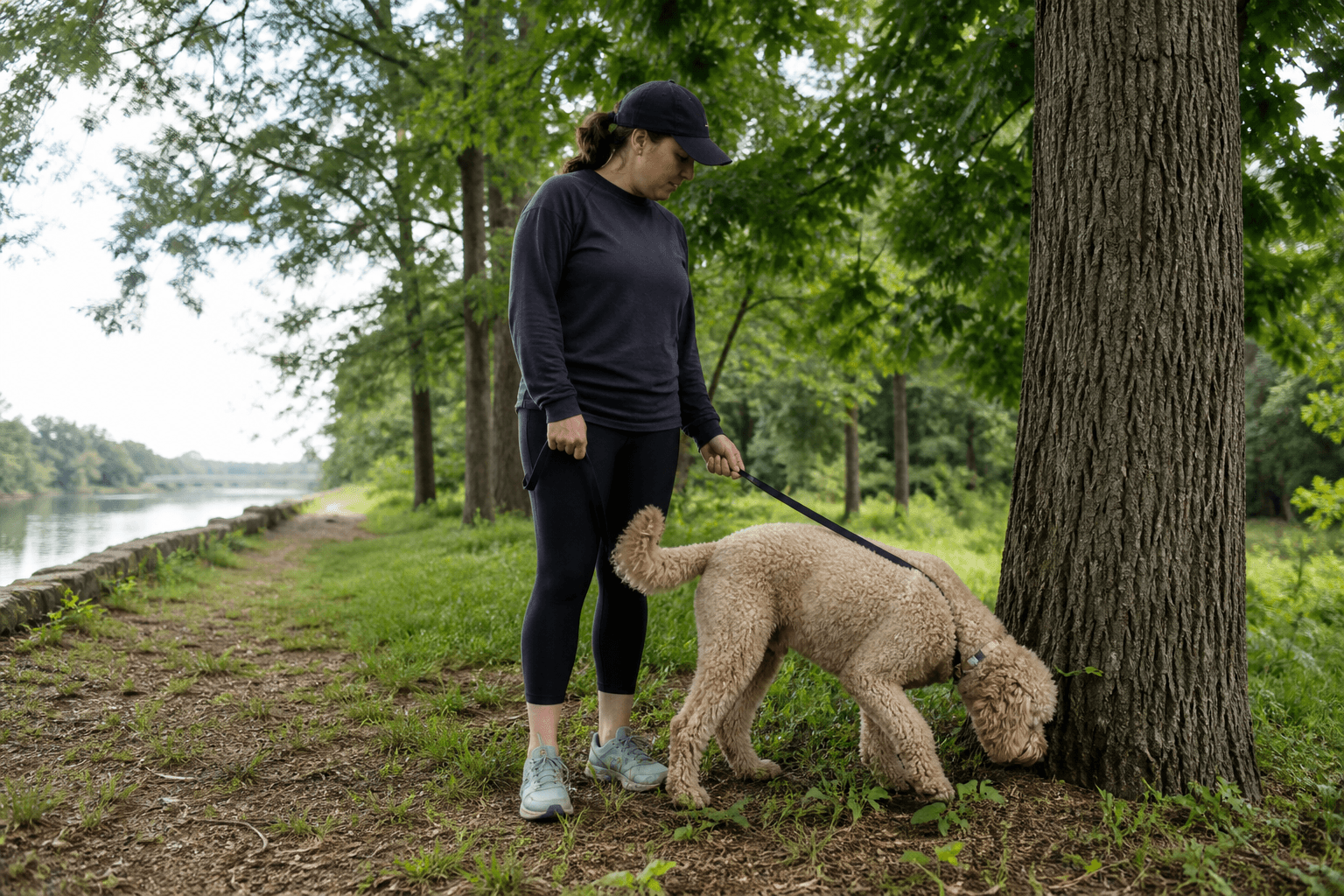
Trajeto de passeio com diferentes pontos de parada e farejamento
Image credit: Acervo pessoal: DogWise

Monitoring notebook

Mark the exact location of the first pull on a simple map. Compare whether it repeats or changes with the time and route. A consistent geographic pattern may point to a visible destination, floor, noise, or other environmental element.

Count short stretches of loose guidance, not just failures. Recording that the dog walked ten meters comfortably before accelerating shows where the training works and avoids the impression that nothing has changed.

Write down which rewards really mattered on that outing. Some days, food works; in others, smelling a tree or gaining distance from a noise is more valuable. Reward is defined by the effect on behavior.

Observe the physical state at the end of the trip. Breathing, heat, rhythm and willingness to stop help decide whether the lap should be shorter. Don't turn signs of fatigue into an obedience problem.

Record your own speed and tension on the guide. Anticipating the pull may lead the owner to shorten the leash early, creating pressure before the dog accelerates. Adjusting this detail changes the conversation between both sides.

Review arrival. Identify what happens in the first few minutes at home and vary only as necessary. The goal is not to take away everything the dog likes, but to prevent running from always being the quickest way to access that.

When to stop training and investigate

Sudden changes, limping, sitting while walking, licking paws, being reluctant to go out or reacting to touch warrant veterinary evaluation. Pain can change the rhythm. Intense fear, escape attempts or reactivity also require professional support.

A qualified trainer must observe the environment, equipment and body language, explain criteria and avoid absolute guarantees. The plan needs to fit the physical safety of the owner and the dog.

Frequently asked questions

Should I stop every time he pulls?

Stopping can remove progress, but excessive repetition indicates high difficulty. Combine the break with early training, proper routing, and rewards for slack leash.

Does turning in the opposite direction work?

It can help if the change is smooth and practiced, in a safe place. Sudden turns that give a jolt confuse and hurt. Don't use the technique to prolong a scary environment.

Can I use snacks throughout the journey?

Yes, as part of a plan, adjusting quantity to the daily diet. Gradually vary with sniffing and advancement. Don't expect to withdraw rewards before the skill is stable.

Is he trying to be dominant?

Pulling toward home is most usefully explained by learning, motivation, discomfort, and context. The dominance label does not indicate what to change in the ride.

How long should the tour last?

There is no universal duration. Age, health, climate, fitness and environment matter. Choose a route where the dog can still learn on the way back.

Conclusion

The unique pull on the way back is a clue, not an affront. Find out where you start, check for reward rush, tiredness or fear and train before the critical stretch. Less predictable routes, rewarded loose guidance and reorganized arrival make for a calmer return. If the body or environment indicates distress, reduce the demand and investigate the cause rather than fighting for strength.