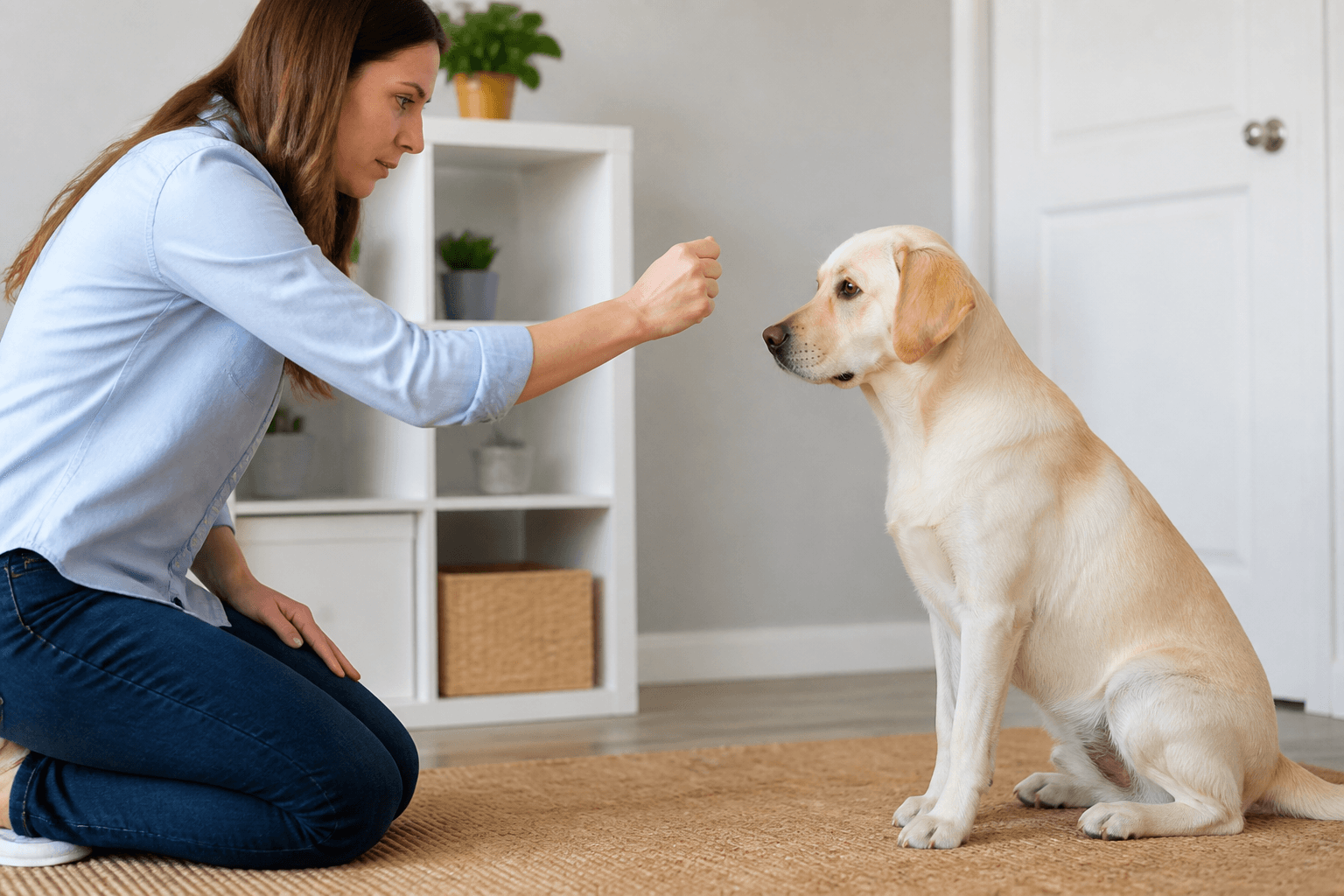
Tutor treinando o comando deixa com um petisco protegido na mão fechada

Image credit: Acervo pessoal: DogWise

Training10 min readPublished on August 17, 2026

Teaching the “leave it” command without shouting: step by step that works

The “leave it” command teaches the dog to stop being interested in something before picking it up: food on the floor, trash, an object or another animal. It should not mean a threat or rely on shouting. The desired behavior is voluntary: upon hearing the cue, the dog moves away from the item and returns its attention to the owner because it has learned that this choice is safe and advantageous.

Training works best when it starts away from emergencies. First, use a low-value item protected in your hand; reward with something different; then increase difficulty in small steps. On the street, handling with a guide and at a distance remains essential. “Leave” is a layer of security, not license to expose the dog to poison, glass or conflict.
Before training, differentiate “leave” from “release”

“Leave” is used before the dog takes the item. “Solta” is for something that is already in the mouth. Mixing the two clues makes the criteria confusing. If the dog has already grabbed an object, pulling forcefully may encourage fighting, damage the item or cause biting.

Choose a short word and stick with it. It can be “leave”, as long as everyone uses the same sound and the same goal. Do not repeat “leave it, leave it, leave it” while the dog ignores it. Repetition teaches that the first clue doesn't matter.

The American Kennel Club training guidelines area brings together general content on canine education. The step-by-step process needs to be adapted to the dog's temperament, health and environment, with professional help when there is fear, aggression or resource guarding.

Prepare a workout where making mistakes is safe

Hold sessions in a quiet room, on a solid floor, without other animals competing. Separate two types of food: an uninteresting item to serve as a distraction and more valuable rewards. The reward must come from the other hand, never from the item that was prohibited in this phase.

Use small pieces and reduce them from your daily diet when necessary. For dogs with restricted diets, allergies or illness, confirm options with your veterinarian. Toys and access to an activity can also be rewarding, but food facilitates initial accuracy.

Train for a minute or two and stop while the dog is still engaged. Five good repetitions are worth more than twenty with frustration. If he becomes agitated, barks, scratches or abandons the session, reduce the difficulty.

Step 1: Closed hand teaches logic

Place the low-value item in your palm and close your hand. Present it at muzzle height without saying anything. The dog will likely sniff, lick, or touch it. Keep your hand closed and still; do not push the muzzle and do not scold.

The instant he backs away, turns his head, or stops investigating, mark it with a short word like “yes” and hand a treat from your other hand. Then hide your hands and start over. The separation may last less than a second at first; reward that small choice.

The closed hand item is not delivered. If he learns that insisting ends up releasing the same item, perseverance competes with withdrawal. After a few repetitions, many dogs back off faster.

Avoid presenting your hand continuously for long periods. If he insists for ten seconds, move your hand away, pause and try with a less valuable item or greater distance. The goal is not to test willpower, but to make the correct answer easy.

Step 2: Add the word at the right time

When the dog starts to move away as soon as he sees the closed hand, say “leave it” once, immediately before presenting it. Wait for the pullback, mark and reward. The word begins to predict the action already understood.

Don't say the clue after he's already given up; this associates the word too late. Also don't use it while you're still organizing snacks. Keep a clear sequence: clue, presentation, removal, marker, reward.

Do repetitions in slightly different positions, without increasing the difficulty all at once. Train sitting and standing, with your hands on the right and left. If the response worsens, return to the previous arrangement.

Step 3: Open your hand without offering the item

Show the item in your open palm and say “leave it”. Be ready to close your hand if the dog lunges. As soon as he backs away, mark and reward with your other hand. Opening does not mean allowing it to catch on.

Start with the farthest palm. Approach gradually only after several calm responses. The dog doesn't need to stare at you; moving the muzzle and body away already meets the initial criteria. Eye contact can be added later if helpful.

If he manages to steal the item, the exercise has progressed too quickly. Don't chase or yell. Rearrange the environment, use larger food that does not escape easily and return to the closed hand. Preventing theft tests speeds it up more than correcting it later.

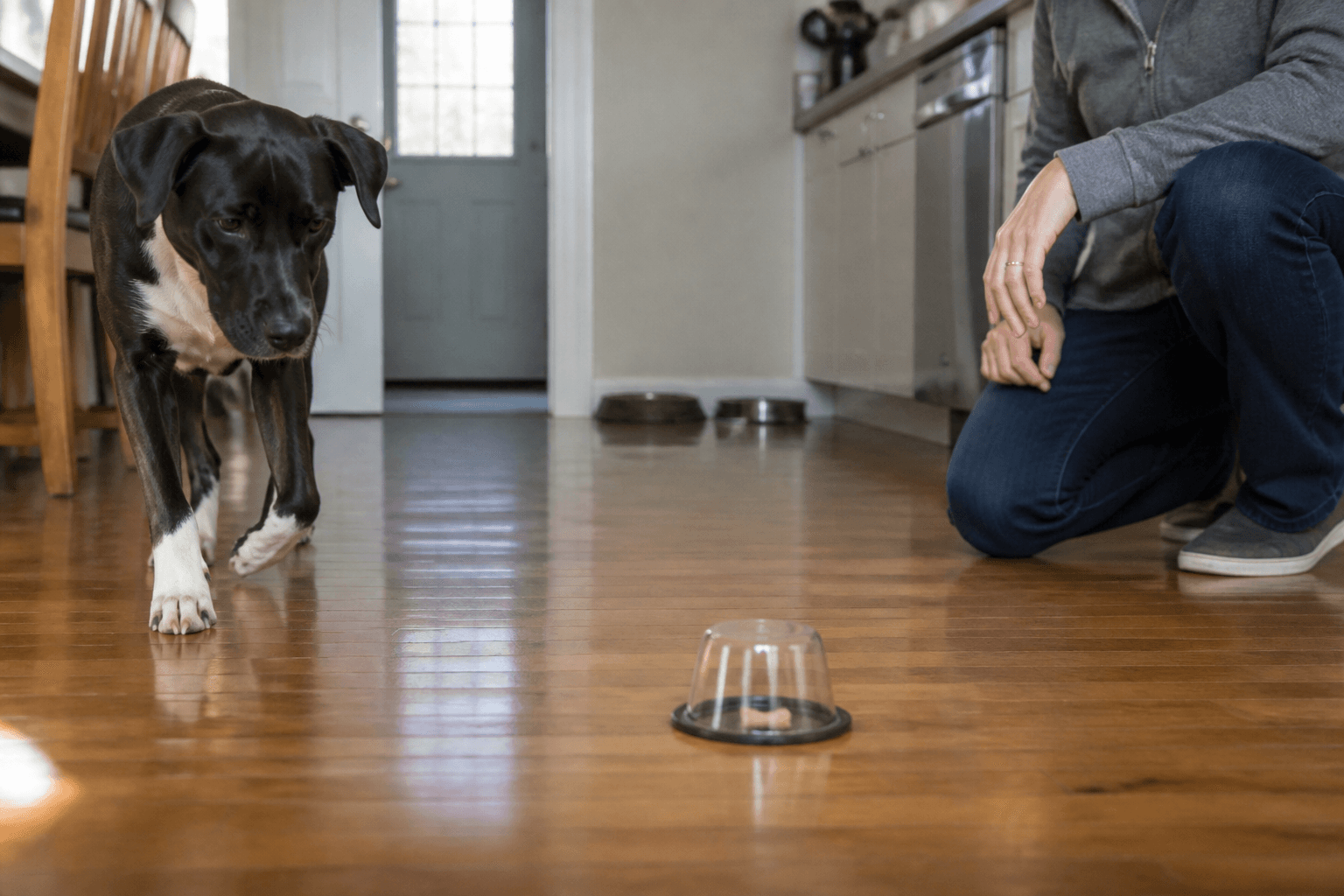
Cão se afastando voluntariamente de um petisco coberto no chão
Image credit: Acervo pessoal: DogWise

Step 4: Take the item to the floor with barrier

Place the item on the floor and cover it with your hand or foot, without putting pressure on it so that it breaks. Wear safe shoes and objects. Say “leave it” once. When the dog moves away, mark and deliver the reward away from the ground.

At first, keep your distance with a loose leash just to be safe, without pulling to produce the response. Then, partially uncover the item. In subsequent steps, leave it visible, keeping it covered before the dog can reach it.

Change one variable at a time:

  • distance between dog and item;
  • value of the object;
  • movement of the object;
  • duration before reward;
  • environmental distractions;
  • position of the tutor.

Increasing everything simultaneously creates glitches and seems like the dog “forgot”. In fact, he has not yet generalized.

Step 5: Teach that the reward comes with you

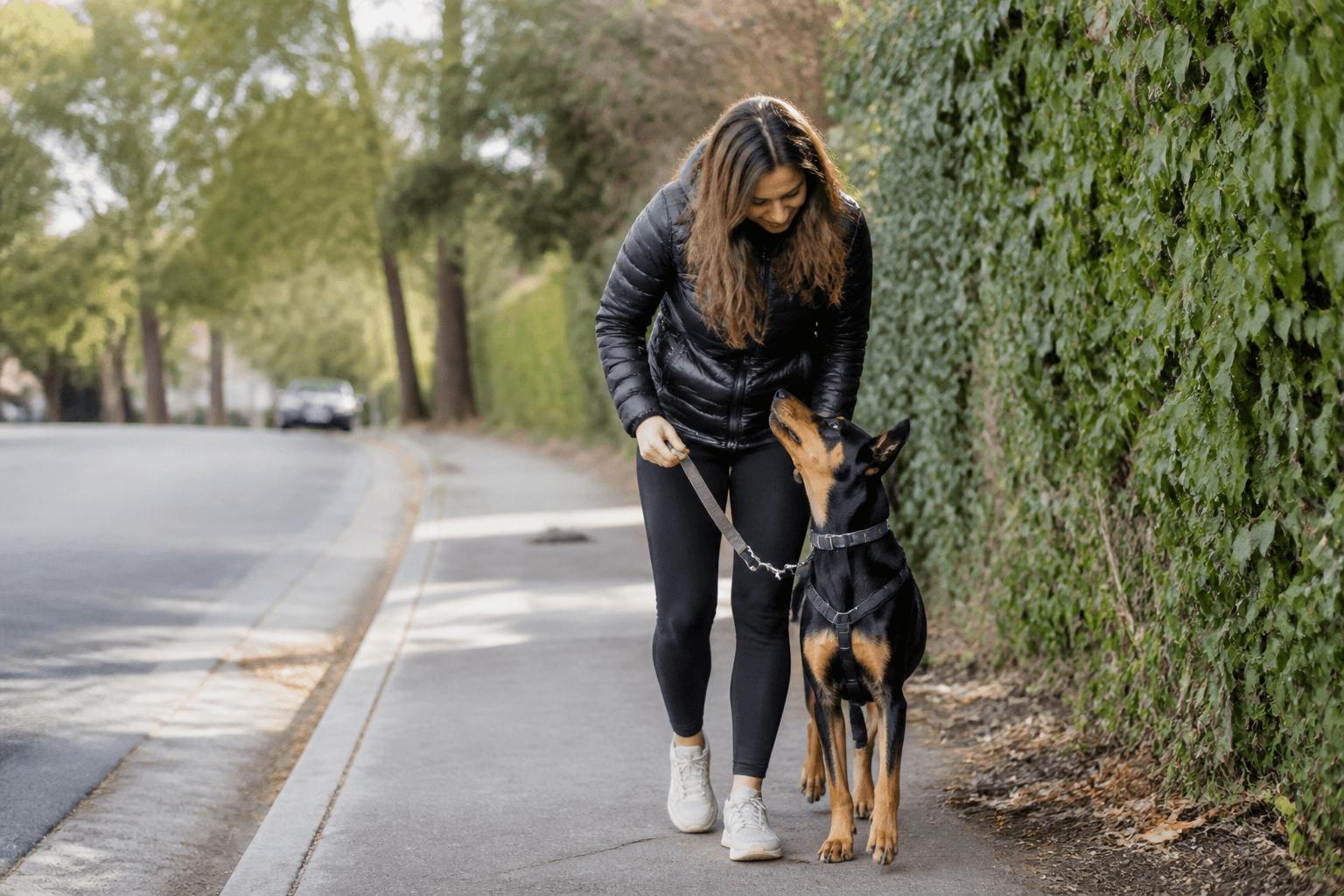
After the dog consistently moves away, step back when marking and deliver the reward near his leg. This builds the habit of stepping out of the distraction, not just freezing next to it.

You can add a simple action, like following two steps or touching a hand. Don't turn every answer into one long string. In a risk situation, getting away quickly is a priority.

Vary rewards: food, calm praise, opportunity to sniff for safe driving or resumption of the walk. For strong distractions, use really competitive reward. Reducing premiums too early weakens behavior.

How to leave the room and get to the sidewalk

Generalization does not happen automatically. A perfect dog in the kitchen may fail in the hallway, elevator or street. Train in progressive locations: another room, controlled yard, gate, quiet sidewalk and only then busy areas.

Prepare the scene with an assistant or place safe objects beforehand, knowing where they are. Do not use real junk, cooked bones, medicines, chocolate or any dangerous items. In an outdoor environment, maintain adequate guidance and sufficient distance.

The article about dog that pulls the leash on the way back complements the walk management: tension, direction and motivation on the leash interfere with the ability to respond to cues.

Start so far away that the dog notices the object but can still eat and think. Say “leave it”, mark the distance and walk in an arc away. Little by little, reduce the distance. If he stops, pulls or stops accepting reward, walk away; dwelling on that point teaches conflict.

Why yelling often makes it worse

The scream can scare and interrupt an action once, but it doesn't clearly tell you what to do. Some dogs are afraid of their owner; others swallow the item faster to avoid loss; others only obey when the volume increases. That's not a reliable clue.

Repeating in a rising tone also contaminates the word. “Leave it” becomes a prediction of tension, not practiced instruction. A neutral cue, followed by a trained response and reinforcement, works in a wider variety of situations.

This does not mean speaking quietly while the dog runs into danger. In an emergency, use safe physical handling, barriers, distancing and assistance when necessary. Prevention remains more important than training purity.

Tutor recompensando o cão junto à perna após afastamento de distração no passeio
Image credit: Acervo pessoal: DogWise

Common errors and how to fix them

Use only when something is prohibited

If the word appears only in the face of enormous temptations, the dog never accumulates successes. Practice with easy items and reward. Then take the skill into everyday life.

Show prize before answer

Using food as bait may work momentarily, but the dog will then check for visible payoff. Keep rewards accessible but hidden and delivered after the behavior.

Letting go sometimes

When the training item is released in a few repetitions, waiting or insisting may seem advantageous. Use a release track in different exercises; on “leave”, reward with another source.

Pull the tab as a response

If the retreat happens just because the owner dragged the dog, he did not make a choice. Use the leash to prevent access, keep your distance and wait for a small voluntary movement before marking.

Advance through the calendar

There is no obligation to reach the ground on the second day. Move forward when the dog easily succeeds in several repetitions, not because the session is over. Taking a step back is adjustment, not failure.

Situations where home training is not enough

Look for a professional who uses non-intimidating methods if your dog growls, lunges, bites, protects food or objects, panics or has ingested dangerous items. Resource guarding requires a specific plan; teasing the dog by taking objects can increase the risk.

The behavior of eating non-food items, compulsively scavenging or picking up feces also deserves discussion with a veterinarian. Abnormal hunger, gastrointestinal problems, pain and other conditions can influence. Training does not replace investigating your health.

Puppies explore with their mouths and need a protected environment. Store medicines, cleaning products, threads, clothes and toxic foods. Gates, closed bins and supervision are part of teaching.

A simple seven-session plan

In the first session, reward clenched hand release. In the second, consolidate and add the word. In the third, vary hand position. On the fourth, introduce open palm. On Thursday, use a covered item on the ground. On Friday, practice small trips away. On the seventh, move to another room with low difficulty.

This is a map, not a deadline. A session can be repeated for several days. Record in a few words: item used, environment, distance and hit ratio. If there are two failures in a row, ease up. Finish with one possible repetition.

Everyone in the house must follow the same criteria. Children should not conduct exercises with disputed items or approach a dog that is eating. An adult organizes, supervises and stores materials at the end.

Frequently asked questions

How long does it take for the dog to learn “leave it”?

He can understand the logic in a few sessions, but responding on the street requires generalization and practice. Timing depends on history, distraction value, environment, and consistency.

Can I use my own food as a reward?

Yes, if it has enough value in that context and can be included in the daily portion. For larger distractions, you may need a more valuable authorized prize.

What do I do if he takes the object?

Do not chase or forcefully open your mouth, unless professional emergency advice is given. Use a safe shift and train “release” separately. Then reduce the difficulty of “leave” and prevent new access.

Do I need to reward forever?

Behaviors are maintained better when they continue to have positive consequences, even if the reward varies. Do not remove food abruptly in difficult environments; also use distance, walking and safe access as reinforcement.

Does “leave it” work for another dog?

It can help to redirect attention to a distance where the dog is still responsive. Do not use the track to force an animal that causes fear or reactivity to approach. Distance and professional support are more important.

Conclusion

Teaching “leave it” without shouting is making a choice: notice the distraction, move away and return to the tutor. Start with a closed hand, mark any setbacks, reward from another source, and advance one variable at a time to the floor and outdoor environments.

Management remains mandatory. Guide, distance, organized home and prevention protect while the skill matures. If there is resource guarding, aggression or ingestion of items, stop testing and seek qualified veterinary and behavioral help.