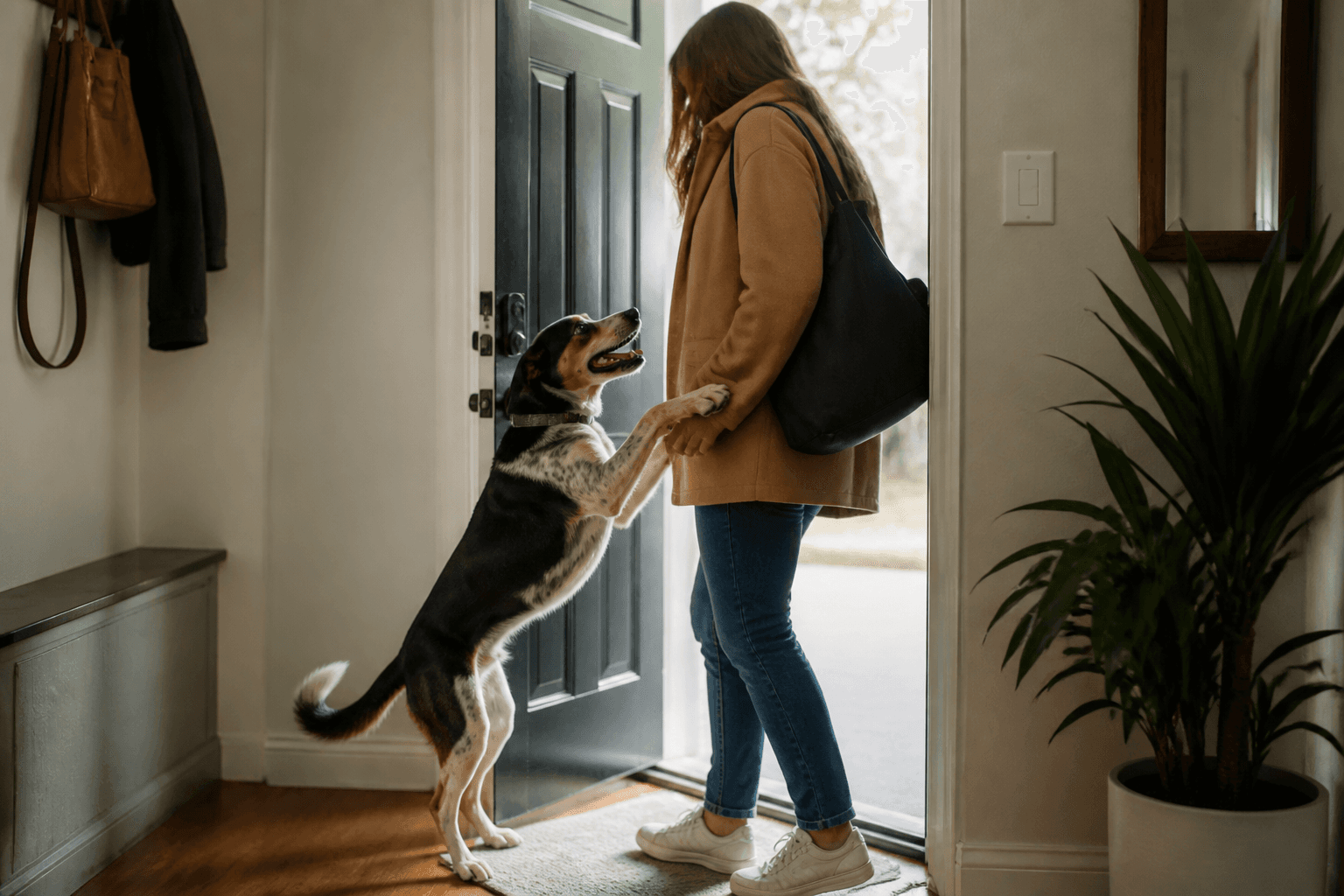
Cão pulando na porta em direção a uma visita que chega

Image credit: Acervo pessoal: DogWise

Training8 min readPublished on September 3, 2026

Dog jumps on visitors: how to stop without shouting at the door

Written by the DogWise editorial team. Who writes here.

The doorbell rings. The dog turns into a rocket. The visitor comes in laughing, says “hi, cute” and paws up his pants. You shout “get down!” It goes down for half a second and goes up again. Everyone laughs. Training just failed.

A dog that jumps on visitors is not “ill-mannered out of spite”. He's greeting the way it works: quick contact, agitated voice, sometimes even a snack that someone takes out of their bag. The jump was paid.

The AKC describes the jump as a greeting that the dog repeated because it worked. Correction is not force on a leash in front of the visitor. It's teaching what to do instead of jumping - and convincing humans to stop paying for the show.

If the house already practices the command “leave it” without shouting, use this at the door: the target of the party (hand, mouth, bag) says “leave it”, and the floor becomes the place that gets attention.
The direct answer

To stop jumping:

  1. Rehearse without visitors (you walk in and out the door).
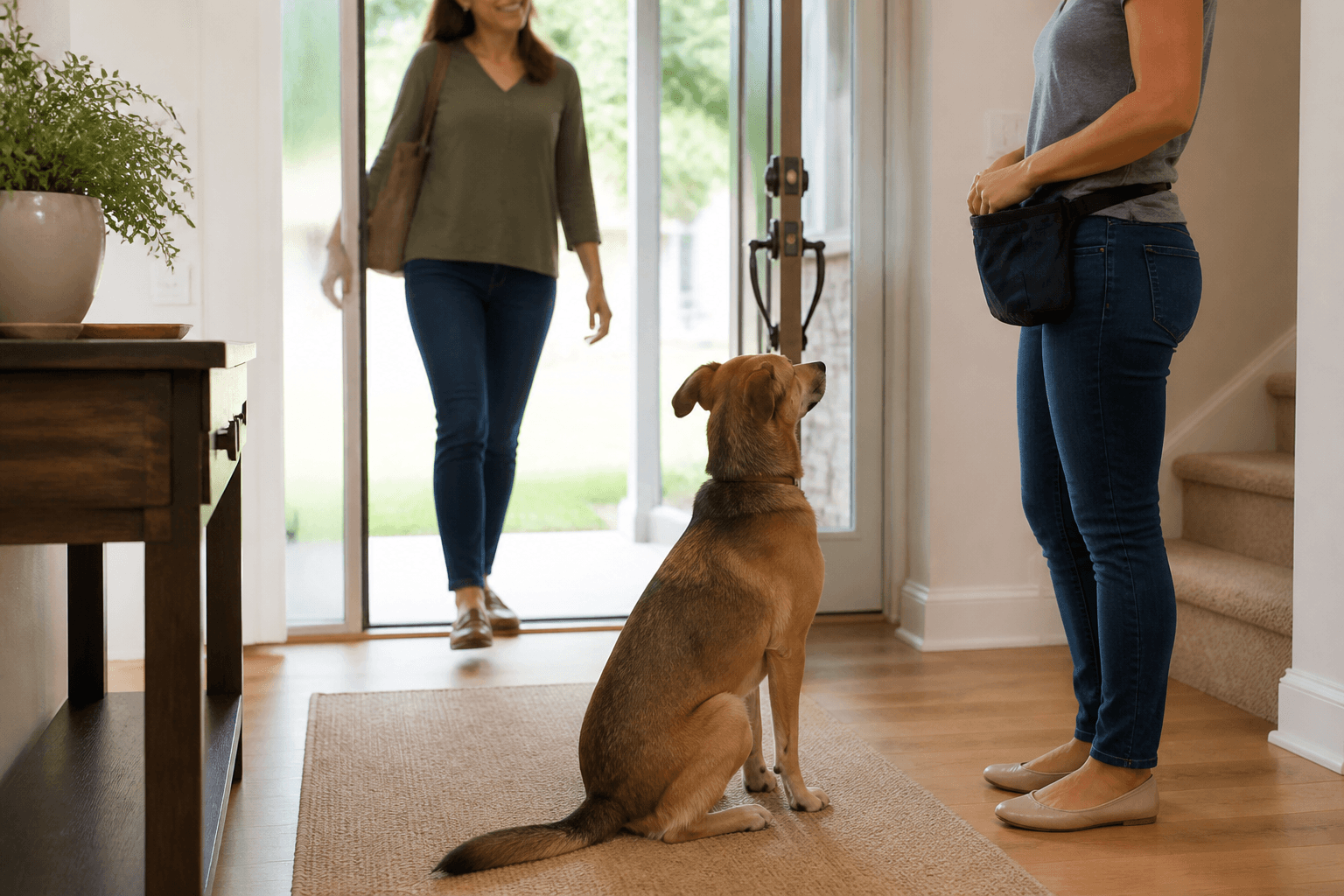
  2. Ask for four paws on the floor or a “sit” before any affection.
  3. Visits that reward jumping (laps, high-pitched voice, playful push) undo the training.
  4. Screaming at the door increases excitement. Low body, low voice, loose collar.

A big dog that knocks down a child or elderly person is not “funny until someone falls”. Prioritize training. Small dogs also scratch skin and tear pantyhose — the method is the same.

Why does he jump (without becoming a couch psychologist)

  • Wants the person's face (dogs greet each other higher than our chest).
  • The visitor speaks softly and moves his hands — that seems like a joke.
  • You only pay attention when it's already in the air.
  • The bell became a party signal, not a “go to the carpet” signal.

If the dog also pulls the leash on the street, the “it doesn’t fit in the body” brain is the same. The article about dog that pulls the leash only on the way back is another context, but the logic is similar: teach calm behavior before the trigger pops.

Workout alone: 5 minutes, several days

Don’t wait for your aunt to arrive to “correct”. Rehearse.

Step 1. Bring a collar home if your dog snaps. Don't hang. It just stops the rocket.

Step 2. You put your hand on the doorknob. If he jumps, the hand comes out. Door doesn't open. Silence.

Step 3. Four paws on the floor (or sit, if you already know how). Then the door opens a foot. Jump? Close. Floor? Open more.

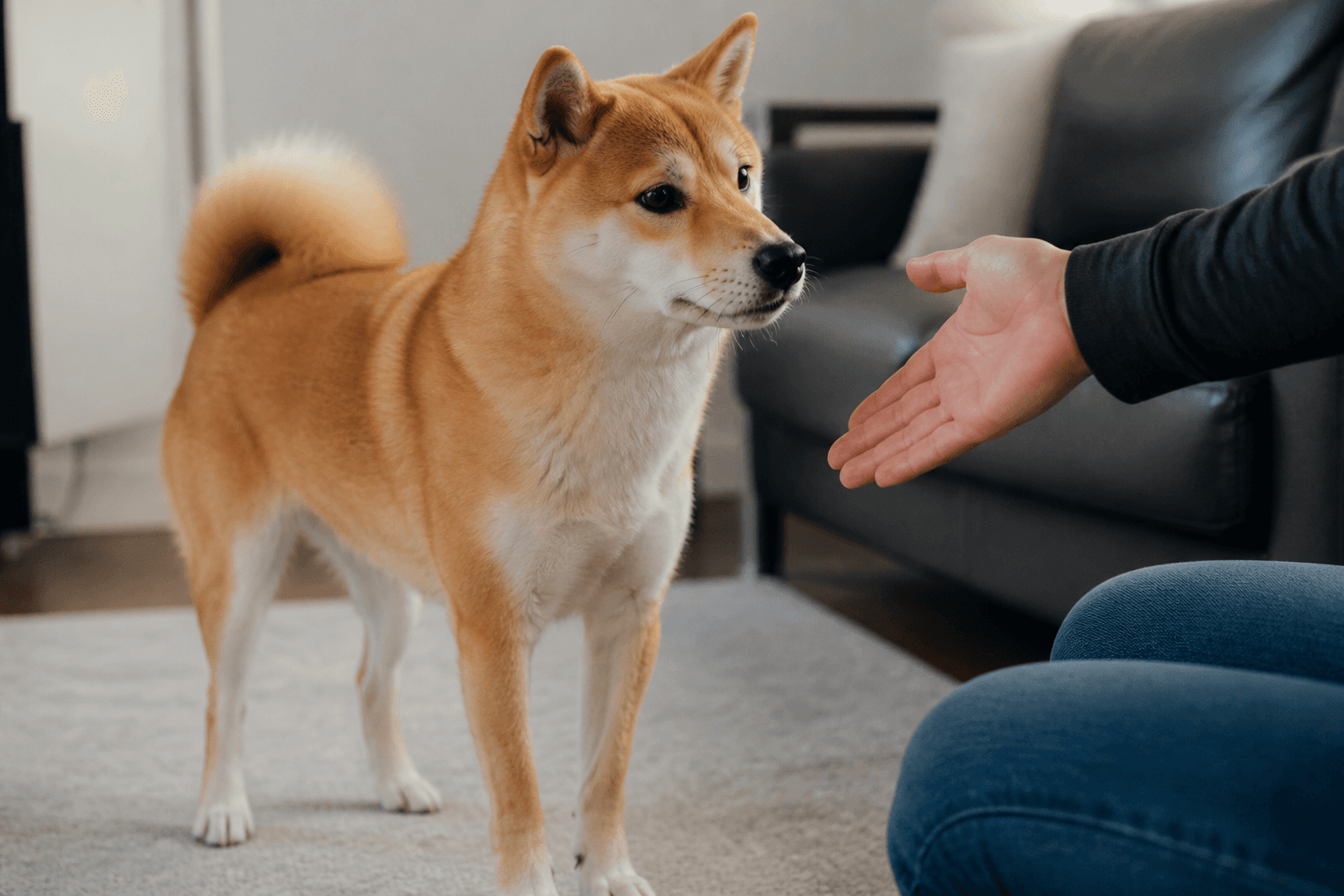
Step 4. You enter as if you were a visitor: without a party. Pet only with paws on the floor, at chest level, not on his face.

Repeat until it gets boring. Boring is good. Training that only takes place on Saturdays with visits never works.

Small snacks help in the beginning. Then move on to short praise (“that”) and a stroke. If the dog only works for sausages, a visit without sausages becomes a relapse.

What to say during the visit (ready text)

Send it on WhatsApp first:

"He's learning not to jump. Please: come in, ignore if you come up, only greet when all four paws are on the floor. No cartoon voice at the door."

People who love dogs hate this message. Still, send it. An excited guest undoes two weeks.

If the person insists on squatting and shouting the name, take the dog to the other room with a toy. It is not eternal punishment. It's environmental management while the dog can't do it yet.

Four paws on the floor versus “sit”

Sits of course, but an excited dog sits and gets up in a single jump. Four on the floor (sometimes called “four on the floor”) is accepted standing up, as long as you don’t go up.

Choose one. Train one. If you mix “sit, lie down, stay, paw” at the door, the dog chooses to jump — it’s the fastest.

Child: teach to turn the body sideways, arms close together, without pushing the dog's chest. Pushing turns into a fighting game.

Cão sentado no tapete perto da porta enquanto a visita entra
Image credit: Acervo pessoal: DogWise

What doesn't work (and seems to work)

  • Knee to chest. It hurts, it scares, and some dogs jump more.
  • “He knows he did it wrong because he lowers his ear.” This is appeasement, not door learning.
  • Spray water on the face. Fear of the person, not the doorbell.
  • Allow it to jump “only on me” and prohibit it during the visit. Dog generalizes poorly. There is only one rule of the door.

The AKC also reinforces: ignore the jump, reward the ground. Simple to read, difficult in the emotion of arrival.

Doorbell, intercom, elevator

Apartment has three triggers.

Doorbell: record the sound on your cell phone and play it quietly, keep it quiet. Raise the volume little by little. You don't need 50 touches in the same day.

Intercom: the voice in the hallway is already going off. Practice “carpet” when the intercom beeps, before opening.

Elevator: dog climbs on people in the cubicle. Short leash, you enter first, dog next to the leg, visitor greets after the door opens on the floor.

If the building complains, training stops being “coolness” and becomes coexistence.

Dog that jumps in fear, not in celebration

Less common at the door, but it exists: low body, tense tail, jumping to reach the face with the tongue. Don't treat it like the happy rocket. Give space, don't force compliance, and if the fear is strong, talk to a positive reinforcement trainer or behavioral veterinarian.

Jumping + growling at the door is another case. Don't “get scared” before the visit. Management: dog in another room, professional later.

14 day routine (realistic)

  • Days 1–3: Just you at the door, 5 minutes.
  • Days 4–7: a resident visits.
  • Days 8–14: an informed visit, short session, dog tired before (walk, sniff, not run until panting).

Dog panting too much at the door makes jumping worse. Tire your head, not just your paws.

Mãos cumprimentando um cão que mantém as quatro patas no chão
Image credit: Acervo pessoal: DogWise

Frequently asked questions

How long will it take?

It depends on your age, how much the visitor still pays for the jump, and how many times you rehearsed without a visitor. Days to a few weeks in rehearsal. “Forever” if the rule breaks every weekend.

Can I use a place mat?

Yes. Carpet at the entrance + “go to the carpet” + snack. The visitor greets on the carpet. Works well in narrow apartments.

Puppy jumps. Do I leave?

Puppies also learn. Be shorter in sessions. Don’t wait to “pass the stage”. The phase becomes a 30 kg habit.

Does he only jump on men / only on women?

Train with both types of visits. Smell, voice and cap change the trigger.

Do you need a trainer?

If there is a fall of a person, aggression or you cannot achieve consistency, yes. Basic door training many people do at home with a clear method.

Conclusion

Dog that jumps during visits for when the ground becomes worth more than the air. Rehearse the door alone, ask for four paws before petting, warn the guest and stop the shouting that turns into a party.

Don't kneel. Don't be shy in front of the visit. Environmental management and boring repetition, a little every day. The day the doorbell rings and the dog looks for the rug instead of the pants, the training has started to pay off — even if it still misses one Saturday or another. Then you start the rehearsal again, not the scolding.

Rehearsal with two residents (what the visitor doesn't see)

One person visits. The other holds the leash loosely and marks the ground. Switch roles. Dog learns “only mom is in charge” and explodes when dad opens the door.

Mark three identical rules, written on the refrigerator if necessary:

  • door does not open with dog in the air;
  • greeting only with four paws on the ground;
  • no one shouts the name at the entrance.

If a resident thinks jumping is cute, training is not training. It's a dispute. Get this sorted out before the birthday party.

Film 20 seconds of the rehearsal. Sometimes you think it's calm and the voice is in the stadium. The video shows. Adjust.

Open door to the building corridor

In the apartment, the visitor appears in the doorway with the dog already in the air. Also train door ajar: you look at the corridor, dog next to your leg, only then do you open it once and for all.

If the dog darts towards the hall, use a short leash until the greeting ends. Hall is not a park. There are children, there are elderly people, there are deliveries.

Delivery man: the dog doesn’t need to “know the pizza guy”. Order on the floor, door, dog on the carpet. A lot of the “I was just excited” biting starts in this gap. Animated and tooth occupy the same space.

When to stop exercising for the day

Dog panting, with mouth open too much, who can't sit down for two seconds: end it. Water, break, another time. Door training at peak excitement teaches leash jumping—the opposite of what you want.

Puppy: 2–3 minute sessions. Several blocks in the day. Young adult: 5 minutes is enough if they are clear.

If after two honest weeks the dog still knocks people over, call professional help. It's not failure. It's security.