Cão descansando em cama confortável nas primeiras horas após receber a vacina V10

Image credit: Acervo pessoal: DogWise

Health10 min readPublished on August 17, 2026

What to expect in the 48 hours after the V10 vaccine

Most dogs go through the first 48 hours after the V10 vaccine with mild and temporary changes, such as more sleep, less energy, sensitivity at the injection site and a slightly reduced appetite. The most useful point is not to wait for the animal to be completely the same as usual, but to observe whether it remains responsive, is able to rest, drinks water and shows progressive improvement. Severe reactions, difficulty breathing, facial swelling, fainting or rapidly worsening are not part of a normal home recovery.

This content is educational and does not replace evaluation, diagnosis or guidance from a veterinarian. The professional who vaccinated the dog should be the first point of reference, as they know the product applied, the patient's history and any combinations of vaccines carried out on the same day.

Why the first 48 hours deserve attention

V10 is a multiple vaccine used to prevent important infectious diseases. After application, the body recognizes components of the vaccine and initiates an immunological response. This process can produce temporary discomfort without meaning that the dog has contracted the diseases against which it was immunized.

Monitoring begins at the clinic. Before leaving, confirm the name of the vaccine, the batch registered in the card, the date of the next dose and a telephone number in case of any complications. Also ask if there has been any other application or medication, as this helps the vet interpret any reaction. The American Veterinary Medical Association guidance on vaccines reinforces that the protocol must consider the age, health, lifestyle and risk of exposure of each animal.

At home, think less about monitoring every movement and more about comparing four points: alertness, breathing, hydration and tendency to improve. An isolated, mild change is usually less worrying than several simultaneous signs or a condition that worsens hour after hour.

An observation script per period

In the first two hours

Some dogs become agitated because of the walk and handling; others are quiet as soon as they arrive. Provide a ventilated, safe place without excess stimuli. Don't force food right away. Clean water may be available in the usual quantity.

Observe breathing when the dog is still. She should appear comfortable, with no obvious abdominal strain, unusual noise, or purple tongue. Also check that the eyes and muzzle maintain their usual appearance and that there is no increase in volume in the eyelids, lips or face.

Major allergic reactions may appear early. Seek immediate veterinary care if there is difficulty breathing, facial swelling, widespread hives, repeated vomiting, severe weakness, collapse or disorientation. Do not expect to complete an hour of observation and do not offer human anti-allergy on your own.

Between two and twelve hours

It is common for dogs to sleep more and avoid playing. He may get up slowly, look for a quiet corner and show discomfort when the application area is touched. A small increase in local volume may occur, but it should not grow rapidly or cause disproportionate pain.

Do a simple check without pressing the location: does the dog respond to the name? Do you get up to drink water or go to the bathroom? Do you walk without losing balance? Can you accommodate? Do you accept at least part of a meal, if it is already the usual time? There is no need to wake him repeatedly if he is breathing well and reacts when approached.

Between twelve and twenty-four hours

In this interval, mild malaise may still be present. The most important data is the trajectory. A dog that was quite sleepy and starts to show interest in the environment tends to evolve in a calming way. An animal that becomes progressively more depressed, refuses all water or develops new symptoms needs professional guidance.

Write down times and specific facts: “drank water at 8 am”, “ate half the portion at 12 pm”, “vomited twice in forty minutes”. This record is much more useful for the clinic than just saying that he is “not well”. A short video of breathing or walking can also help with triage, without delaying care when there is an emergency.

Between twenty-four and forty-eight hours

Many dogs have already resumed much of their routine. Slight sensitivity at the injection point and a little more sleep may persist. The disposition, however, must move in the direction of normal. If there is no improvement by the second day, or if the condition worsens, contact your veterinarian.

A small local mass may take longer to disappear than the general subsidence. It must be monitored without constant manipulation. Notify the clinic if it becomes hot, very painful, red, has secretion, increases or does not resolve within the period informed by the professional.
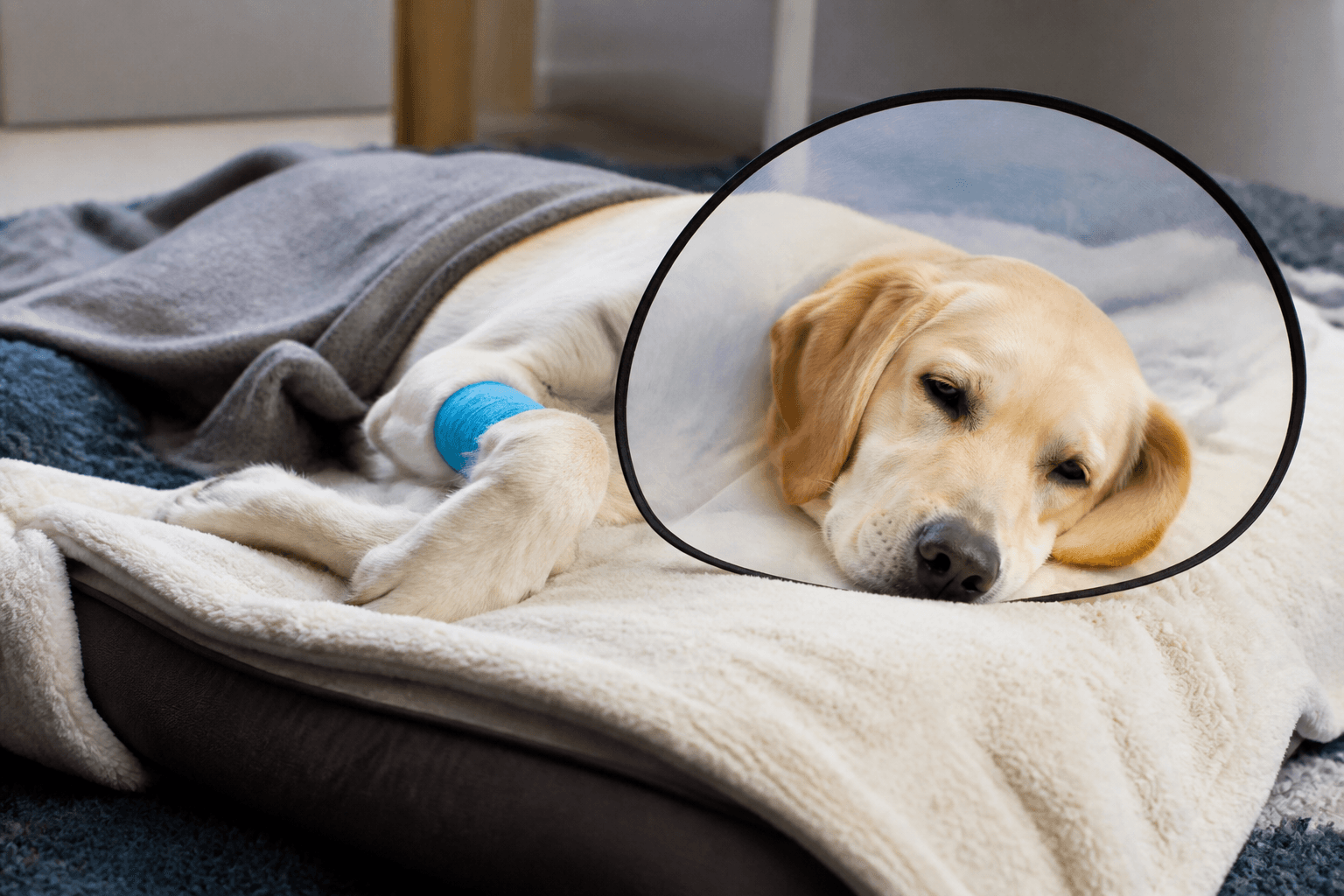
What is usually expected and what changes behavior

Signs generally compatible with a mild reaction include:

  • sleep longer on the day of the vaccine;
  • reduced interest in intense games;
  • localized sensitivity;
  • a slightly smaller appetite for one or two meals;
  • slight increase in temperature perceived as a warmer body, without other serious signs.

Touching the nose does not confirm a fever. Temperature is only adequately assessed with appropriate methods and equipment, and interpretation must be guided by the clinic. Don't insist on measuring if it puts you or the dog at risk.

Signs that justify calling the clinic on the same day include persistent refusal of water, isolated vomiting accompanied by significant letdown, repeated diarrhea, frequent crying, pain that prevents rest, persistent tremors or lack of improvement. The team will decide whether it is possible to observe, anticipate an appointment or seek emergency care.

Emergency signs include difficult breathing, swelling of the face, very pale or bluish gums, collapse, convulsion, inability to stand, and successive vomiting with weakness. In these cases, transport the dog safely and notify the service on the way if this will not delay departure.

Tutor observando com cuidado o local de aplicação da vacina V10 no cão
Image credit: Acervo pessoal: DogWise

How to make your dog comfortable without masking signs

Keep the routine simple. Leave a clean bed in a quiet place, reduce jumping and running and only make brief trips for needs. If your dog wants to walk slowly indoors, there is no reason to immobilize him. The goal is to avoid unnecessary effort, not to provoke anxiety with excessive restriction.

Offer the usual food. Changing the food, adding fatty snacks or preparing a completely different meal can cause gastrointestinal symptoms and make interpretation difficult. If he doesn't want to eat a portion, remove it after the normal time and ask for guidance if the refusal continues. For decisions about hydration and diet during hot periods, see also wet or dry food on hot days, remembering that the link indicated addresses another everyday sign and does not replace post-vaccination assessment.

Do not massage the injection site, do not apply ice or hot compresses without instructions, and do not use ointments. Preventing children from hugging or squeezing the area reduces discomfort and the animal's defensive reaction.

Never administer human analgesics, anti-inflammatories, antipyretics or anti-allergy drugs on your own initiative. Some are toxic to dogs; others may alter symptoms and delay recognition of a reaction. Even previously used veterinary medicines should only be repeated with authorization for that situation and that patient.

The mistake of comparing different dogs

Two dogs vaccinated at the same time may react differently. Age, size, anxiety, simultaneous applications, clinical condition and previous experiences affect the observed behavior. Therefore, the best reference is the pattern of that dog before the vaccine and the evolution over the hours.

Puppies can sleep a lot even on ordinary days, while very active adult dogs make a small drop in energy obvious. In homes with several animals, separate the vaccinated animal during play so that it is possible to assess water intake, urine, feces and disposition without confusing the individuals.

Also do not conclude that every new symptom was caused by V10. Coincidences happen: the dog may have ingested something inappropriate, suffered musculoskeletal pain or is incubating another condition. Temporal proximity is relevant information, not a diagnosis. Report to the clinic everything that occurred, including access to garbage, plants, medicines or different foods.

Prepare a registry that really helps

Before application, it is worth photographing the vaccination card and confirming how the dog was that day. Then, register only what is necessary:

  • schedule of the vaccine and other applications;
  • water and meal schedule;
  • episodes of vomiting or diarrhea;
  • change in the size of local swelling;
  • short videos of signs that are difficult to describe;
  • name of any prescribed medication and time of administration.

Don't turn registration into a reason to postpone an appointment. If the dog shows signs of emergency, the priority is to get to care. Take her wallet or photo and inform her that this is the post-vaccination period.

Carteira de vacinação canina aberta ao lado de um relógio e um bloco de anotações
Image credit: Acervo pessoal: DogWise

The next dose begins with the report of this

Even a mild reaction should be mentioned at the next appointment. The veterinarian will be able to evaluate the context and decide on the application environment, observation time, association between vaccines and other appropriate measures. Do not abandon the protocol out of fear or repeat the vaccine without supervision.

If there was a significant reaction, ask for it to be clearly recorded in the medical record. Save the trade name, manufacturer, batch and date. This data allows for individualized decisions in the future. Disease prevention remains relevant, but the plan needs to respect that patient's risk and history.

Frequently asked questions

Is it normal for the dog to not want to eat after V10?

A mild reduction in appetite for one or two meals may accompany sleepiness and discomfort. Observe whether he drinks water, remains responsive, and improves. Persistent refusal, especially in conjunction with vomiting, pain, weakness or worsening, should be reported to the veterinarian.

Can I go for a walk the next day?

If the dog is willing and the clinic has not imposed specific restrictions, a short outing for needs is usually more prudent than intense exercise. In addition to recovery, puppies with an incomplete protocol may need to avoid places of greater health risk; Check with your veterinarian when they will be able to circulate.

Does a lump at the site mean a serious reaction?

Not necessarily. A small nodule may occur and gradually regress. Mark mentally or photograph the size without pressing. Growth, heat, secretion, redness, severe pain or persistence beyond the stated period justify evaluation.

Is drowsiness for two days normal?

There may be more sleep on the first and even the second day, but there should be a tendency for improvement. Profound drowsiness, difficulty waking up, inability to walk, refusal of water or progressive worsening should not be normalized.

Should I give an anti-allergy medication before the next vaccine?

Only if your veterinarian prescribes it. The decision depends on the type of previous reaction and the planned protocol. Preventive medication on its own may be inadequate and does not guarantee protection against an emergency.

Conclusion

In the 48 hours after V10, observe trends, not perfection: more rest, a slightly smaller appetite and local sensitivity may be temporary, as long as the dog remains responsive and improves. Keep water, regular food, relative rest and an objective record.

Difficulty breathing, facial swelling, collapse, repeated vomiting or rapidly worsening require immediate care. Less intense symptoms, but persistent or without improvement until the second day, justify contacting the clinic. In any doubt, guidance from a veterinarian who knows the dog is worth more than trying to fit the case into a generic list.