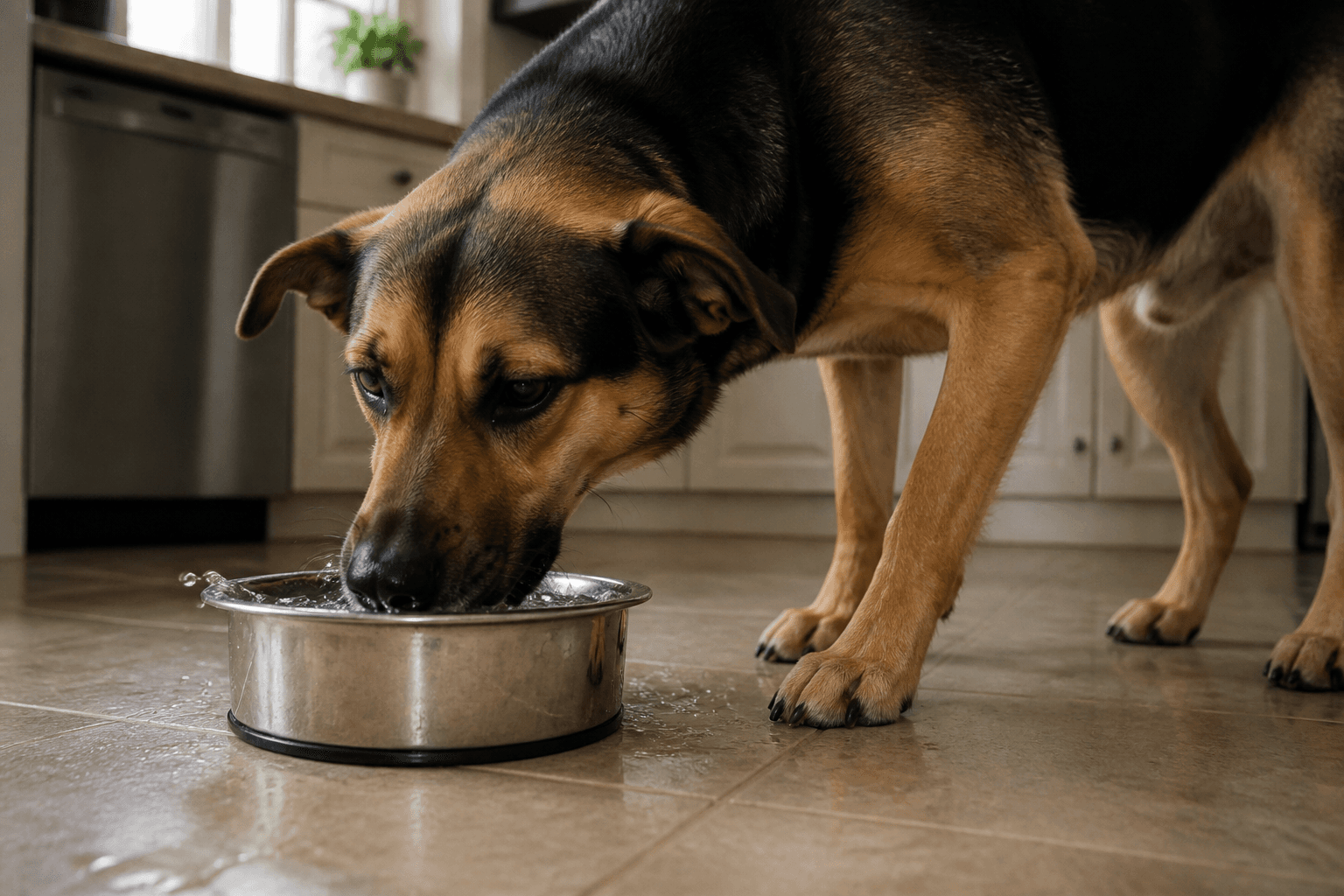
Cão bebendo água rapidamente de tigela de aço em cozinha

Image credit: Acervo pessoal: DogWise

Health8 min readPublished on September 1, 2026

Dog drinks water too quickly: real risk or just a habit?

You fill the bowl, turn your back for a second, and when you look again, the water is gone. The dog raises its head panting, with a wet mustache, and sometimes vomits liquid immediately afterwards.

The question comes right away: is this just a habit or is there a real risk?

Both things exist. Drinking quickly could be anxiety, heat, thirst accumulated after the ride or competition for resources. It could also be a sign that the body is asking for more water than before — and then the problem is not speed, but thirst.

This text is educational and does not replace consultation, examinations or guidance from a veterinarian. If there is a swollen abdomen, an attempt to vomit without anything coming out, weakness, collapse or repeated vomiting, seek care without waiting.
The direct answer

Drinking water too quickly may just be a habit when it happens occasionally, the dog is fine afterwards, eats normally, doesn't vomit all the time and doesn't drink a clearly larger volume throughout the day. In this case, the focus is to slow down intake (smaller portions, larger bowl, breaks).

It becomes a real risk when it comes with: frequent vomiting after drinking, truly increased thirst, excessive peeing, weight loss, weakness, or signs of emergency such as distended belly and retching (attempting to vomit without producing it). Then it’s not enough to change the bowl — you need to investigate.

If your thirst has increased along with the pee, also read dog drinks a lot of water and pees a lot. If the dog is elderly and confused as well as thirsty, see confused elderly dog ​​drinking more water.

The AVMA warns that gastric distension and torsion (bloat/GDV) is an emergency in dogs — especially deep-chested dogs — and that factors such as swallowing air quickly can enter the clinical picture in susceptible animals.

Why do some dogs “swallow” water

Common reasons, other than a closed list:

  1. Accumulated thirst: long walk, heat, dry food, empty bowl for hours.
  2. Anxiety or excitement: arrival of the tutor, noise, hectic routine.
  3. Competition: more than one pet in the house; fear of being without.
  4. Habit since he was a puppy: he never learned to drink with pauses.
  5. Medical thirst: diabetes, kidney, urinary infection, medication effect — here the dog drinks more, not just faster.

Separating habit from illness starts by comparing total volume of the day and what has changed in the last few weeks.

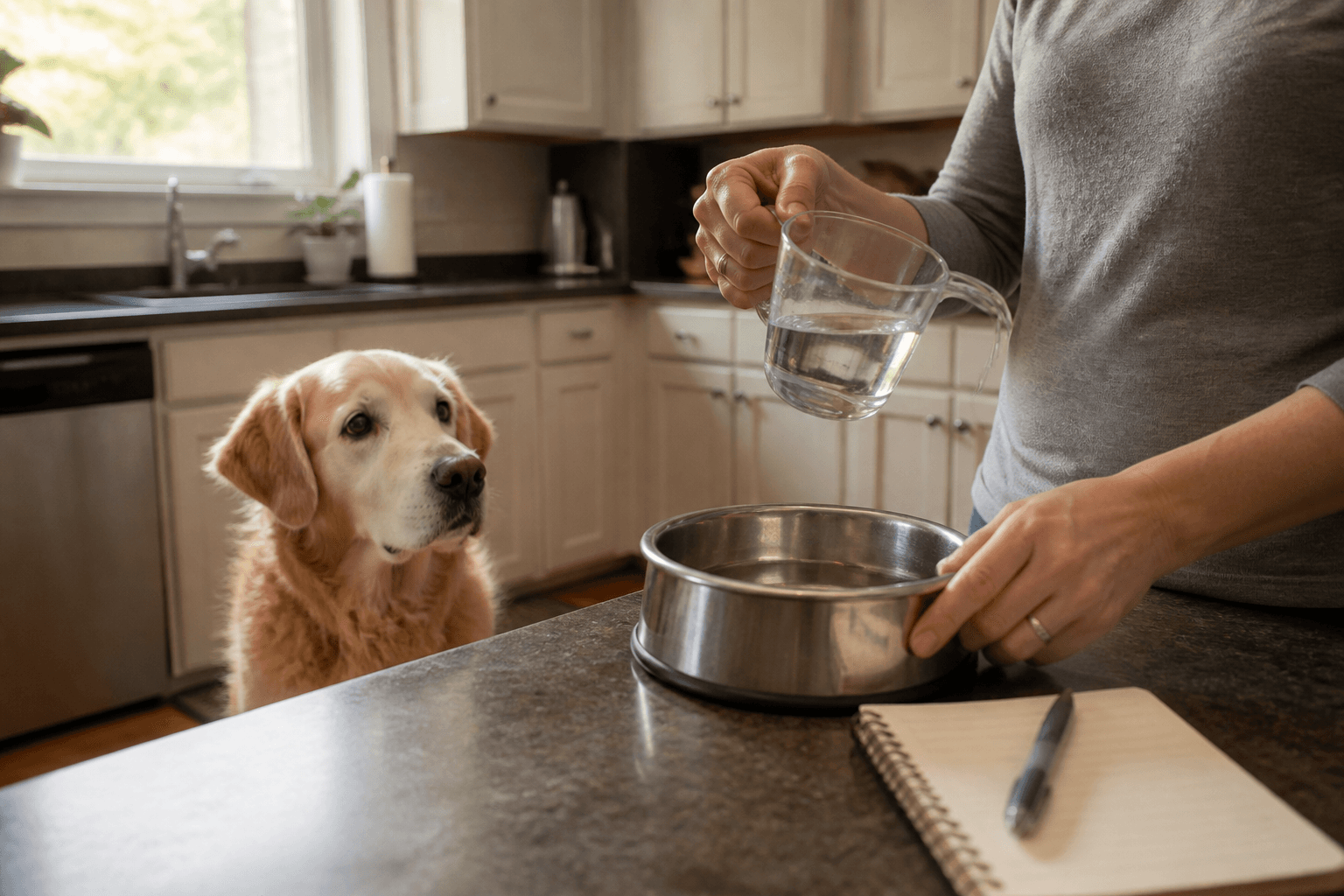
A simple trick: for two or three days, measure how much you fill the bowl (American cup or bottle with marking). Also note how many times he asks to go out to pee. Many people discover that their dog doesn't drink “just quickly” — he drinks more than before.

What can go wrong when you drink too quickly

Vomiting or regurgitation of water

The stomach receives too much liquid at once. In a healthy dog, it may be an isolated episode — especially after exercise. If repeated, it irritates the digestive tract and can lead to dehydration if the dog does not retain water.

Swallowing air (aerophagia)

Drinking in a hurry often brings air into the stomach. In many dogs this only causes discomfort or burping. In deep-chested breeds (e.g., Great Dane, Shepherd, Weimaraner), the combination of a full stomach, air and stress is a scenario that veterinarians associate with greater vigilance for bloat.

Vacuuming

Less common, more serious: if the dog chokes and inhales water, there may be aspiration pneumonia. Be suspicious if persistent cough, fever, or wheezing after violent drinking/vomiting episode.

Confusing “quickly” with “very”

The owner sees the bowl empty in seconds and thinks it's just anxiety. But if it fills up five times a day when it used to be twice, the problem is polyphagia/polydipsia (increased thirst) — the subject of the article about older dog that drinks too much water and blood/urine tests.

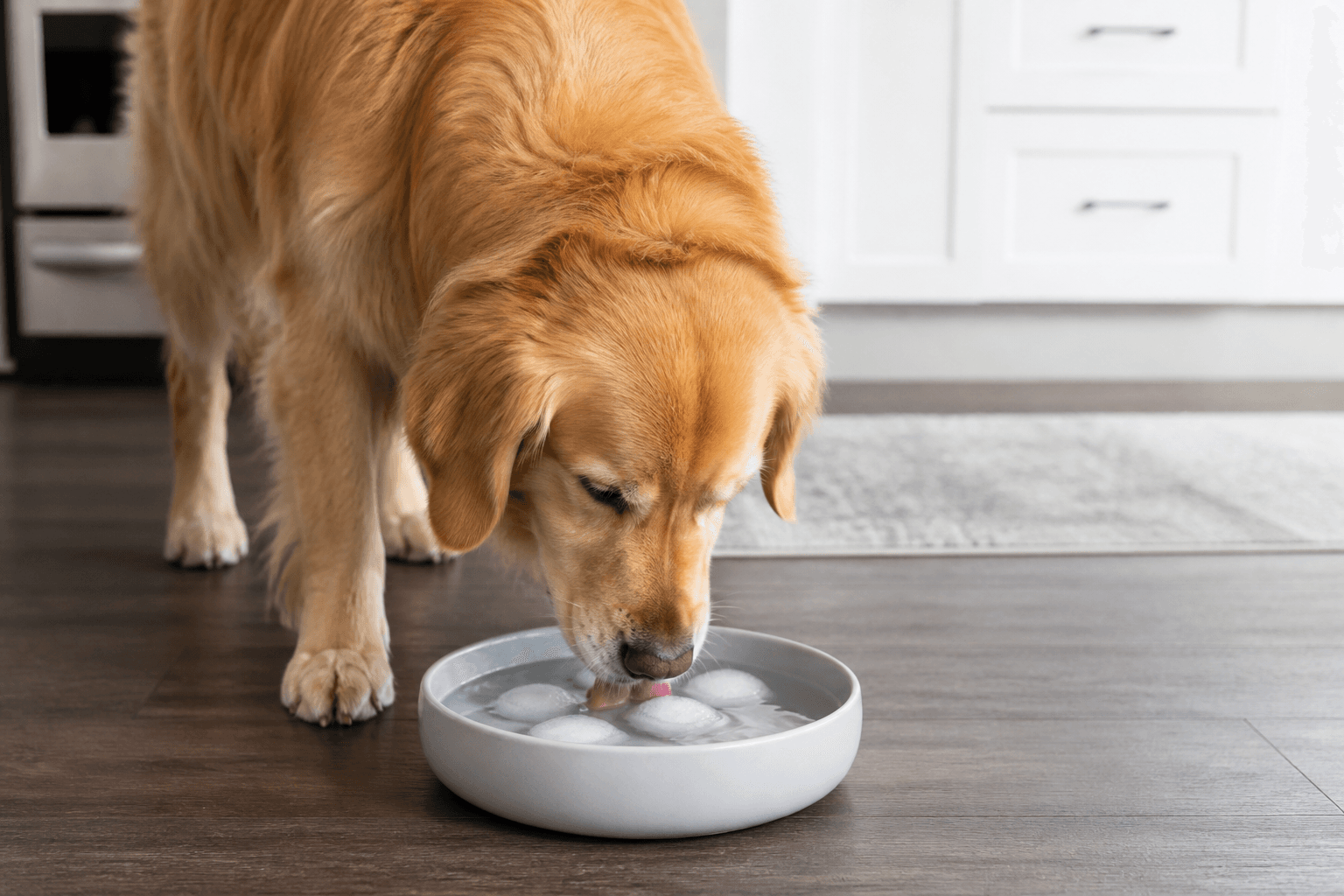
Tigela larga com acessório para desacelerar a ingestão de água
Image credit: Acervo pessoal: DogWise

How to know if it is a habit or a medical alert

Use this handy filter:

Most habit-friendly:

  • occasional episode, with clear context (heat, long walk);
  • total volume of water on the stable day;
  • normal pee;
  • stable weight;
  • at most rare regurgitation;
  • normal mood and appetite.

More compatible with investigating:

  • drink quickly every day, without a clear trigger;
  • clearly larger total volume;
  • peeing more frequently or in greater volume;
  • weight loss;
  • repeated vomiting after drinking;
  • lethargy, confusion or signs of pain.

Pain when moving can reduce going to the bowl and cause a thirst “attack” afterwards — see how to know if your dog is in pain.

What to do at home (without restricting water)

Never remove water completely thinking he drinks too much. Abrupt restriction worsens dehydration if illness is present.

Slow down intake

  • Offer smaller portions several times a day.
  • Use a wide and shallow bowl (less deep “diving”).
  • Place clean stones or anti-gulping accessory at the bottom (supervised).
  • After the ride, offer water in breaks before filling up again.
  • On hot days, cool water in the shade — real thirst also speeds up drinking.

Routine that helps

  • Bowl always available prevents thirst “attack” for hours without drinking.
  • In homes with more than one dog, separate bowls in different corners reduce competition.
  • Avoid intense exercise immediately before/after a large meal + liters of water at once (a combination that owners of large breeds usually monitor).

Active puppies and dogs

Puppy plays, forgets the bowl and then attacks the water — common pattern. The care is the same: smaller portions after running, shade and breaks. Very athletic adult dogs may repeat the thirst-cum-cum-swallowing cycle after training. It is not automatically an illness, but frequent vomiting deserves a conversation with the veterinarian.

If you vomited water once

In an alert dog, without other signs:

  • Wait 15–30 minutes.
  • Offer a few sips or ice cubes to lick.
  • Watch. If you keep water and eat normally, write down the episode.

If you vomit again, can't retain water, or seem lethargic, make an appointment.

When to make an appointment — and when it’s an emergency

Short-term consultation if:

  • vomits water frequently;
  • total thirst increased (not just speed);
  • pee increased;
  • lost weight or changed appetite;
  • new pattern persists for more than a week.

Emergency if you notice:

  • swollen or hard abdomen;
  • attempt to vomit without producing anything (retching);
  • extreme restlessness, prolonged “prayer” position with pain;
  • pale or bluish gums;
  • collapse, sudden weakness;
  • vomiting with blood or black stools.

When in doubt between “waiting” and “going now”, choose the path that protects the animal.

What to take to the vet

  • How many times you fill the bowl per day (estimate in liters).
  • If you vomit only water or food.
  • 10–20 second drinking video.
  • Changes in food, medicine, walks, heat.
  • Age, breed, castration.

Common tests when thirst is suspected: blood, urine and, if indicated, imaging tests — the veterinarian decides as appropriate.

Tutor medindo água com copo ao lado da tigela do cachorro
Image credit: Acervo pessoal: DogWise

Common mistakes

  1. Finding that an anti-gulping bowl solves everything. It helps with the habit; does not treat diabetes or kidney.
  2. Restrict water. Dangerous.
  3. Normalize frequent vomiting. “It’s always been like this” is not diagnostic.
  4. Confusing regurgitation with vomiting. Regurgitation is passive; vomiting takes effort. Both deserve attention if repeated.
  5. Ignore elderly. Age + thirst + confusion = investigate, not just slow down.

Frequently asked questions

Dog drinks water too quickly: is it normal?

Maybe, if it's occasional, the dog is fine and the total volume for the day hasn't changed. Persistence or repeated vomiting is not “just personality”.

Why do you vomit water right after drinking it?

Many times the stomach was overwhelmed. Once, after exercise, it may be benign. Repetition calls for evaluation.

Do I need a special bowl?

Can help with anxious or post-walk dogs. It does not replace examination if thirst has really increased.

Puppy drinks quickly: should I be worried?

Puppies play and forget to drink; then they attack the bowl. Observe volume, pee, energy and vomiting. Persistence or lethargy → veterinarian.

Are large breeds more at risk?

Deep-chested breeds have increased vigilance for bloat/GDV. Slowing down intake and knowing emergency signs is part of responsible care.

Can I give cold water after the tour?

Yes, in small sips. The problem is not the temperature, but the volume at once. Let it breathe for a minute, offer a little, wait, offer again.

Does drinking fast cause diabetes?

No. Diabetes can increase thirst; the dog then drinks more—sometimes quickly, sometimes not. The cause is medical, not drinking style.

Conclusion

A dog that drinks water too quickly may just be quenching its accumulated thirst — or showing that its body is asking for more water than before. Habit is resolved with routine, smaller portions and calm; Real risk appears with repeated vomiting, increased overall thirst, increased peeing or signs of emergency.

Look at the volume of the day, not just the ten-second spectacle in the bowl. Slow down safely, never restrict water on your own, and make an appointment when the pattern changes. Taking good care is knowing when it's simple management — and when it's time to investigate.