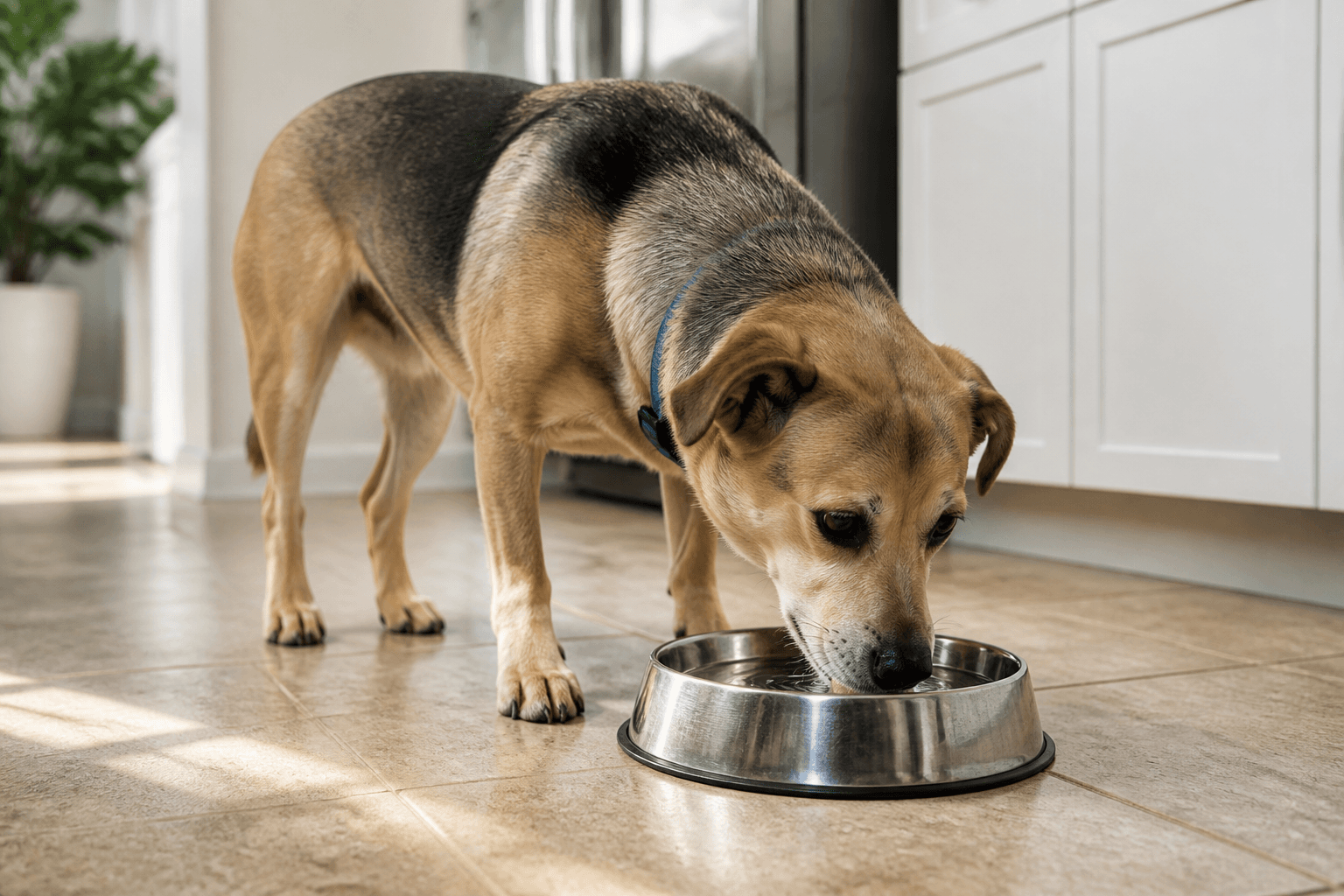
Cão bebendo água em pote de aço inoxidável no chão da cozinha

Image credit: Acervo pessoal: DogWise

Health9 min readPublished on August 26, 2026

Dog drinks a lot of water and pees a lot: what does that usually mean?

You refill the bowl. Two hours later it is almost empty. On the walk, the dog stops again and again. At home, urine shows up on the rug — and this dog was always housetrained. The question that tightens your chest is simple: is this heat, dry food… or a sign the body needs help?

When drinking a lot of water and peeing a lot show up together, the combo deserves attention. Not because every case is severe, but because several conditions use exactly those two signs. The good news: you do not need to guess the diagnosis at home. You need to observe with a method, not remove the water, and know when to call the clinic.

This text is educational and does not replace evaluation, tests, or guidance from a veterinarian.

The direct answer (so you are not left in the dark)

Increased thirst (polydipsia) and increased urine (polyuria) often travel together. In many cases the dog makes more urine and drinks more to avoid dehydration — or drinks more and therefore urinates more. At home you almost never know which came first just by “eyeballing” it.

What it usually means in guardian practice:

  • a real pattern change (not only one hot day);
  • needing to go out more often or new accidents;
  • a bowl that empties much faster than usual;
  • sometimes other signs: weight loss, different hunger, vomiting, lethargy, infections.

What it does not mean by itself: the name of the disease. Kidneys, diabetes, hormones, infection, medication, diet, and heat all sit on the list the veterinarian sorts. Your job is to bring facts, not conclusions.

If your dog is older, also read the article about a senior dog that drinks too much water: age raises the chance of investigation, but the thirst + urine combo matters at any life stage.

“Normal” thirst versus a change that matters

Every dog drinks more on some days: heat, a long walk, intense play, drier food, a salty treat. That exists. Trouble starts when the change:

  • lasts several days in a row;
  • appears suddenly and does not reverse;
  • comes with much more urine;
  • arrives with other symptoms;
  • leaves the animal “different” — less energy, more hunger, less hunger, vomiting, house soiling.

Do not use an internet number as a diagnosis. Weight, age, food, weather, and health change intake. The value of a home measurement is comparing your dog with himself and handing that to the professional.

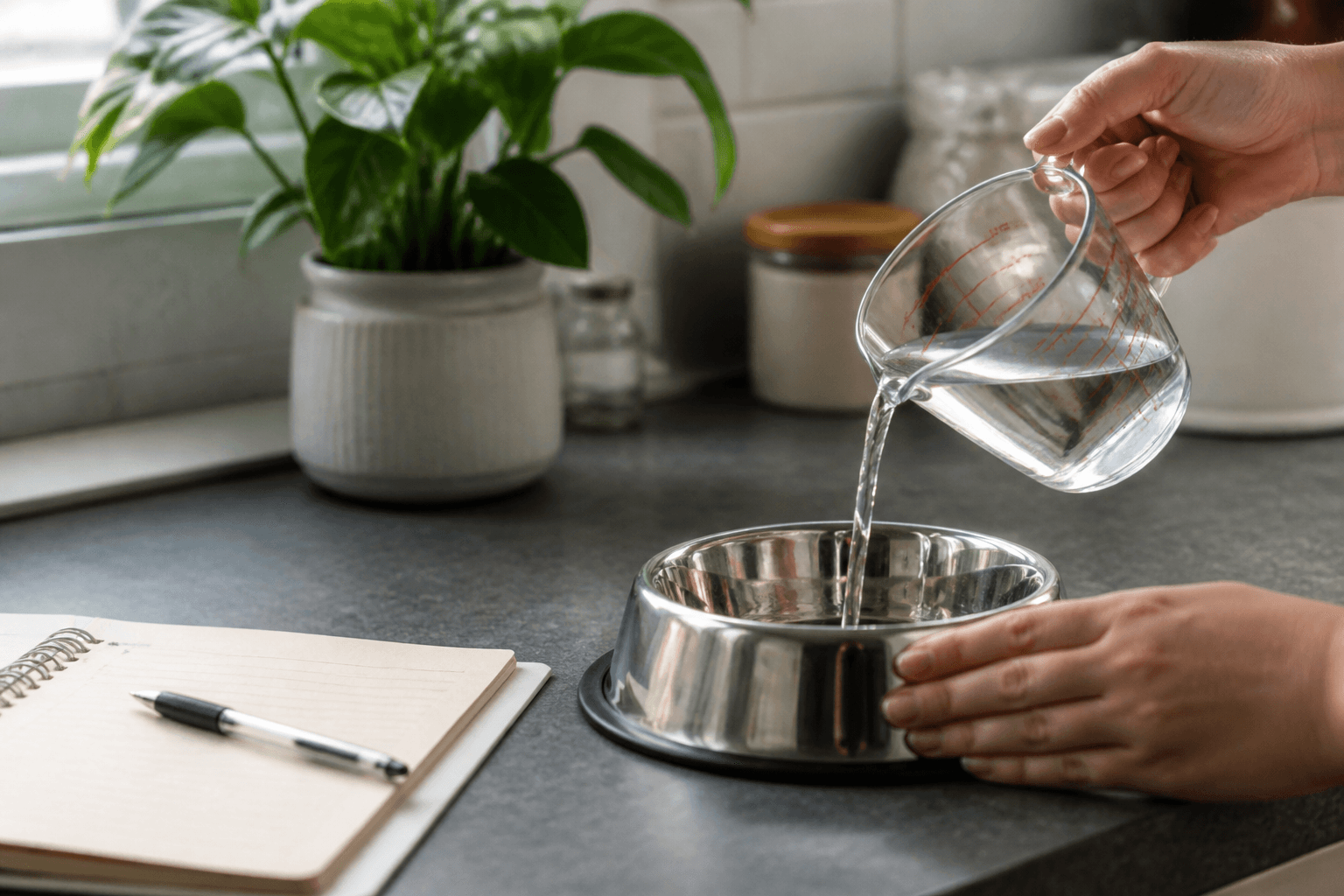
How to measure water without becoming obsessed

Keep a short log for one to three days if the dog is stable and the clinic can be scheduled. If he is unwell, go before you “finish the spreadsheet.”

Simple steps:

  1. Use a clean bowl and, if possible, a measure (jug or mark on the container).
  2. Note how much you put in and how much is left at the end of the period.
  3. Add water from wet food, authorized broth, and other sources.
  4. In a multi-dog home, try separate bowls under supervision — otherwise the number lies.
  5. Do not reduce water to “make the math work.”

Also note: food type, amount, medications, home temperature, and whether there was a long walk. Those details save time at the appointment.

Peeing a lot is not the same as “straining to pee”

“Pees a lot” can mean different things:

  • Large volume, few or many times: the dog is producing more urine.
  • Many times, small volume, straining, pain, blood, dribbling: that can be another kind of alert (for example irritation or obstruction) and needs a quick call to the clinic.

Do not wait until the weekend to “see if it passes” if there is straining to urinate, almost no urine, visible blood, strong pain, or weakness. Those scenarios are urgent.

An accident in a trained dog is also not “stubbornness.” It can be larger volume, pain when rising, a routine change, or a urinary problem. Scolding does not treat the cause — it only raises stress.

Mãos medindo água com jarra graduada antes de colocar no pote do cão
Image credit: Acervo pessoal: DogWise

What may be behind it (without a DIY diagnosis checklist)

The veterinarian considers a wide range. In guardian language, groups often mentioned in general guidance include:

  • kidney changes;
  • diabetes mellitus;
  • hormonal imbalances (for example related to cortisol);
  • urinary infection or inflammation;
  • medication effects (such as some corticosteroids — never stop them on your own);
  • diet and environment changes;
  • other systemic diseases that only tests help separate.

The American Veterinary Medical Association page on diabetes in pets explains, in language for guardians, that increased thirst and urine can be part of the picture — and that the path starts with a visit, not a home remedy.

Again: listing possible causes does not authorize picking one and treating at home.

Signs that raise urgency

Book an evaluation soon if thirst and urine rose and stay that way, even if the dog “seems fine.”

Call sooner if you notice:

  • weight loss or a strange belly gain;
  • much greater hunger or appetite disappearing;
  • vomiting;
  • repeating skin or urine infections;
  • new tiredness;
  • frequent nighttime urination;
  • strongly changed breath odor;
  • an intact female with discharge, lethargy, or a growing belly (can be an emergency).

Seek urgent care if there is:

  • collapse, disorientation, or intense weakness;
  • repeated vomiting or inability to keep water down;
  • breathing difficulty;
  • straining to urinate with little or no urine;
  • obvious blood;
  • intense pain or a very sensitive abdomen;
  • suspected poison or wrong medication;
  • rapid worsening in a few hours.

What not to do while you wait for the appointment

Do not remove the water. Limiting the bowl to reduce urine can dehydrate or worsen a problem already underway. If accidents bother you, add short outdoor trips, use pee pads or temporary protection — without punishing.

Do not give human medicine, tea, “diuretic tea,” kidney supplements, or internet formulas. Do not switch on your own to “renal” or “diabetic” food on suspicion. Therapeutic diets have indications; used at the wrong time they can hurt.

Do not force water with a syringe if the dog already drinks alone. If he cannot drink or is very weak, that is a reason for care, not improvisation.

Do not delay the visit to “test” new medicines or diets. Each day of delay can mean less useful information and more risk in some conditions.

How to prepare the visit in 10 minutes

Bring (or have on your phone):

  • approximate water per day;
  • how often he asks to go out and whether there are accidents;
  • food type and brand, amount, treats;
  • list of medicines and supplements (name, dose, since when);
  • recent weight, if you know it;
  • short videos of difficulty urinating, limping, or getting up;
  • old lab results, if they exist.

Say clearly: “it started X days ago,” “it got worse at night,” “he lost weight by eye,” “the bowl empties Y times.” Concrete phrases help more than “he seems off.”

At the clinic the professional may ask for blood, urine, blood pressure, imaging, or other tests. A urine sample sometimes helps — ask first how to collect it. Do not interpret lab results alone on your phone.

At home: adaptations that help without “normalizing” the symptom

While you investigate:

  • leave clean water in more than one spot if the house is large;
  • use a stable bowl and non-slip flooring;
  • clear the path to the door at night (soft light, obstacles out of the way);
  • agree with the family: nobody removes the bowl “just a little”;
  • assign one person to the log.

These measures improve wellbeing. They do not replace finding out why thirst and urine rose together.

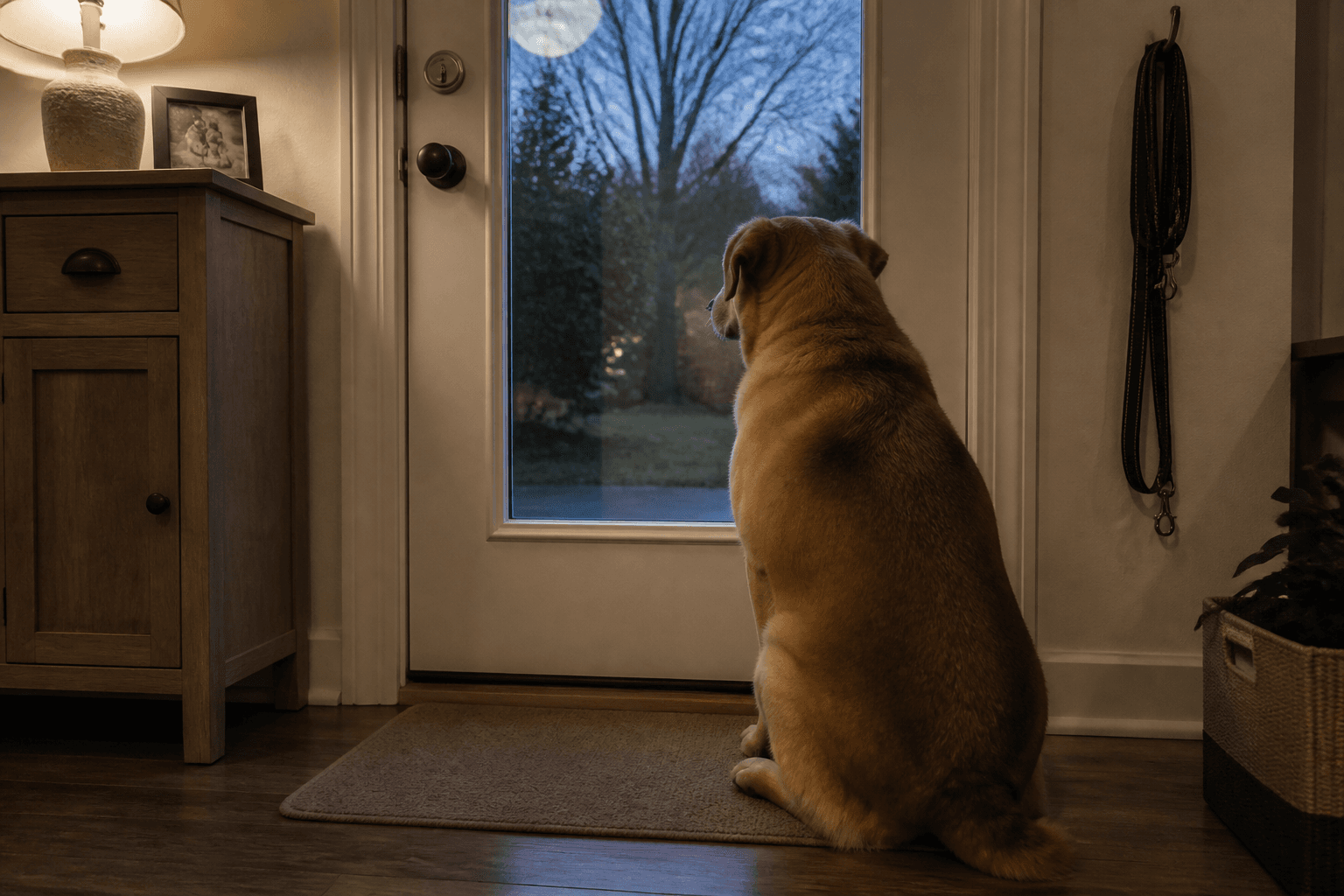
Cão idoso esperando junto à porta para sair e fazer xixi à noite
Image credit: Acervo pessoal: DogWise

Puppy, adult, and senior: what changes in the reading

  • Puppy: drinks and plays with water; still, diarrhea, vomiting, lethargy, or straining to pee need evaluation.
  • Adult: a sudden pattern change deserves a log and a visit.
  • Senior: the same combo is often investigated with higher priority because some diseases become more common with age — without accepting everything as “just old age.”

If the question is specifically the senior and measuring the bowl, the text on when to worry about thirst in a senior dog goes deeper on that angle.

After the diagnosis: keep watching with purpose

If there is treatment, ask:

  • what should improve and in how long;
  • which signs need an urgent return;
  • whether daily water measuring is still useful;
  • what to do on hot days or food changes.

Do not adjust medicine doses based on whether the bowl “fills or empties.” A hot day changes intake. Use the trend and talk to the clinic.

Frequently asked questions

Is drinking a lot and peeing a lot always disease?

Not always. Heat, exercise, and drier food raise intake. But when both signs rise together and persist, the chance of needing investigation goes up — and only the veterinarian separates environment from clinical cause.

Can I remove water at night so he does not pee in the house?

Do not do that on your own. If the body is making more urine because of a medical condition, cutting water can harm him. Offer a nighttime outing and protect the floor until you have guidance.

Does dry kibble explain everything?

It can increase water taken from the bowl compared with wetter food. It does not alone explain marked thirst and urine, weight loss, vomiting, or new tiredness.

What if it is diabetes?

Diabetes is one of the possibilities the veterinarian considers. The AVMA describes increased thirst and urine among signs that bring guardians in. Only exam and evaluation confirm — and management is individual.

How long can I wait to book?

If the dog is stable, with no urgency signs, book soon and log water/urine. If there is straining to urinate, blood, weakness, repeated vomiting, or rapid worsening, do not wait.

Do I need to bring urine to the first visit?

Ask the clinic. Sometimes yes; sometimes the team prefers to collect at the appointment. Wrong container or timing can spoil the test.

Conclusion

A dog that drinks a lot of water and pees a lot is asking for serious observation, not improvised medicine. Confirm the change, keep water available, tell large volume apart from straining, note food and medicines, and bring objective facts to the visit.

Do not remove the bowl to control the house. Do not diagnose via Google. Use the log to speed the veterinarian’s work — and seek urgent help if straining to urinate, blood, intense weakness, or rapid worsening appears. Good care starts by noticing the pattern; real treatment starts at the clinic.