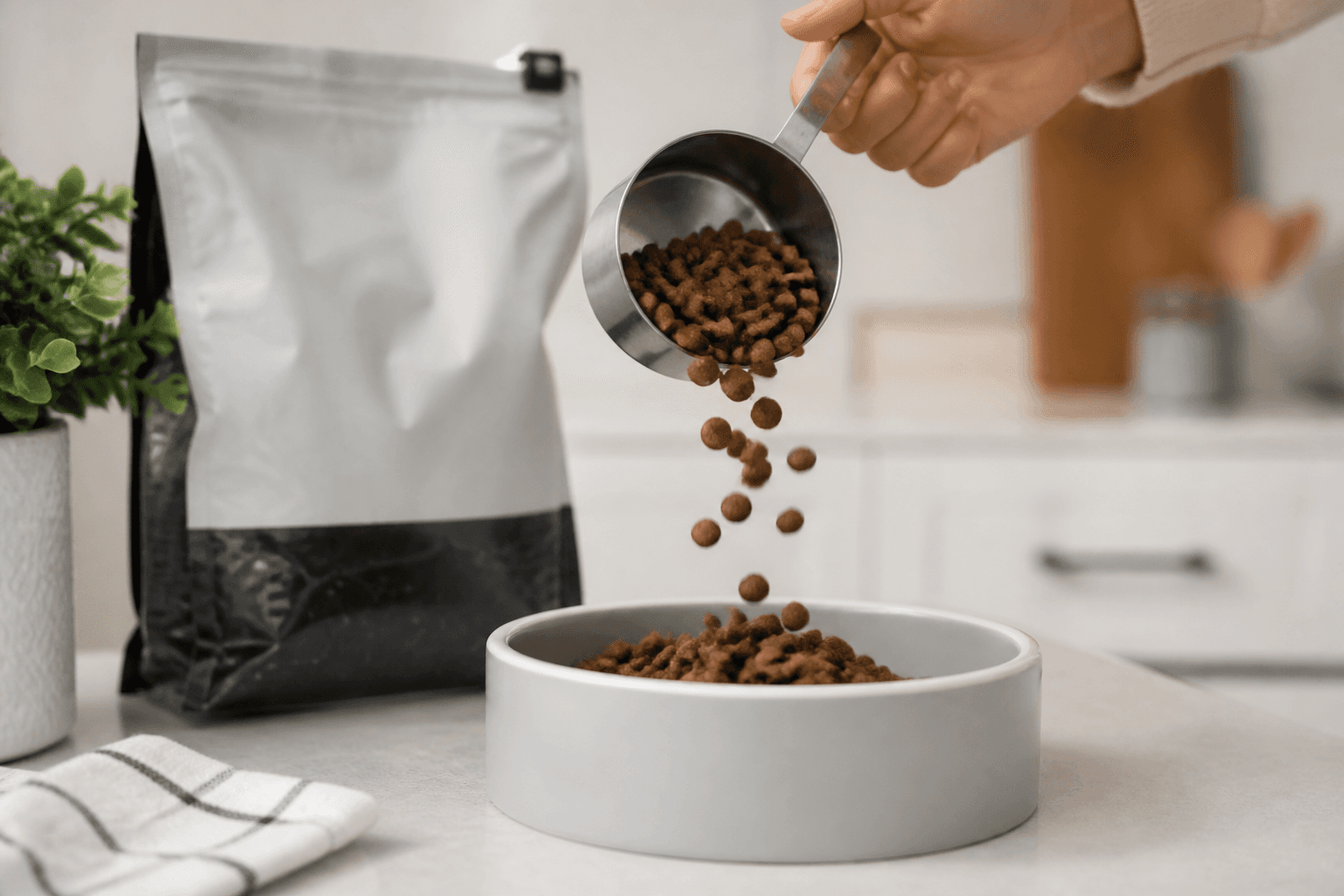
Copo medidor servindo ração seca na tigela do cachorro

Image credit: Acervo pessoal: DogWise

Nutrition7 min readPublished on August 25, 2026

Dog food: how much to feed, how to choose, and when to switch

You type “dog food” into Google and see brands, prices, and opinions. The real question is usually different: how much to give, what to choose, and how to switch without making your dog sick.

This text answers that in plain language. No fluff. No “best food in the world.” Just what helps day to day — and what usually goes wrong.

Quick answer: the right food depends on age, size, and weight. Amount starts on the package chart and is adjusted by looking at the dog’s body. Switching food? Do it slowly. This content is educational and does not replace a veterinary visit.

Serious makers, like Royal Canin in Brazil, stress that the puppy-to-adult change should be gradual and planned with a veterinarian. Keep that in mind.
What people want to know about dog food

Searches for dog food almost always land on these questions:

  • How much food per day?
  • How many times should a dog eat?
  • Can a puppy eat adult food?
  • When to switch from puppy to adult food?
  • How to change brands without diarrhea?
  • Wet or dry food?

Let’s go step by step.

How much dog food to give (no guessing)

The most common mistake is serving “by eye.” The other is following the chart without looking at the dog.

Do this:

  1. Check the package for weight and age ranges.
  2. Use that amount as a starting point.
  3. In 1–2 weeks, check the body: ribs easy to feel (without bones sticking out), waist visible from above.
  4. If he gains weight, reduce a little. If he loses too much or seems low on energy, increase carefully — and talk to a veterinarian if the doubt remains.

Treats count. Too many biscuits “because he asked” become extra weight fast.

How many times per day?

  • Puppy: several small meals (the rhythm changes with age; a veterinarian helps adjust).
  • Adult: usually 2 meals (morning and late afternoon) work well for most dogs.
  • 1 meal only: some adults eat this way, but in large deep-chested dogs a veterinarian may prefer splitting meals — a conversation beats an internet rule.

Fixed times help the gut and behavior.

How to choose dog food (without falling for marketing)

On the shelf, every bag looks “premium.” Filter like this:

  • Right age: puppy, adult, or senior.
  • Size: small, medium, large (this changes kibble size and formula).
  • Complete: the food should cover the day’s meals, not only be a “topper.”
  • Your dog: allergy, sensitive stomach, overweight, or disease need veterinary guidance — not influencer rankings.

Does a high price help? Not always. A very low price is not always a bargain either: you may pay later in problems.

If the coat looks dull and you want to switch brands every week, pause. The piece on a dull coat even with premium food reminds you: sometimes the issue is not only the bag.

Puppy and adult food: can you mix them?

A puppy should not live on adult food instead of a growth formula. He needs energy and nutrients in the right balance to grow.

The puppy → adult switch is not the same day for everyone:

  • small breeds often mature earlier
  • large and giant breeds take longer

So “at how many months do I switch?” has no single answer for every dog. A veterinarian looks at size, weight, and health. In large breeds, growing too fast is a classic concern — the article on a Great Dane puppy touches that for giant size.

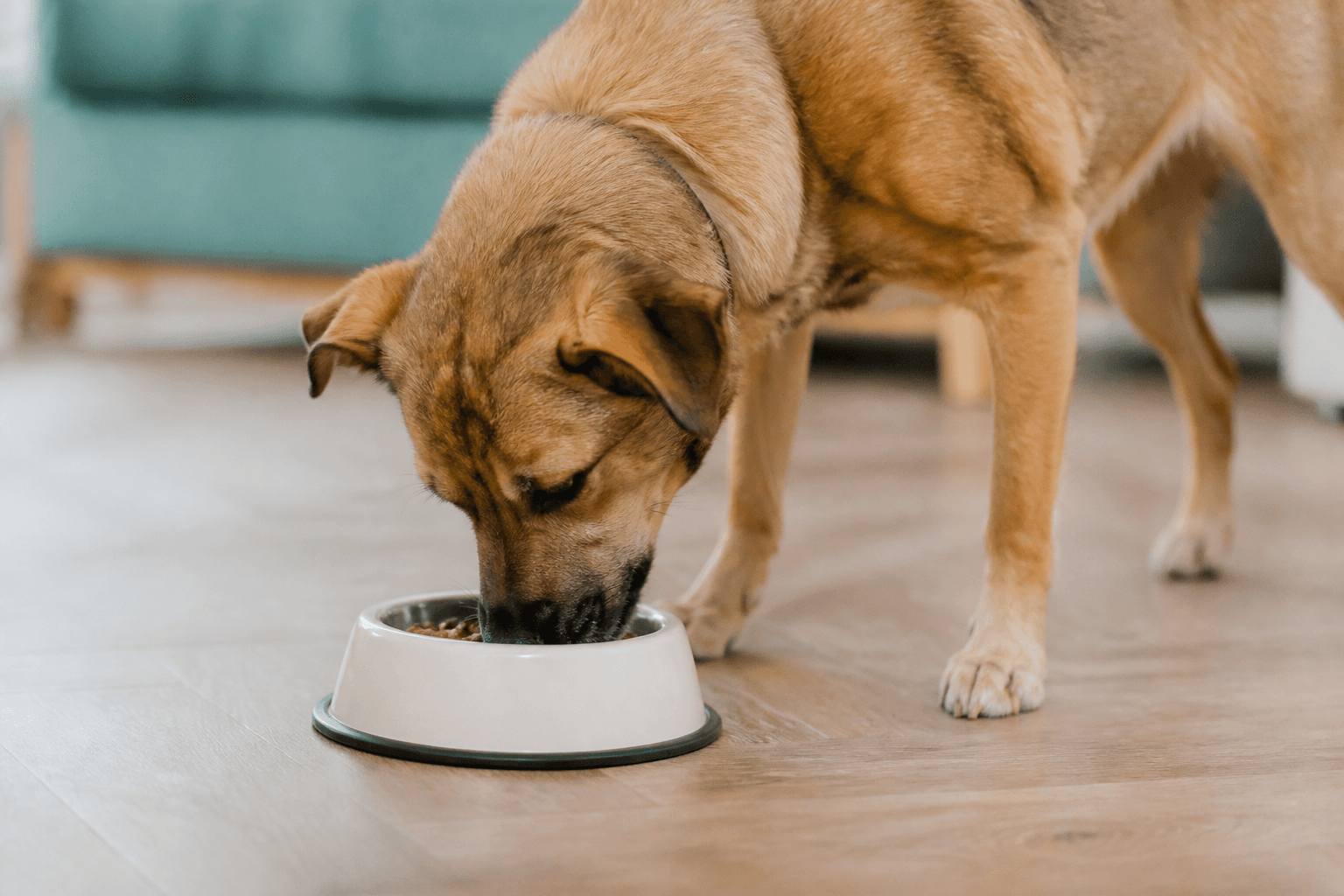
Cão comendo ração seca com calma em ambiente doméstico
Image credit: Acervo pessoal: DogWise

How to switch dog food without an upset stomach

A sudden switch = soft stool, gas, vomiting. The safe path is mixing little by little, for about 7 days (sometimes more if the dog is sensitive).

A common rhythm:

  • days 1–2: more old, little new
  • days 3–4: half and half
  • days 5–6: more new
  • day 7: only new

If the stool softens, go back one step and wait. Do not force “finish it fast.”

Even changing only the flavor in the same brand, go slowly. The gut notices.

Purina Brazil also describes gradual switching as a practical rule — use it as a general reference and adjust with a veterinarian if there is disease.

Dry, wet, or canned?

Here the “dog food” search meets another doubt:

  • Dry: practical, easy to measure, usually lasts longer.
  • Wet / canned: more water in the meal; many dogs like the smell more.

You can mix them. What matters is the total amount for the day. Can details are in canned dog food. In hot weather, also see wet or dry food on hot days.

Signs the food (or the amount) is not working

Watch for:

  • diarrhea or repeated vomiting after a switch
  • strong itching that starts with the new food
  • fast weight gain or loss
  • a dog always “hungry” even on a high portion (habit or health)
  • low energy, bloody stool, hard belly → veterinarian, not “one more brand”

Do not switch bags every week trying to guess. That hurts more than it helps.

A routine that makes life easier

  • Clean bowl, clean water always.
  • Stable times.
  • Measure with a cup or kitchen scale.
  • Keep food closed in a dry place; do not leave the bag open to moisture.
  • Note lot and best-by — useful for complaints or recalls.

The FDA reminds basic buying and handling tips for pet food: damaged packaging, for example, is not worth the discount.

Classic mistakes when hunting for the “best food”

  • Choosing only by price or only by ads.
  • Ignoring age and size.
  • Giving too many treats and blaming the food for weight.
  • Switching overnight “because the bag ran out.”
  • Using seasoned human food as if it were dog food.
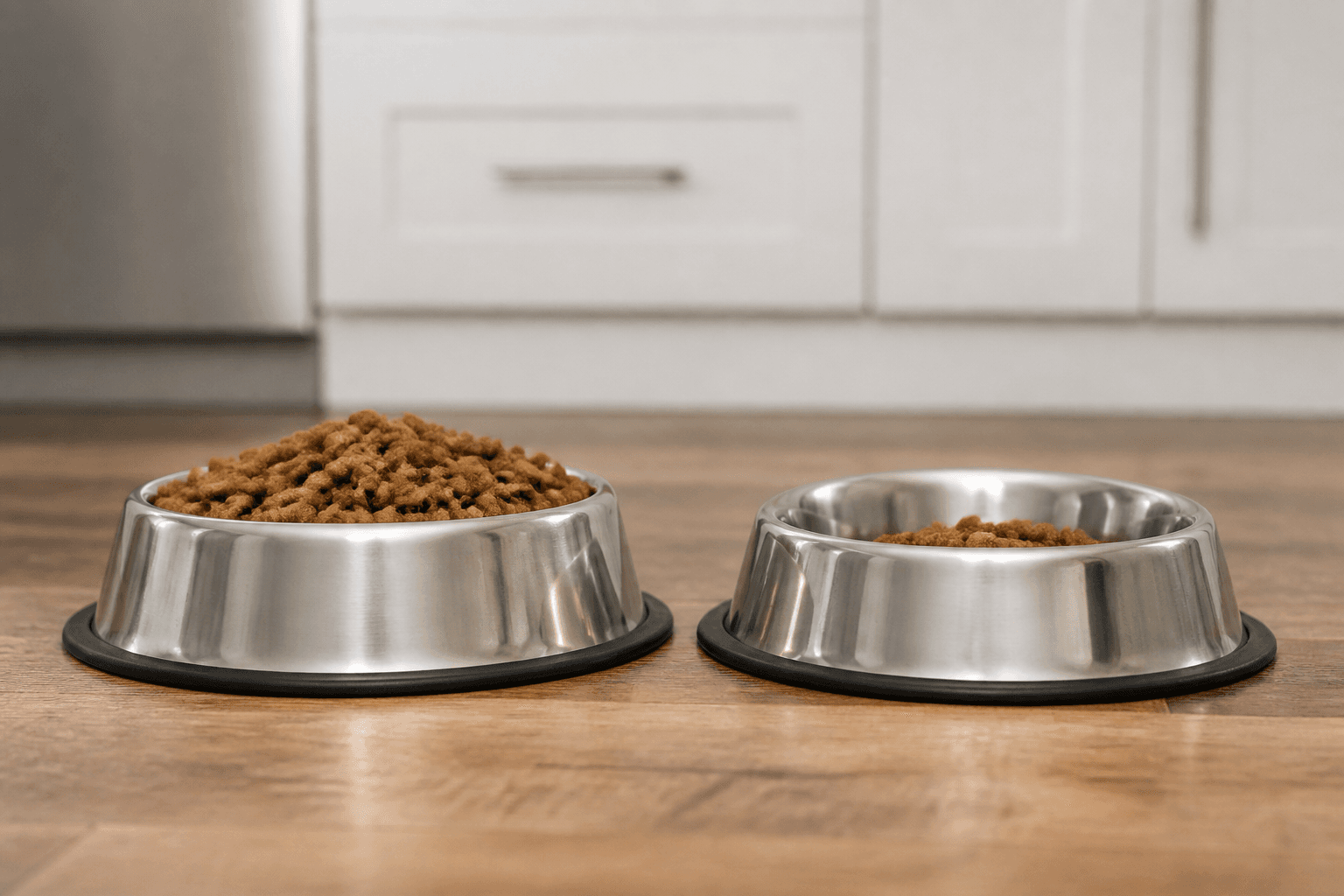
Duas tigelas com porções diferentes de ração para comparar quantidade
Image credit: Acervo pessoal: DogWise

Water, bowls, and what to do if he “won’t stop asking”

Good food without clean water is incomplete care. Change water often. Wash the bowl — old leftovers smell bad and attract pests.

If your dog begs all the time, do not raise the portion on impulse. It may be habit, boredom, or irregular routine. It may be health. Log 3 days: how much he ate, how many treats, how the stool looked. Take that to a veterinarian if hunger seems odd or comes with weight loss, too much thirst, or vomiting.

A dog that gains “just a little” every month becomes a quiet problem. Better to adjust early than chase a miracle later.

And if he refuses food from one day to the next? Check if the bag is old, damp, or smells odd. Check if you changed brands without a transition. If refusal comes with lethargy or vomiting, do not force — seek care.

Want a plan for today?

  1. Open the current bag and check age and size fit.
  2. Measure the chart portion and serve in 2 meals (adult).
  3. In 10 days, feel the ribs and look at the waist.
  4. If switching brands, use the 7-day mix.
  5. If there is vomiting, strong diarrhea, or intense itching, stop the switch and call a veterinarian.

That simple. Dog food does not need to be a mystery — it needs a method.

Frequently asked questions

How much food should an adult dog eat?

Start with the package chart by weight. Adjust by looking at the body. Treats count.

How many times a day should a dog eat?

Adults: usually 2 times. Puppies: more times, smaller portions. Confirm with your veterinarian.

Can a puppy eat adult food?

Not as the main diet. Use puppy food until the life-stage switch, at the right time for size.

How do I switch food without diarrhea?

Mix little by little for about 7 days. If stool softens, go back one step.

What is the best dog food?

There is no single “best” for every dog. There is the right fit for age, size, health, and routine — with veterinary help when needed.

Can I wet dry food?

Yes, if it helps acceptance. Serve and do not leave it for hours in the heat. Watch stool and appetite.

Conclusion

Dog food gets easy when you stop hunting a “miracle brand” and look at the basics: age, size, measured amount, gradual switches, and body signs. Use the chart as a start, adjust calmly, and ask a veterinarian if something looks off.

Want to go further? Also see our pieces on canned food and wet or dry in the heat — and choose what fits your dog, not shelf hype.