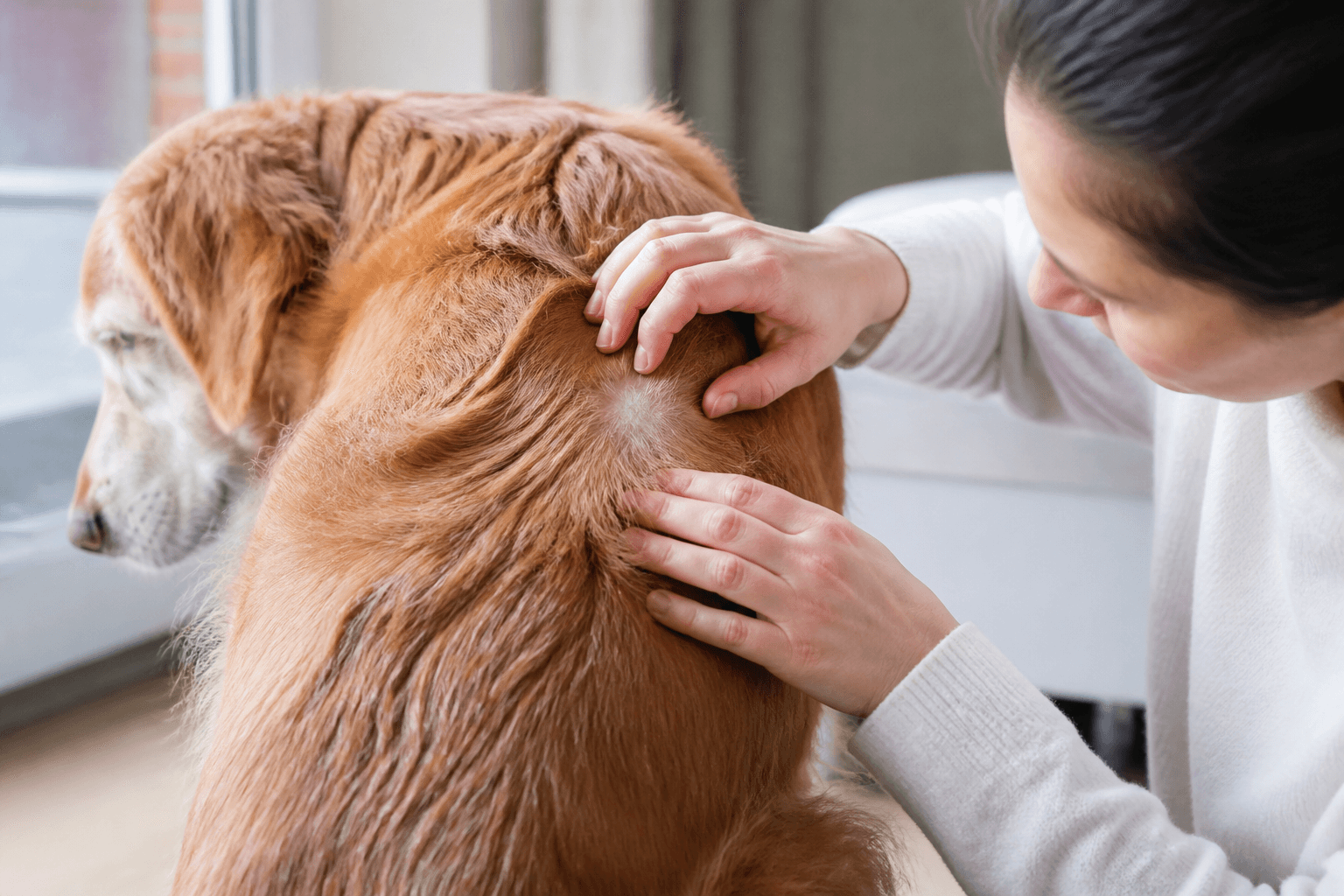
Tutor separando o pelo opaco do cão para observar a pele com boa iluminação

Image credit: Acervo pessoal: DogWise

Nutrition9 min readPublished on August 17, 2026

Opaque coat even with premium food: what to investigate before changing everything

A dull coat does not automatically mean that the food is bad, just as the word “premium” does not guarantee that every dog ​​will have a shiny coat. The appearance of the mantle depends on healthy skin, adequate food intake, digestion, life stage, bathing, brushing, parasites, environment and clinical conditions. Changing everything at the first sign can create gastrointestinal discomfort and erase important clues.

The most efficient way is to separate appearance from symptom. Naturally coarse fur, seasonal change, and cosmetic damage call for an approach; itching, breakouts, redness, odor, crusting or weight loss call for another. Before purchasing a new package, record when you started, what has changed and how the skin under the strands feels.
“Premium” is a commercial category, not diagnostic

Positioning terms vary between manufacturers and markets. They may indicate a product proposal, but they do not replace reading the label or confirm individual suitability. A food can be complete for a certain stage of life and still be offered in incorrect quantities, stored poorly or supplemented with so many extras that the total diet becomes unbalanced.

The useful question is not “which food makes the coat more beautiful?”, but rather “does the dog receive and enjoy adequate nutrition while its skin and body are healthy?”. This change avoids looking for a cosmetic solution to a dermatological, parasitic, hormonal or management problem.

The World Small Animal Veterinary Association provides global resources for professionals and owners, including materials related to nutrition. When evaluating food, give more weight to responsible formulation, quality control, life stage suitability and veterinary guidance than to flashy words on the front of the package.

Start by looking at the skin, not the glow

Separate the hair with your fingers in different areas: back, belly, armpits, base of the tail, ears and paws. Look for redness, peeling, oiliness, sores, scabs, dark spots, parasites, moisture, or an unusual smell. Do this in good light and without rubbing painful areas.

Also observe the behavior. Does the dog scratch, lick or bite more? Do you rub your face on the couch? Do you wake up at night to lick it? Shake your ears? Repeated damage caused by itching can break strands and remove shine before a clear flaw appears.

Photograph the areas at the same angle and lighting. Images from different days help to see progression. Do not apply oil, perfume, ointment or human product to “test”: in addition to irritating, this changes the appearance and makes evaluation difficult.

See your veterinarian when there is persistent itching, hairless areas, inflamed skin, secretion, strong odor, wounds, pain or rapid worsening. A consultation is also important if the dull coat comes with weight loss, increased thirst, changes in stool, vomiting, apathy or a marked change in appetite.

Make a timeline of the last eight weeks

Pelage does not respond instantly. The thread seen today reflects processes from previous weeks. Therefore, just remembering yesterday's meal is not very useful. Register:

  • when the opacity was noticed and in which regions;
  • change of food, flavor, batch or quantity;
  • opening and storing the package;
  • frequency of baths and product used;
  • use of antiparasitics as prescribed;
  • starting medications or supplements;
  • changes of home, climate, routine and stress;
  • changes in weight, stool and appetite.

A change of bath may coincide with the opening of a new feed. Without a timeline, food gets the blame for proximity. With dates, the veterinarian can prioritize hypotheses and decide whether a controlled dietary change makes sense.

Review how much the dog actually eats

The portion in the jar is not necessarily the portion eaten. In homes with more dogs, one may steal from the other. Sore teeth, nausea or difficulty reaching the feeder can reduce consumption. Some animals select supplements and leave the main diet.

Measure the food and the rest. Write down snacks, leftovers, chews, toy stuffing and foods used for medication. If too many extras occupy the day, the dog may consume enough calories while reducing the amount of the complete food that would provide nutrients in planned proportions.

Do not conclude that increasing the portion improves the coat. Excess energy favors weight gain without correcting a dermatological cause. The amount must follow weight, body condition, activity and professional recommendation.

Also confirm the indicated life stage. Puppies, adults, elderly people, pregnant women and dogs with illnesses may have different needs. “Fits all” needs to be checked on the label and discussed accordingly.

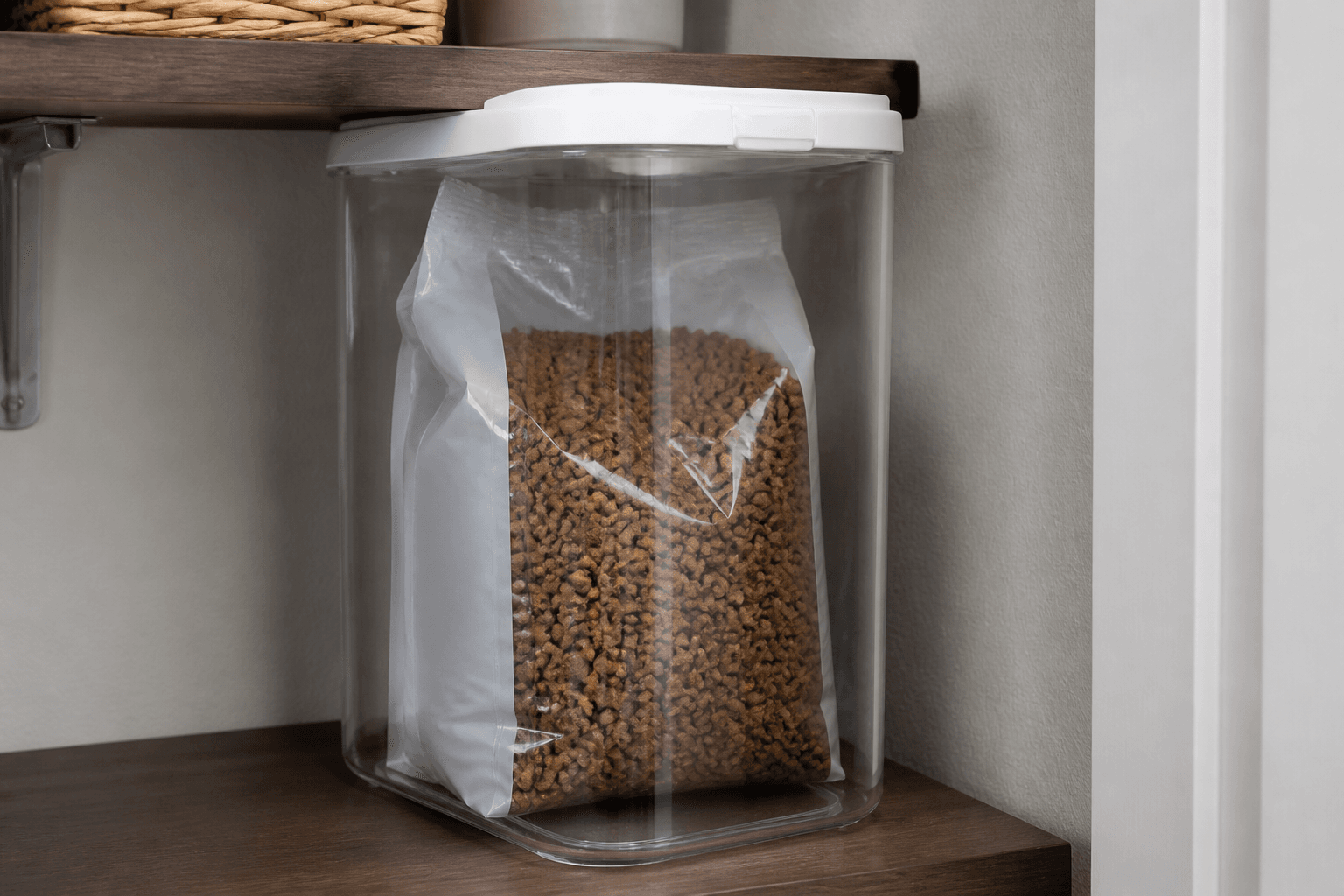
Embalagem original de ração bem fechada dentro de recipiente limpo e seco
Image credit: Acervo pessoal: DogWise

Storage can ruin a good choice

Heat, humidity, air and light affect quality over time. Keep the food in its original, tightly closed packaging, inside a clean container if you want additional protection. The packaging preserves batch and expiration information and was designed as a barrier; Dumping successive packages into a box with old waste encourages contamination and rancidity.

Do not purchase volume that will remain open for a period of time that is incompatible with the manufacturer's instructions. Observe smell, color, presence of insects, humidity and integrity. If you notice a change, stop offering and contact the manufacturer and veterinarian, saving the batch and photos.

Wash jars regularly and dry before serving. Containers that are scratched or difficult to clean accumulate residue. This alone does not usually explain a generalized dull coat, but is part of coherent management.

Too much bathing and too little bathing leave similar clues

Frequent baths with an inappropriate product can remove protective oil, dry out the skin and break hair. Long intervals in a dog that requires specific hygiene can allow dirt and oil to accumulate. There is no universal calendar for all breeds, coats and diseases.

Use only product recommended for dogs and rinse thoroughly. Human shampoo has characteristics formulated for other skin. Poor drying leaves moisture close to the body; Excessive heat from the dryer also damages and irritates. In dense coats, professional technique can make a difference.

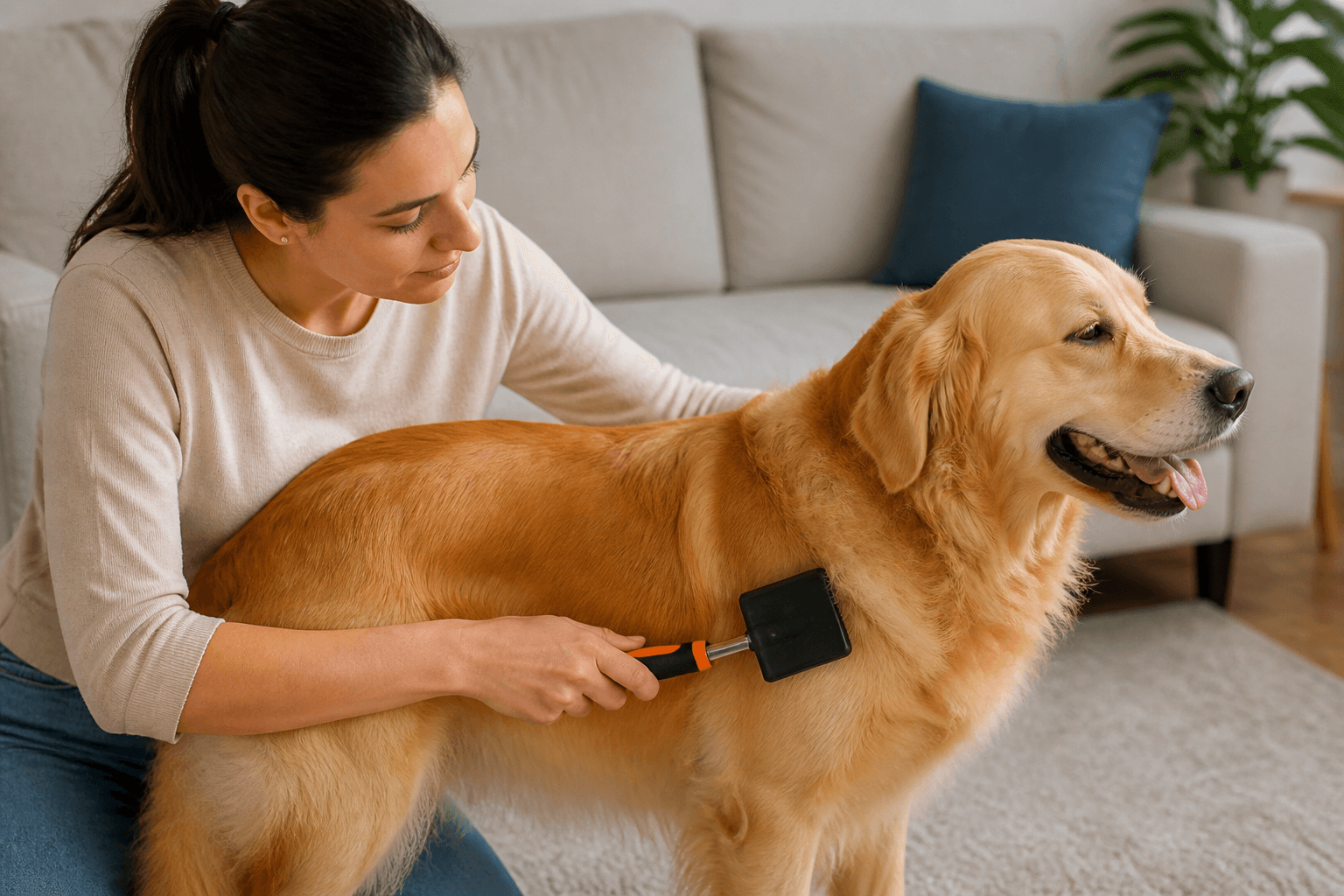
Brushing distributes oil, removes loose hairs and reveals changes, but the wrong tool breaks the coat or hurts it. Ask for advice on your hair type. Unnecessarily close grooming can change the texture and exposure of the skin, especially in double coats.

If the opacity started after bathing and grooming, report the products and procedures used. This does not prove the establishment's error, it just adds context.

Parasites and allergies do not respect the price of food

Fleas, mites and other parasites can cause itching, inflammation and hair breakage. The tutor does not always see the agent. Irregular control or product inappropriate for the weight and species leaves gaps. Never combine antiparasitics on your own; toxicity and interactions are possible.

Environmental and food allergies and contact reactions can affect the skin. However, diagnosing “food allergy” just because the coat has lost shine leads to random changes. Elimination diets, when indicated, require formulation, duration and control of everything the dog ingests. Switching proteins without a method may reduce future options and not produce an interpretable response.

If there is itching, recurrent ear infections, paw licking or lesions, seek a dermatological evaluation. Food is a possible piece, not the automatic suspect.

When nutrition deserves direct investigation

Nutrition comes into focus when the diet is not complete for the life stage, the amount ingested is insufficient, there are too many supplements, inadequate storage or signs of poor digestion and absorption. Bulky or altered stools, weight loss, vomiting, and unusual appetite should be reported.

Homemade diets need to be formulated by a qualified professional. Intuitively chosen meat, rice and vegetables do not guarantee balance. Recipes found on the internet may lack nutrients or provide excess. Supplementing on top does not safely correct it either.

Oils and supplements sold for “skin and coat” are not neutral. They can add calories, cause diarrhea, interact with clinical conditions or unbalance the diet. The type, dose and need must be defined with your veterinarian. More doesn't mean better.

The dry or wet form of the food also does not alone determine the quality of the coat. To understand practical differences in hydration and routine, see wet or dry food on hot days. The choice must consider the complete diet, not just the water content.

Cão sendo escovado com ferramenta adequada enquanto o tutor observa a pelagem
Image credit: Acervo pessoal: DogWise

How to make a food exchange that can be evaluated

If the veterinarian recommends a change, define a goal: improve digestive tolerance, meet life stage, conduct food testing or adjust energy density. Without a goal, any improvement or worsening will be difficult to interpret.

Make the transition at a guided pace, generally mixing progressive proportions when there is no different clinical indication. Observe appetite, stool, vomiting, itching and skin. Change one factor at a time whenever possible. Changing food, shampoo and antiparasitic in the same week prevents knowing which factor interfered.

Save exact name, batch, dates and portions. Do not compare brightness under different lighting; evaluate standardized photos and skin examination. New hair growth takes time, so promises of results in a few days should be viewed with caution.

If the dog worsens during the transition, contact the clinic. Do not go from one package to another indefinitely, as this can prolong symptoms and cause gastrointestinal disorders.

A practical guide before buying another food

First, confirm whether there are signs that call for immediate consultation. Second, gently photograph and examine the skin. Third, make a timeline of food, baths, parasites and medications. Fourth, measure consumption and extras. Fifth, check the label, expiration date, batch and storage.

With this data, talk to your veterinarian. The professional may recommend a clinical examination, dermatological evaluation, tests or nutritional review. Sometimes the solution lies in bath management; in others, to treat a disease. And there are cases where changing your diet is, in fact, part of the plan. The difference is to exchange with a hypothesis and a method.

Frequently asked questions

Does dull hair mean lack of vitamins?

Not necessarily. It may reflect inadequate care, hair breakage, parasites, inflammation, poor diet, or illness. Supplementing without diagnosis can be useless or harmful.

Can I give oil to make the hair shine?

Not without guidance. Oils add fat and calories, can cause discomfort and do not treat the source. If a specific fatty acid is indicated, the professional will define the product and dose.

How long does a new food take to improve the coat?

There is no single deadline. Skin may respond sooner, while new hairs take longer to grow. The result depends on the cause; If it is not nutritional, changing food may not help.

Does a weekly bath leave the coat opaque?

It may be appropriate for some dogs and excessive for others. Product, rinsing, drying, skin disease and coat type matter more than an isolated rule. Request an individual calendar.

Should I change the food if the dog also scratches?

Not automatically. Itching has several causes. Seek evaluation and avoid successive changes, as a valid food test requires strict diet and control.

Conclusion

Dull fur is a clue, not a verdict on feed. Before changing everything, evaluate the skin, behavior, actual consumption, extras, storage, baths and protection against parasites. Record dates and photos to transform an aesthetic impression into useful clinical information.

Consult your veterinarian if you notice itching, lesions, odor, defects, digestive symptoms or general changes. When food change is indicated, do it with purpose, transition and monitoring. This sequence protects the dog from random experiences and increases the chance of finding the real cause.