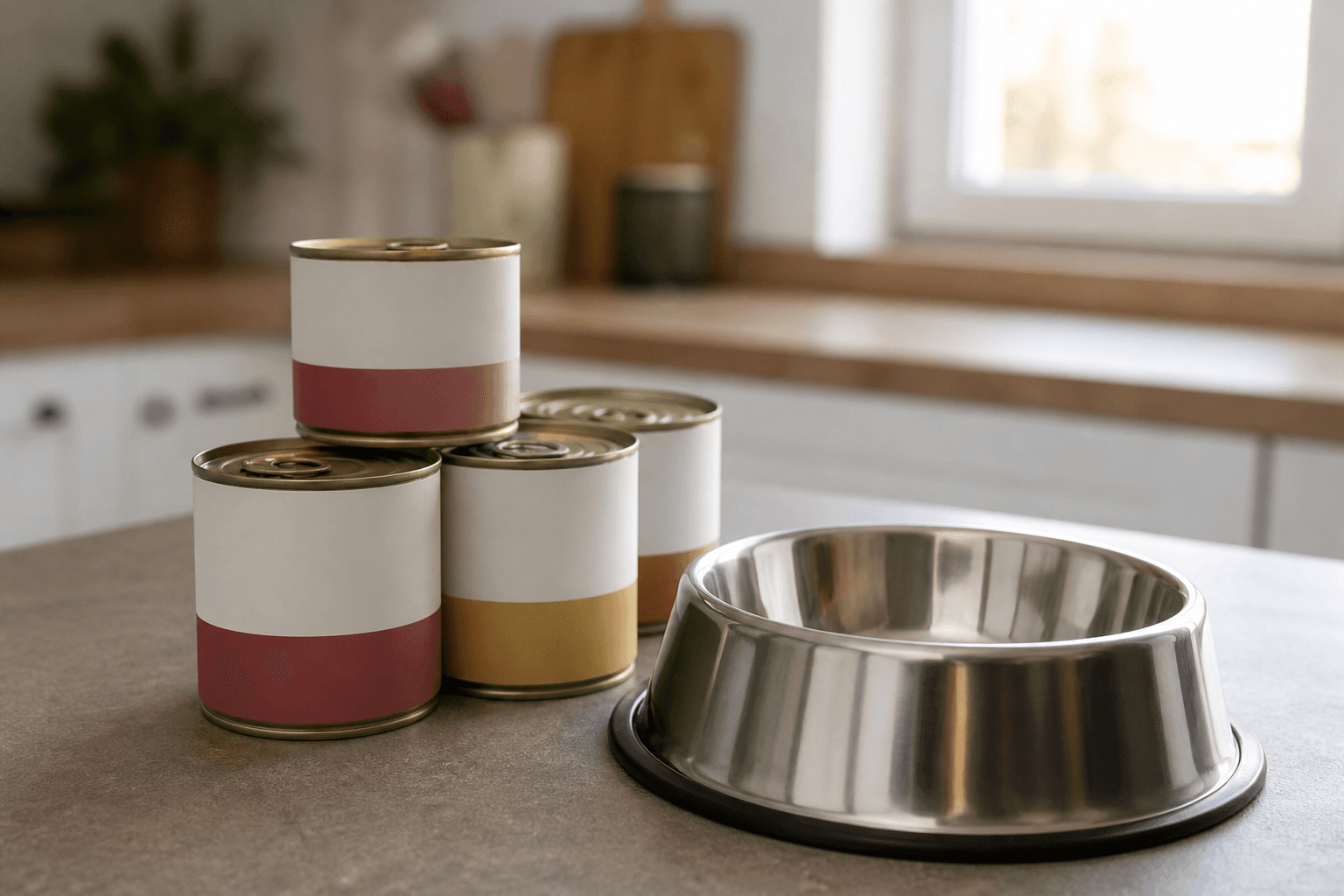
Latas de ração úmida para cães e tigela limpa sobre bancada de cozinha

Image credit: Acervo pessoal: DogWise

Nutrition8 min readPublished on August 24, 2026

Canned dog food: worth it or just marketing?

You stop at the shelf, see a pretty can, and wonder: “Is canned dog food really better?” Sometimes the doubt comes from somewhere else: your dog got bored of dry food, eats little, or you read online about a canned dog food recall.

Take a breath. You can decide calmly.

Quick answer: wet canned food (pâté, chunks in gravy, and similar) can be worth it. But it is not “magic” just because it comes in a can. What matters is your dog, the label, the portion, and care after opening. This text is educational and does not replace a veterinary visit.

Below you will see when the can helps, when it hurts, how to read the label, and what to do if a recall appears. The FDA shares simple tips for buying and handling pet food — for example: do not buy a damaged can.
Why so many people search for canned dog food

Common searches mix curiosity and fear:

  • canned dog food
  • wet canned food / dog pâté
  • wet vs dry food
  • “is it bad?”, shelf life, recall

When news about metal or foreign material shows up, interest rises. The point is not panic. It is knowing what to check on your can.

Canned food is not all the same

There is smooth pâté. There are chunks in gravy. There are cans meant to be the full daily meal. There are cans meant more as a topper (a boost, not the whole meal).

Before you look at price, read:

  • is it for dogs?
  • puppy, adult, or senior?
  • is it a complete food or only a complement?

Complete and complementary are not the same. Swapping them “by eye” confuses the diet.

If your doubt is heat and food acceptance, also see wet or dry food on hot days. Here the focus is the can.

When canned food really helps

Your dog eats better

Many dogs like wet smell and texture more. If he is eating poorly after a routine change, a can may help — with veterinary guidance when there is illness.

Just do not turn the bowl into “new flavors every week.” That upsets the stomach.

More water in the meal

Wet food brings more water. That can help dogs that drink little. But if a dog drinks too much, or changes how he drinks, talk to a veterinarian. We have a piece on a senior dog that drinks too much water.

Easier portions

Cans and pouches help you serve little and right — especially for small dogs. The trick is measuring. “Finishing the can” is not a health rule.

Mixing with dry food

You can put a little canned food on top of kibble. It works well if you count calories. Mixing without measuring is a classic path to quiet weight gain.

When the can becomes a problem

A pretty package does not prove quality

A meat photo and “special recipe” words are not enough. Look at ingredients, who it is for, and whether it is complete food. If your dog has allergy, kidney issues, or another problem, ask the veterinarian before switching.

Dented, swollen, leaking, or rusty cans

Do not buy. Do not “save” them. A weird can is a risk. If the dog already ate it and got sick, note lot and best-by and seek care.

Leaving food in the bowl for hours

Wet canned food spoils faster than dry food. Serve, wait a reasonable time, remove leftovers, and wash the bowl. In hot weather, this matters even more.

Switching brands all the time

Sudden changes often mean soft stools. Change little by little, unless the veterinarian asks for another plan.

Human canned food is not dog food

A supermarket can for people, with seasoning, onion, garlic, or lots of fat, is not a safe shortcut. Use food made for dogs.

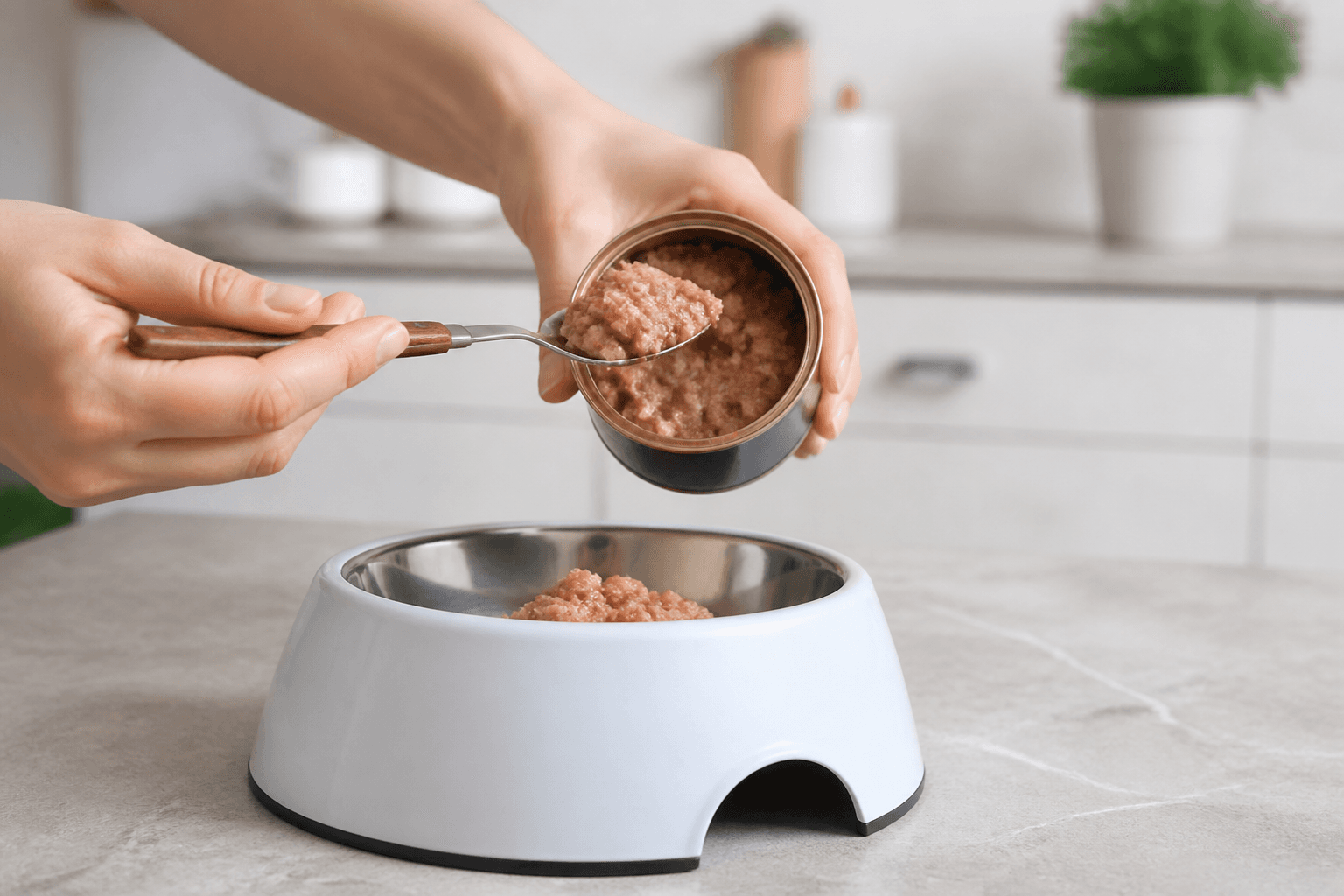
Mãos servindo patê enlatado de ração úmida na tigela do cão
Image credit: Acervo pessoal: DogWise

How to read the label (simple steps)

  1. Is it for dogs? Which age?
  2. Is it complete or only a complement?
  3. Look at the list and the numbers (protein, fat, moisture). Use them to talk with the veterinarian — not to “diagnose” at home.
  4. Find lot, best-by, and manufacturer. You will need them if something goes wrong.
  5. Read how to store after opening.

If the coat looks dull and you want to switch food every week, pause. The article on a dull coat even with premium food helps you see the full picture.

How to store the can without scares

The FDA also talks about safe storage of pet food and treats. In practice:

  • Closed can: cool, dry place.
  • Open can: move leftovers to a clean covered container in the fridge, as the label says.
  • Write the day you opened it.
  • Do not mix old leftovers with a new can in a dirty bowl.

Keeping lot and best-by handy helps if you need to report a problem or check a recall.

A recall came out: what to do now

Sometimes there is an alert about wet food with metal or other foreign material. Your job is not to spread fear. It is to check your package.

Do this:

  1. Stop feeding the suspect lot until you confirm.
  2. Match brand, flavor, weight, lot, and best-by with the official notice.
  3. Photo the can and keep the receipt if you have one.
  4. If the dog ate it and has vomiting, low energy, no appetite, hard belly, choking, or another strong sign, go to the veterinarian with the package.
  5. When it makes sense, report the problem through official channels (in the US, the FDA explains how).

One recall does not prove “all canned food is dangerous.” And a famous brand does not mean you can ignore the alert.

Canned or dry: which to choose?

Dry food is usually more practical and cheaper per calorie. Canned food often tastes better and brings more water in the meal.

Many people mix both. The “best” option is what your dog accepts, keeps a healthy weight, and the veterinarian approves. A dog with health issues should not follow social-media rankings.

A simple daily plan

  • Decide: is the can the base, a mix, or just a topper?
  • Measure the portion. Do not serve “until it is empty.”
  • If the dog only ate dry food, change slowly.
  • Watch stools, vomiting, itching, and energy for a few days.
  • Keep clean water available even with wet food.
  • For travel, plan a cooler bag.

Tasty food without measuring also causes weight gain — in puppies and adults.

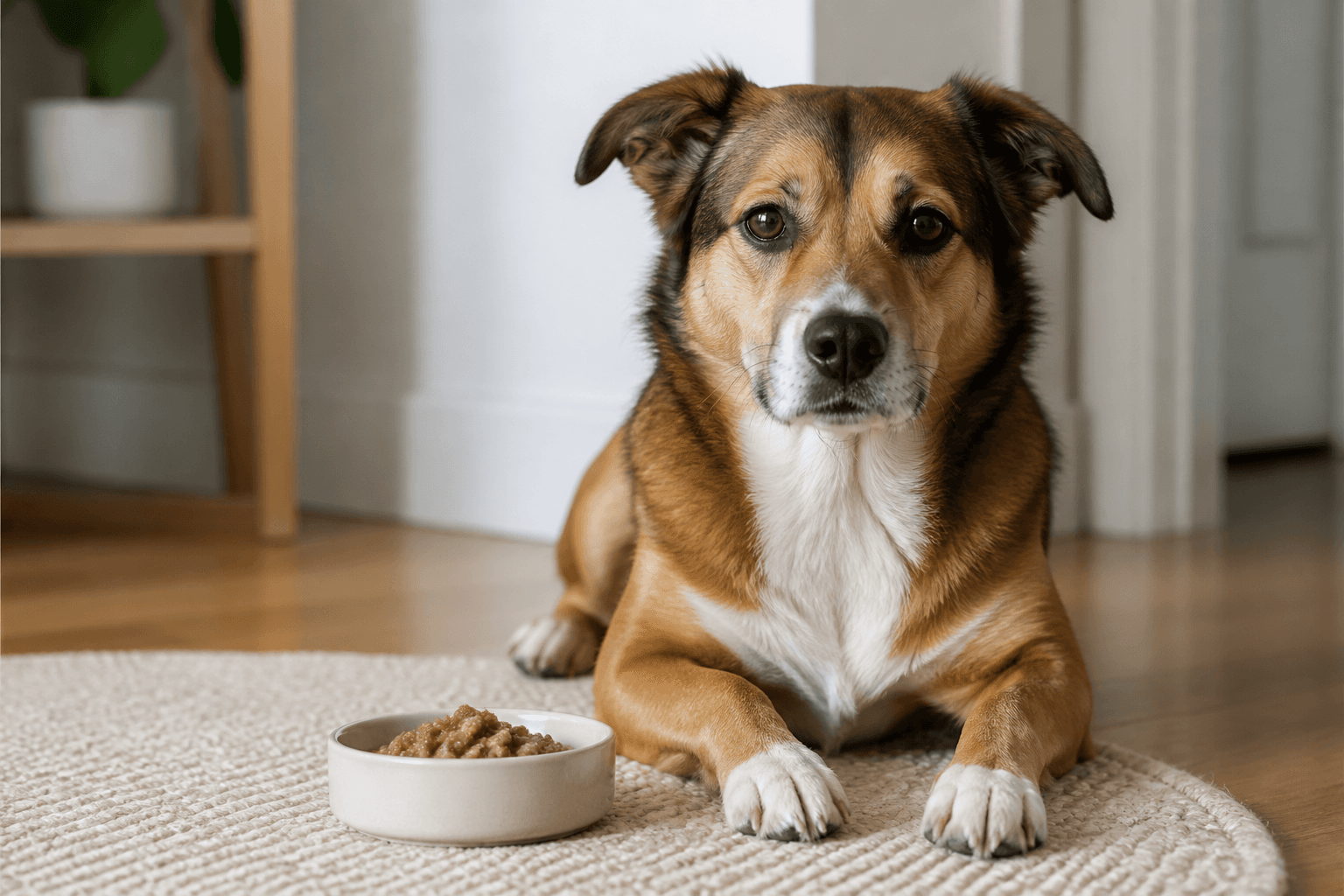
Cão aguardando ao lado da tigela com ração enlatada servida
Image credit: Acervo pessoal: DogWise

Mistakes almost everyone makes

  • Buying for the pretty can and forgetting the dog’s age.
  • Thinking a high price saves poorly stored food.
  • Leaving an open can in the heat and serving it “if it smells fine.”
  • Using canned food as an unlimited treat.
  • Switching brands with every headline without checking the lot at home.

Want to start today? Do this quick check

Before you buy more cans, look at what you already have:

  1. Is the can dented, swollen, or leaking? If yes, do not use it.
  2. Does the label say it is for dogs and for his age?
  3. Is it complete food or only a complement?
  4. Do you measure the portion, or serve “by eye”?
  5. After opening, do you store it right in the fridge?

If any answer is “I don’t know,” fix that first. Good canned food on the shelf becomes a problem fast on a hot counter or in a forgotten bowl.

And if you want to mix with dry food: start with a little, watch the stool for two or three days, then increase. Your dog tells you with his body — soft stool, vomiting, or low energy mean pause, and a vet if needed.

Frequently asked questions

Does canned dog food make dogs fatter?

What causes weight gain is eating too much, not the can itself. Because wet food looks “small,” people often serve more. Measure.

Can a dog eat only canned food for life?

If it is a complete food for the right age, and you track weight and stools (and see a vet when needed), many dogs do well. Check the label.

Is pâté better than chunks in gravy?

It depends on the dog. Texture changes taste. Quality is not only the format.

Can I buy a dented can?

Better not. Choose a package in good condition.

Is human canned food OK for dogs?

No. Wrong seasonings and ingredients are a risk. Use food made for dogs.

I saw a foreign recall. Does my can in Brazil count?

Only if brand, product, market, and lot match the notice. Compare the package. Do not generalize to every can.

Conclusion

Canned dog food can be great day to day — especially if your dog eats better and you control the portion. The safe path is simple: right label, sound can, hygiene after opening, and calm if a recall appears.

Use serious sources such as the FDA tips on safe pet-food handling, talk to your veterinarian when needed, and choose the can for your dog — not for shelf marketing.