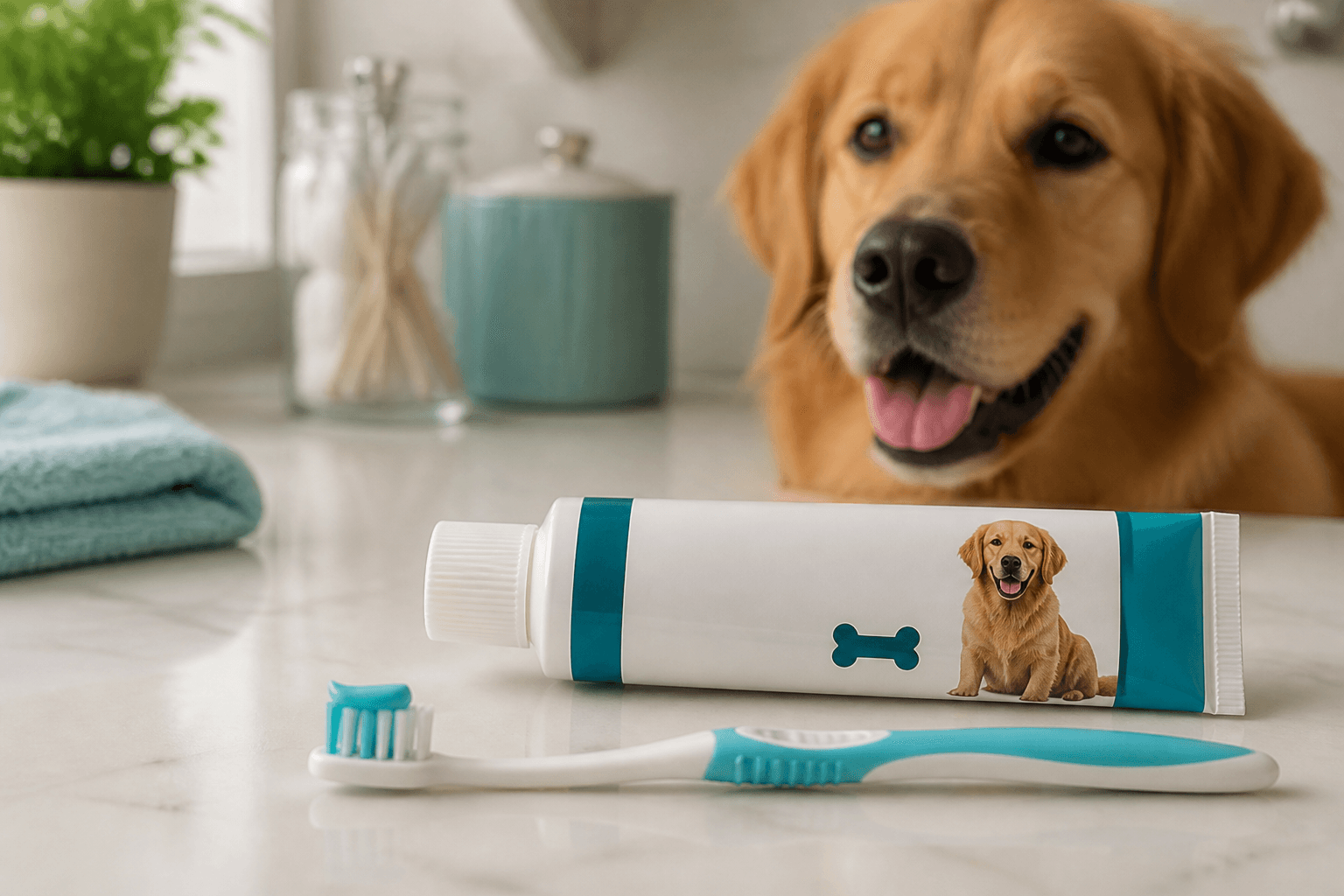
Escova macia e creme dental veterinário próprios para cães

Image credit: Acervo pessoal: DogWise

Health8 min readPublished on August 17, 2026

Human toothpaste on dogs: risks and what to use safely

Human toothpaste should not be used to brush your dog's teeth. The problem is not just the strong taste: dogs do not rinse or spit out the product, so they swallow what is put in their mouths. Formulas intended for people may contain ingredients unsuitable for canine ingestion, as well as detergents and flavorings that cause gastrointestinal discomfort.

The alternative is a toothpaste specifically formulated for dogs, with a clear label, reliable origin and use in accordance with the manufacturer's and veterinarian's instructions. Brushing needs to be introduced little by little. Forcing your mouth or using a large amount of product can turn preventative care into a daily conflict.

Veterinary warning: this content is educational and does not replace consultation. If the dog has ingested human paste, is vomiting, weak, disoriented, trembling or exhibits any changes, seek veterinary care and take the product packaging with you.
Why the habit of spitting changes everything

A person typically brushes, spits out the foam, and rinses their mouth. The dog licks the paste, swallows the saliva and may chew the brush. Therefore, it is not enough to choose a “mild”, child-friendly or fluoride-free human cream. The formulation continues to have been created for another mode of use and another species.

The risk depends on the ingredients, concentration, quantity ingested, the animal's weight and its health conditions. It is not possible to evaluate just by the brand or the size of the portion seen on the brush. Keep the packaging, check the list of ingredients and, if ingested, inform your veterinarian of the time and an estimate of the quantity.

The American Veterinary Medical Association's pet care page is a reliable general reference. For a specific incident, however, individual and quick guidance is more useful than trying to interpret generic lists on the internet.

Ingredients that deserve attention

Xylitol is a sweetener that can be present in hygiene products and sugar-free foods. It is toxic to dogs and exposure requires immediate veterinary contact. Do not wait for symptoms and do not induce vomiting without professional instruction. Read the packaging as trade names and formulas may change.

Fluoride, foaming agents, abrasives, essential oils and flavorings also do not justify testing a human product on animals. This does not mean that they all cause the same consequence or that one lick always results in serious poisoning. It means that there is no benefit in taking an avoidable risk when there are veterinary products designed to be swallowed in the quantities intended for use.

“Natural” does not equate to safe. Recipes with bicarbonate, concentrated oils, hydrogen peroxide, salt or homemade mixtures can irritate tissues, be swallowed and make it difficult to control the dose. Do not improvise a paste because the veterinary product has run out; It's better to just adapt with the brush and use the correct product later.

What to do if the dog licked or ate human paste

Remove the tube from reach and do not offer another substance to “neutralize”. Photograph front, back, ingredients and concentration; note the time and check how much was in the tube. Call your veterinarian or emergency department. Enter approximate weight, age, known illnesses and signs present.

If there is xylitol in the composition, treat the situation as urgent even if the dog appears normal. With any ingestion, signs such as repeated vomiting, weakness, difficulty walking, tremors, unusual drowsiness or seizure require immediate attention. Don't wait for a response on social media.

Do not induce vomiting on your own. Depending on the product, time and condition of the animal, this may be ineffective or cause complications. The veterinary team will decide the course of action based on the case.

How to choose a toothpaste for dogs

Look on the label for explicit indication of use in dogs, identifiable manufacturer, batch, expiration date and instructions in Portuguese or provided by the distributor. Avoid products without composition, origin or contact channel. Pleasant flavor can facilitate adaptation, but is not the main criterion.

Ask your veterinarian which product suits your pet's age and oral condition. A dog with sore gums, a fractured tooth, tooth mobility or a lot of calculus needs evaluation before starting a vigorous routine. Toothpaste does not remove hardened calculus and is not a substitute for professional dental treatment.

Use small amount according to the label. More foam or more paste does not mean better cleaning. The gentle mechanical contact of the brush with accessible surfaces is a central part of the care.

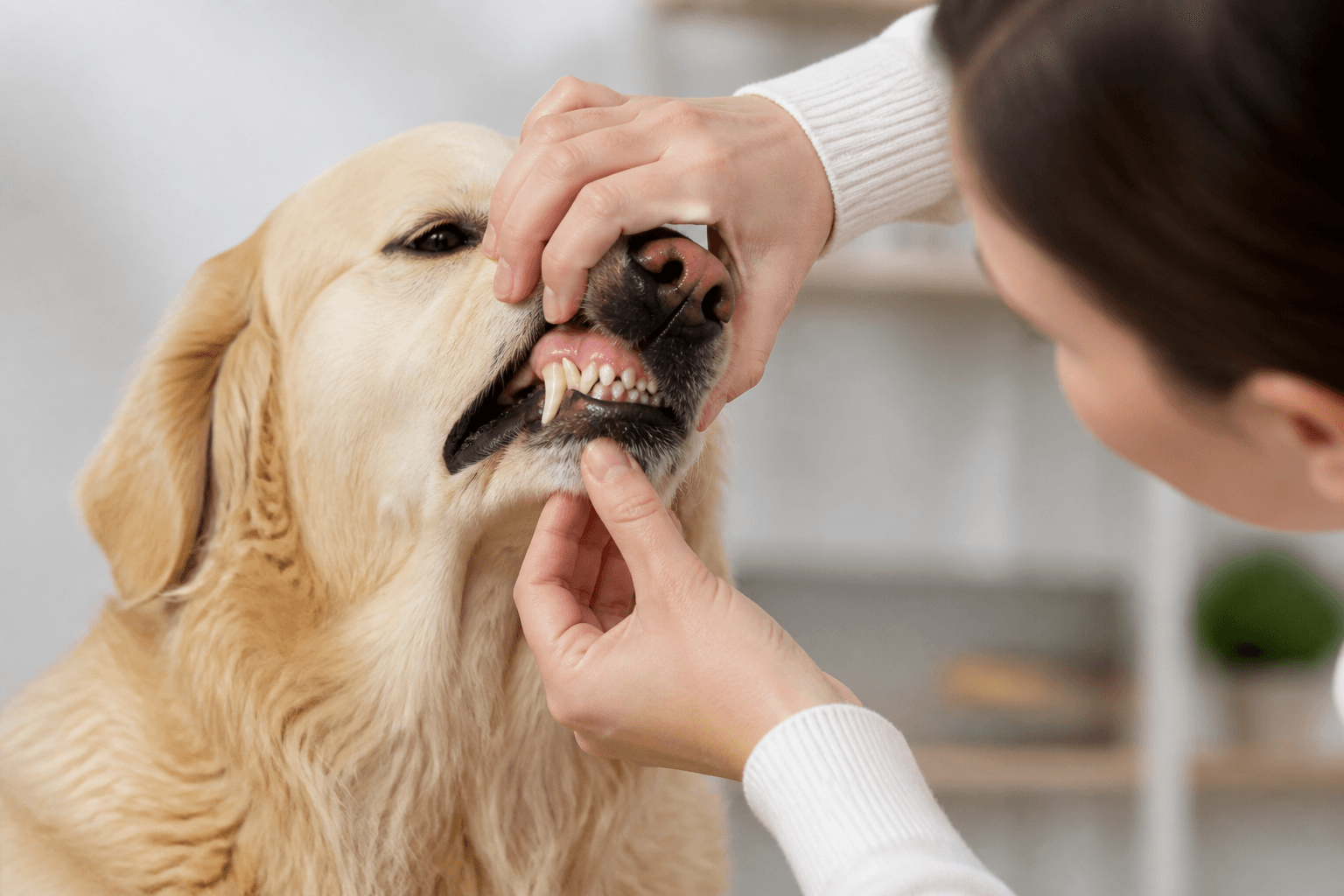
Tutor levantando suavemente o lábio do cão para observar os dentes
Image credit: Acervo pessoal: DogWise

The brush also needs to be suitable

Choose a head compatible with your mouth size and soft bristles. Finger brushes offer control for some owners, but they leave the finger close to the teeth and are not ideal for dogs that bite out of fear or pain. A gauze can help in the habituation phase, without automatically replacing the brush in the final plan.

Do not open your mouth as in a full inspection. In many dogs, it is enough to gently lift the lip and reach the outer surface of the teeth. Short, light strokes are preferable to vigorous rubbing. Stop if there is pain, significant bleeding, an attempt to escape or a sudden change in behavior.

Adaptation in stages, without disputes

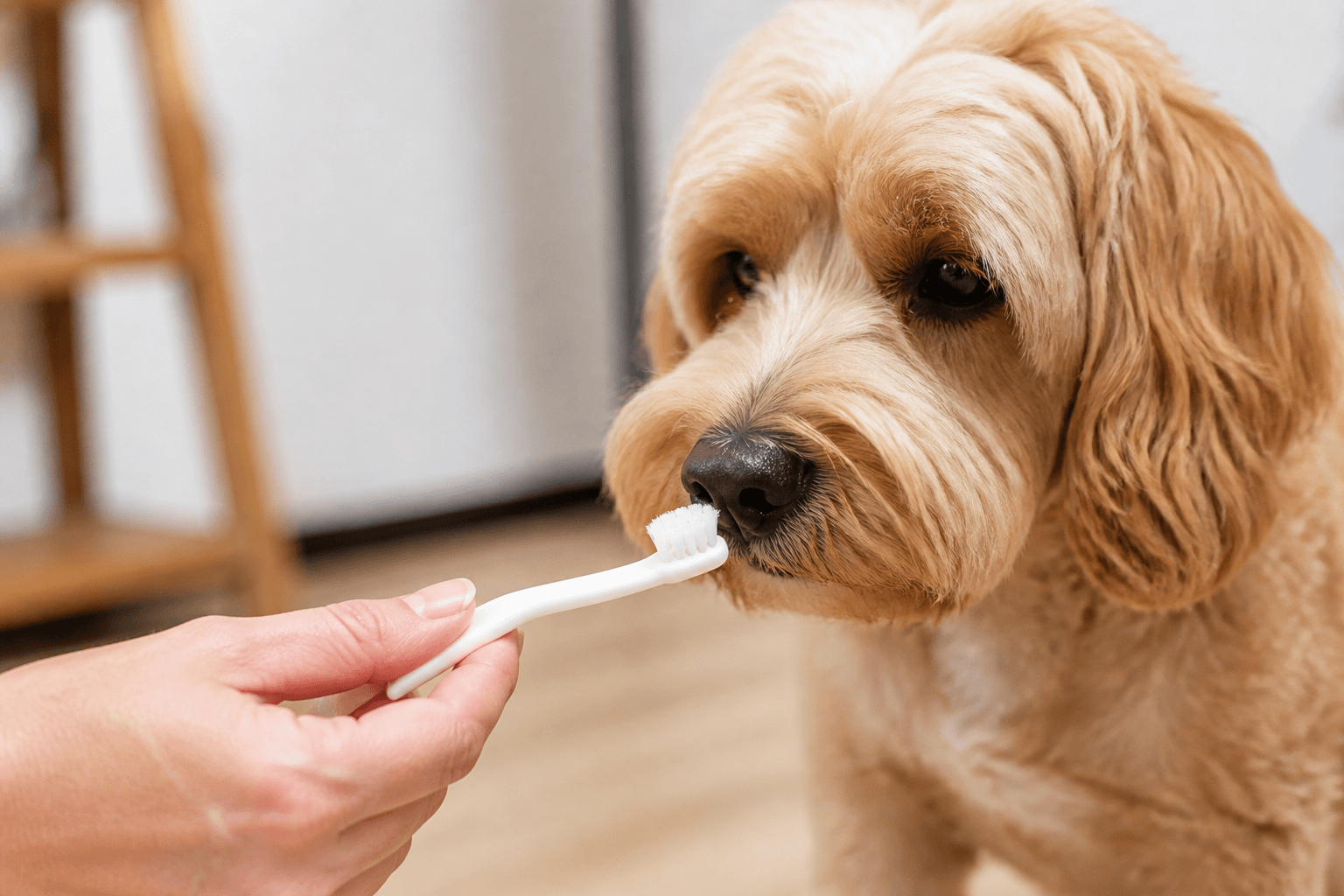
First, teach that bringing your hand closer to your snout predicts something positive. Touch the side of the face for a second, reward and end. Then lift your lip briefly. In another step, present the brush to smell and touch. Only then add a small amount of veterinary cream.

The dog must be able to move its head away. This choice helps build cooperation. If he backs away, reduce the difficulty instead of chasing him with the brush. Sessions lasting a few seconds, repeated calmly, are usually more sustainable than a long attempt to clean the entire mouth.

Create a start and end sign. Use the same place, with firm flooring, and keep the materials ready so as not to hold the animal while looking for objects. Predictability reduces surprise and makes it easier to observe discomfort.

Brushing is not a diagnosis

Persistent bad breath, salivation, preference for one side when chewing, dropping food, reluctance to eat, facial swelling and blood deserve evaluation. Dogs can continue eating even with oral pain. Don't use appetite as the only indicator that everything is ok.

Visible tartar should not be scraped off at home with instruments. In addition to damaging gums and enamel, the procedure does not evaluate structures below the gum line. Dental cleanings and treatments require veterinary planning.

Just as it is useful to observe the dog after preventive procedures, the content on what to expect in the 48 hours after the V10 vaccine shows how to record signs without turning observation into self-medication.

Cão cheirando uma escova dental durante adaptação gradual
Image credit: Acervo pessoal: DogWise

Organize a possible routine

Associate grooming with a predictable time, but choose when the dog is calm. Leave human paste in a closed cabinet and keep the veterinary kit separate, avoiding changes due to distraction. Children should only participate with adult supervision.

Record which regions are accepted and where there is resistance. The initial goal may be to touch just a few teeth with quality and without fear. Coverage increases as cooperation grows. If one day was difficult, do a simple step again the next, without compensating with force.

Oral safety notebook

Periodically photograph the sides of your teeth under similar lighting, without straining your mouth. The images do not replace examination, but they help to notice color changes, accumulation and areas that deserve to be shown to the veterinarian.

Write down the exact name of the veterinary cream, batch, expiration date and opening date. Keeping the label avoids doubt in case of reaction or accidental ingestion and prevents the use of expired product.

Observe the response before, during and after brushing. Moving the head away, licking the lips repeatedly, tensing or avoiding the area the next day may indicate that the step was too quick or that there is pain.

Review where human products are stored. Tubes can be chewed when left in accessible bags, countertops, or trash cans. Environmental prevention is more reliable than hoping the dog will ignore an appealing taste.

Agree with the family on a simple rule: only the dog's identified kit goes into its mouth. This consistency prevents anyone from using children's paste, mouthwash or homemade recipes believing they are helping.

Bring your notes to appointments. Report actual frequency, tolerance, bleeding, breath changes and difficulties. A concrete report allows you to adjust the routine without blaming the owner or the animal.

Frequently asked questions

Can children's paste be used?

No. Being infantile does not make the formula appropriate for a dog that swallows the product. Use only toothpaste indicated for the species.

Does a little lick always intoxicate?

It is not possible to answer without the composition, quantity and weight of the dog. Check the label and ask for veterinary advice; presence of xylitol requires urgency.

Can I brush with just water?

During adaptation, the veterinarian can advise gentle contact with an appropriate brush without paste. This is different from improvising ingredients. For a preventive plan, ask for an individual recommendation.

Do dental snacks replace brushing?

They can integrate care when appropriate for the dog, but should not be considered automatic substitutes. Calories, risk of swallowing pieces and dental condition need to be evaluated.

Is light bleeding normal?

Inflamed gums may bleed, but recurring blood, pain, or increased bleeding warrant examination. Do not increase the force to “clean better”.

Conclusion

Human toothpaste is an unnecessary risk because the dog swallows the product and can expose itself to unsuitable ingredients, especially xylitol. Choose a cream and brush suitable for dogs, introduce care in short steps and seek evaluation in the event of pain or oral disease. If a human product has been ingested, preserve the packaging and contact your veterinarian; Acting with information is safer than trying to neutralize it at home.