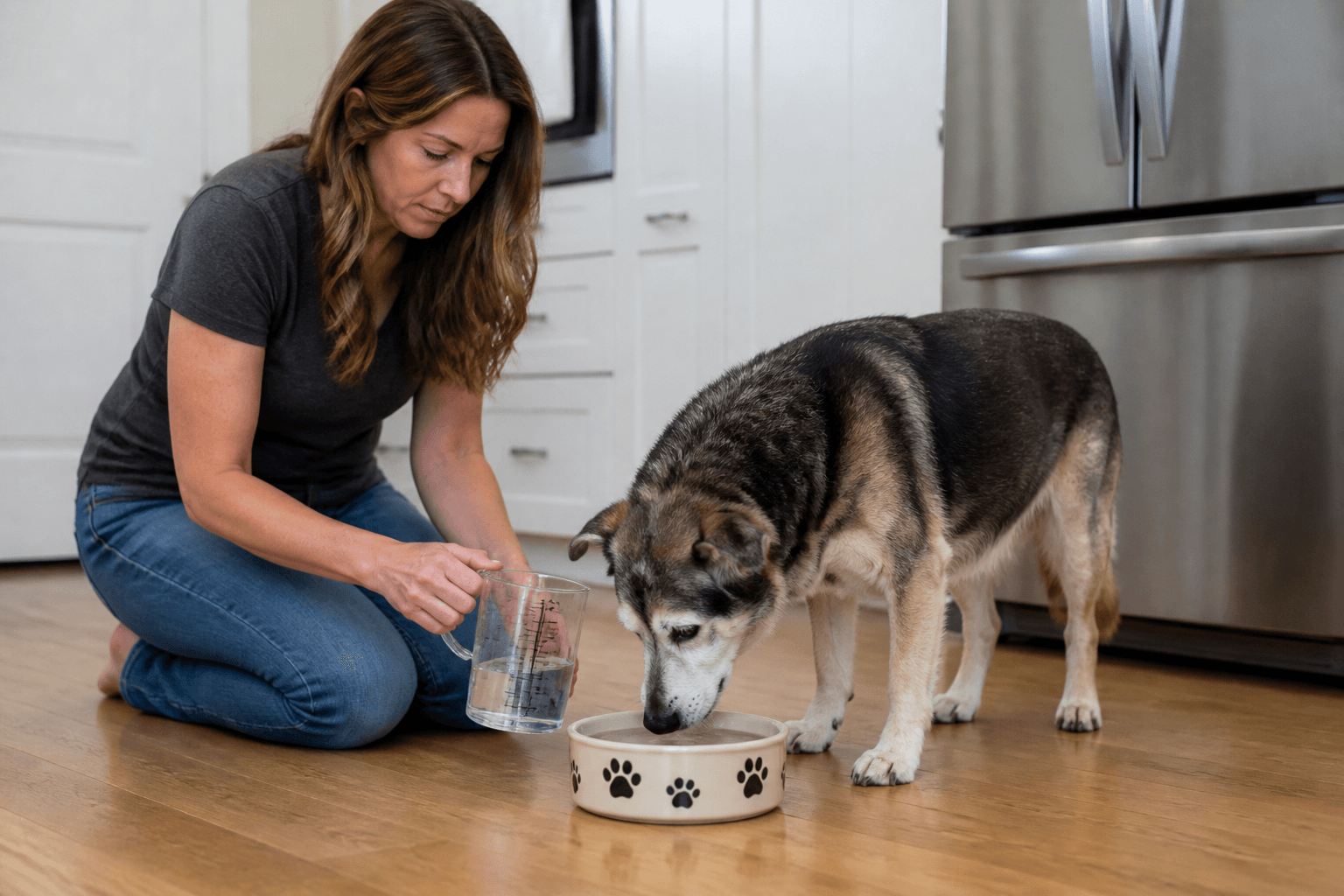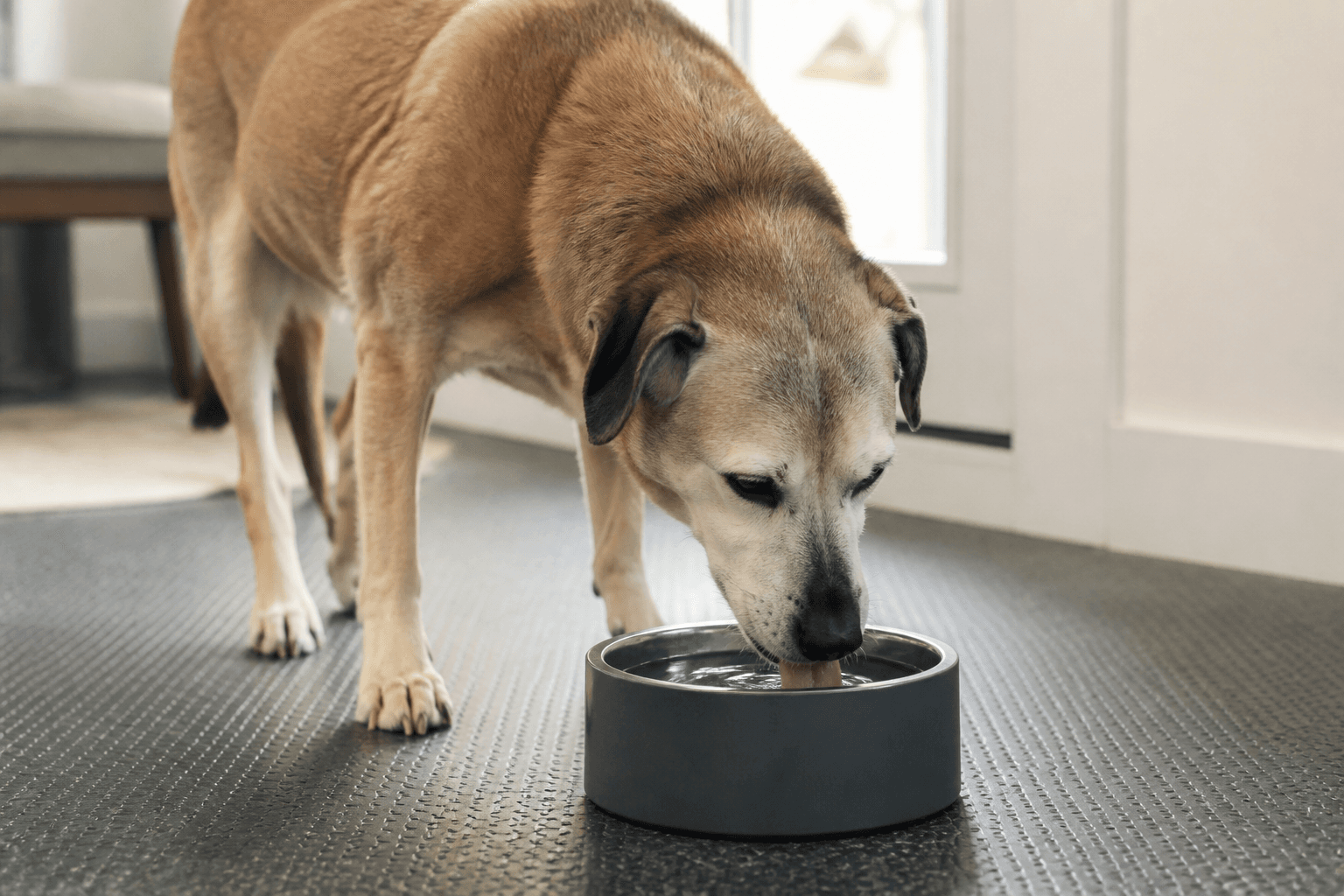
When an elderly dog starts drinking more water, the change deserves to be confirmed and communicated to the veterinarian, especially if it persists or is accompanied by more urination, weight loss, change in appetite, vomiting, weakness or accidents at home. Drinking a lot does not confirm a diagnosis: heat, activity, drier food, medications and various illnesses can increase thirst.
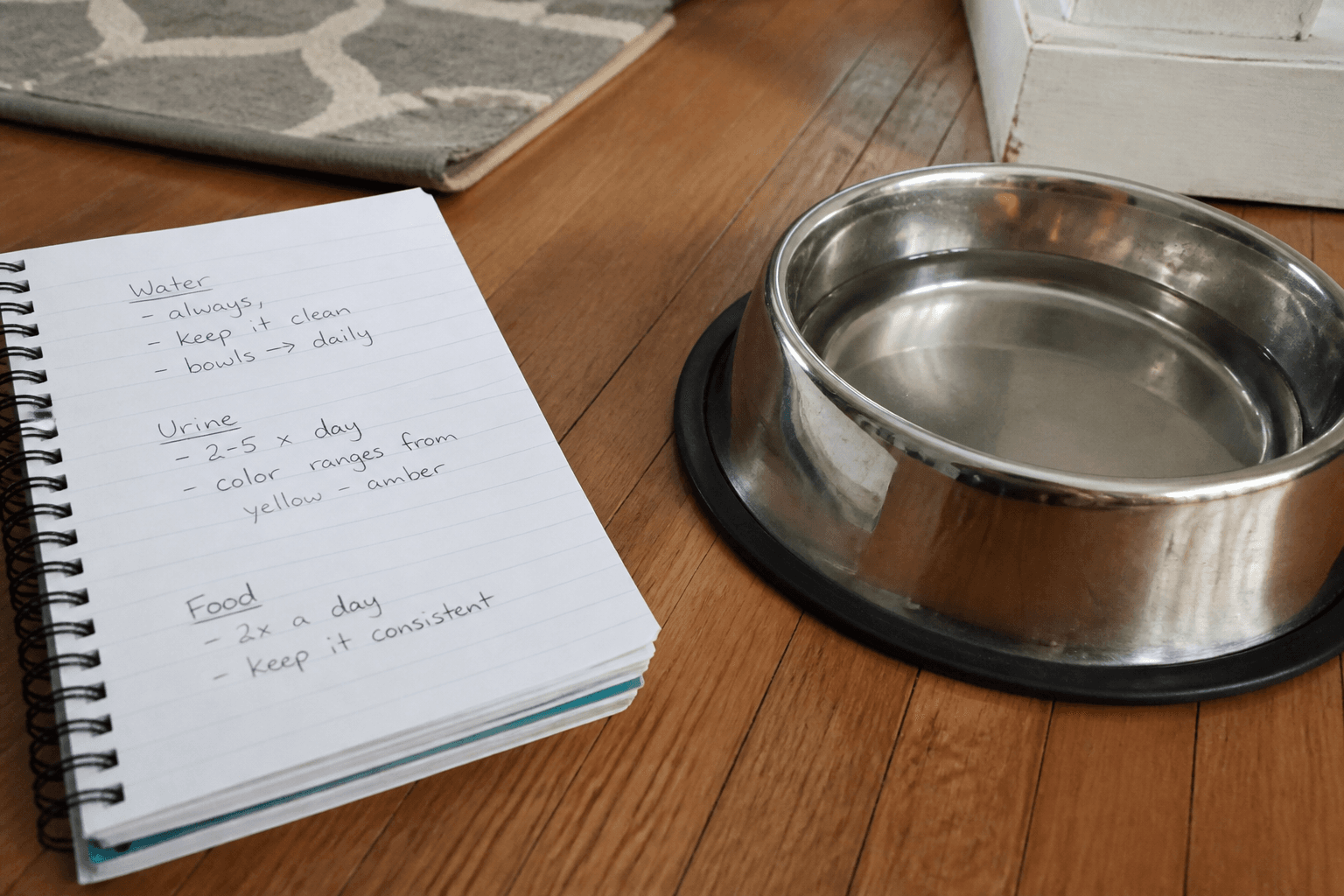
The correct attitude is not to remove the pot to “control” the urine. Water restriction can cause dehydration or worsen an existing problem. Keep clean water available, observe associated signs, and produce an objective record for the consultation. This content is educational and does not replace evaluation, examinations or advice from a veterinarian.