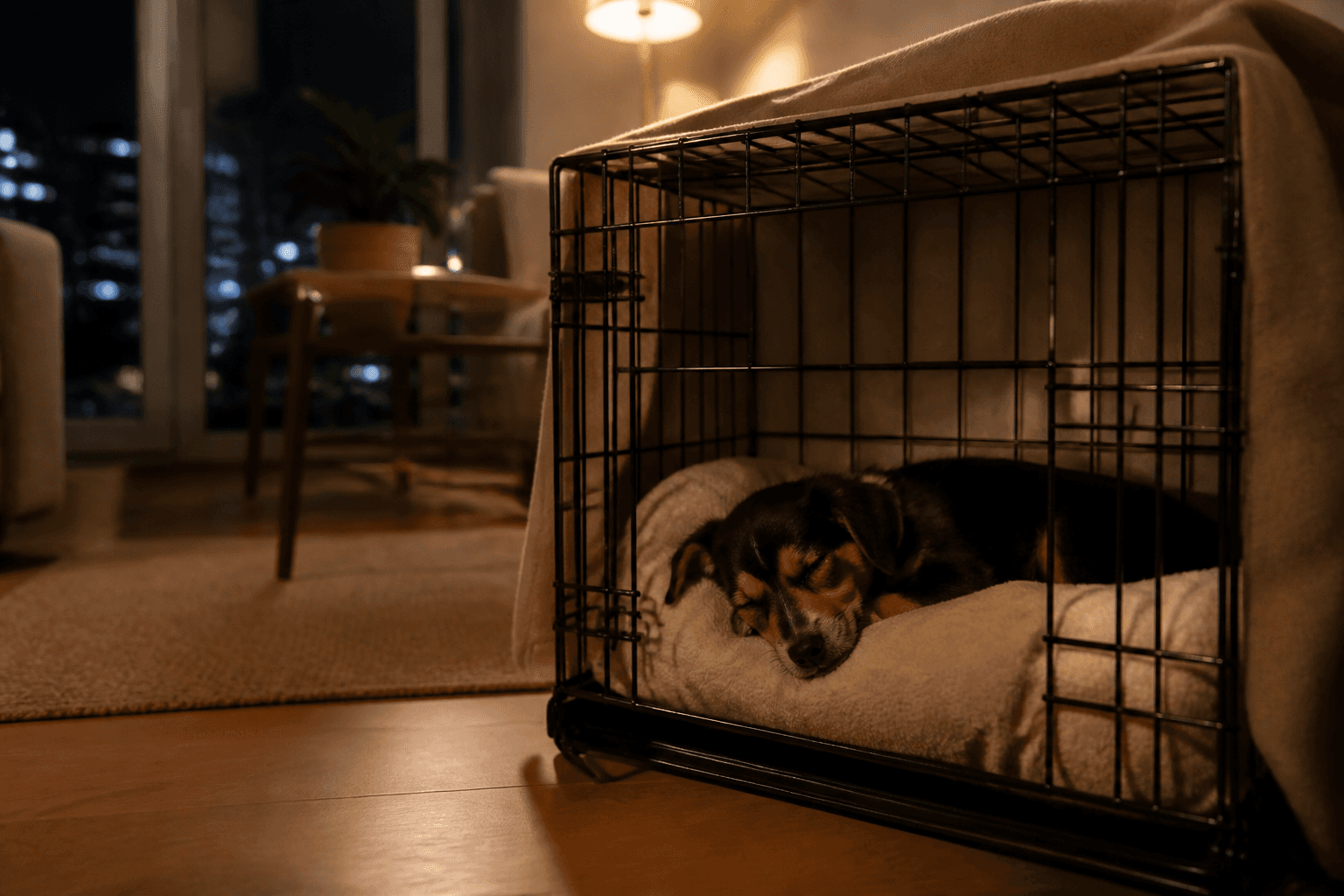
Filhote dormindo em caixa com manta em sala silenciosa à noite

Image credit: Acervo pessoal: DogWise

Puppies9 min readPublished on September 3, 2026

Puppy's first night at home: how to get through it without forcing it

Written by the DogWise editorial team. Who writes here.

The car stopped. The box came in. The house became too big for a small body. Here comes the question that presses after dinner: and now, how is the puppy's first night at home?

Many people treat this night as a sign of love: “if he cries, I’ll put him to bed”. Another part treats it as proof of discipline: “let him cry until he gets tired”. Both extremes usually get worse the following week.

The first night is logistics + calm. It is not advanced training. It's not abandonment. It's about the puppy understanding where the floor, water, pee and silence are — with you close enough so he doesn't panic.

AVMA's guidance on bringing home a puppy remembers the obvious that euphoria forgets: the animal has just come from litter, travel and new smells. He “shouldn’t sleep all night already.”
The direct answer

On the first night, the goal is not for the puppy to sleep eight hours straight. The objective is:

  • a fixed place to sleep (box, playpen or designated corner);
  • last outlet for pee after water and play, not in the middle of the chaos;
  • you close, but without turning the human bed into the only safe place;
  • if you cry, check your need (pee, cold, fear) before improvising.

If your puppy already uses a crate in the car, you can take advantage of that smell. If the crate is still the villain, the text about puppy that cries in the carrier helps the next day — don't force the crate tonight if he only saw it at the pet store two hours ago.

Set up the space before turning off the light

Do this with the sun still in the sky, if possible. Tired puppy + dismantled house = crying.

The sleeping corner needs:

  • non-slip flooring;
  • blanket with the smell of the place of origin, if the creator or the NGO ordered it;
  • water available, but not a huge bucket that turns into a swimming pool;
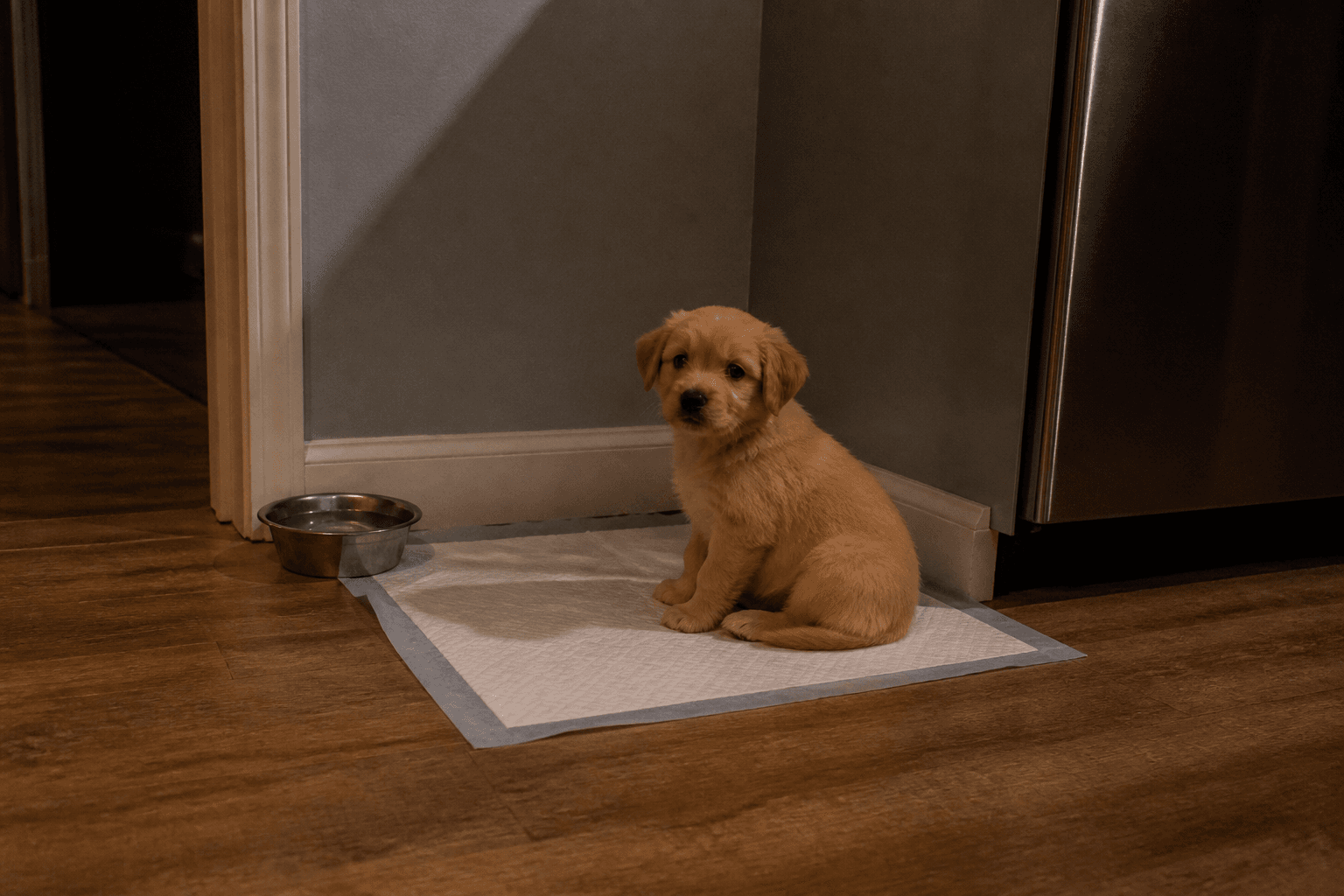
  • toilet mat near, not at the other end of the apartment;
  • no wires, toxic plants, trash and flip-flops becoming toys.

Avoid changing the puppy's room three times “to see where he is quietest”. Pick a spot and stick to it. Predictability is more calming than the rain playlist on your cell phone.

If the house has children, agree: no one wakes the puppy up at dawn “just to see if it's cute”. Interrupted sleep becomes a noisier puppy, not a cuter one.

The last exit is not a walk

Last outing of the night is functional: collar if you already use it, rug on the balcony or quick street, short praise, come back. No tug-of-war play at 11pm.

A few weeks old puppy does not “hold until morning” like an adult. There will be pee in the morning. Plan:

  • alarm clock at 3–4 hours in the first week, if he is still very young;
  • low light, no party;
  • go back to the same corner.

Punishing peeing on the wrong carpet the first night doesn't teach. It just scares. Clean with a suitable product, without homemade ammonia that smells like pee again.

If he cries: check, don't negotiate all night

Crying has a cause. The practical order:

  1. Do you need to urinate or have a bowel movement? Take it, come back.
  2. Are you cold, thirsty or has the blanket come off? Adjust the space.
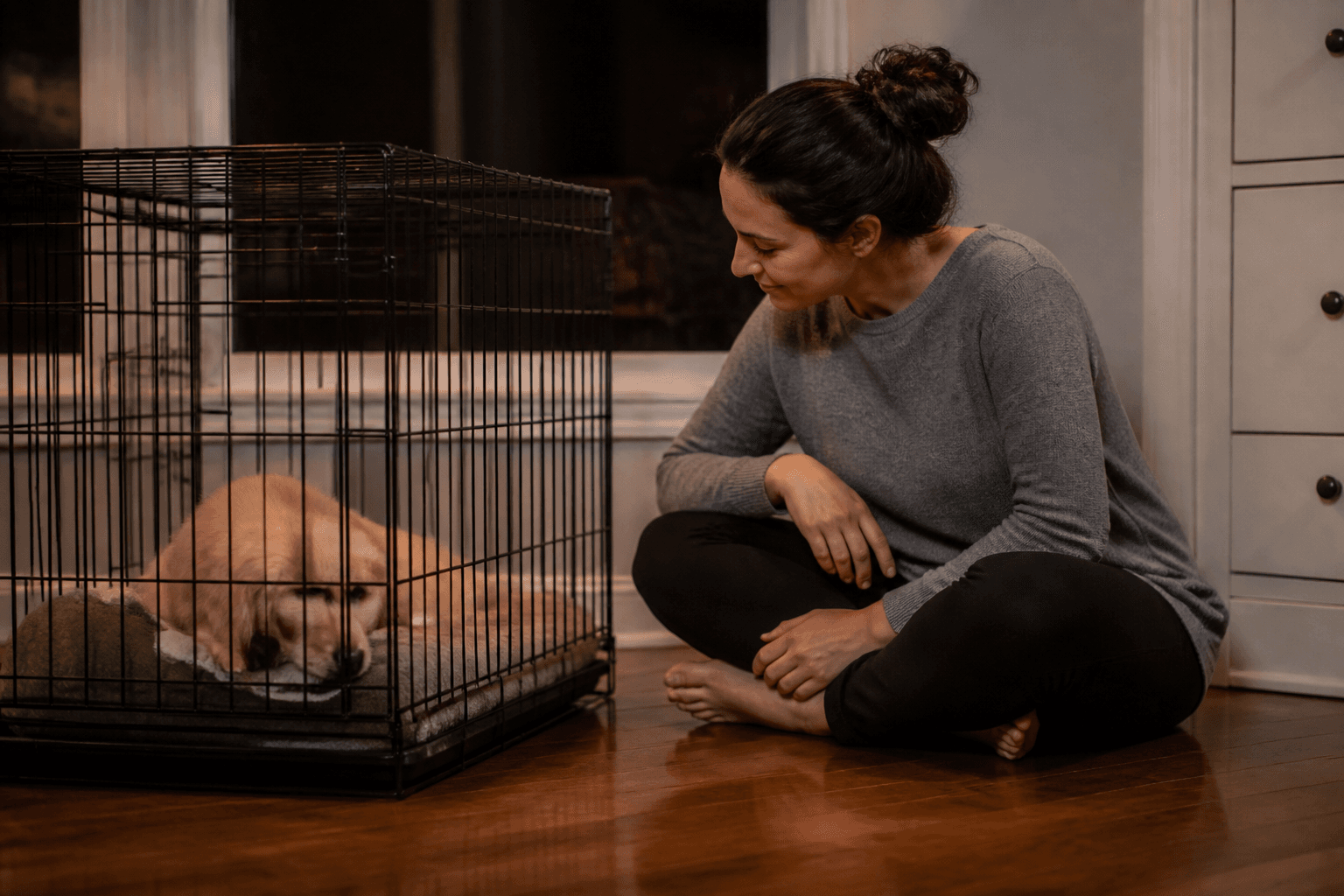
  3. Are you panicking (continuous screaming, throwing yourself against the fence)? Sit on the floor next to you, voice low, without taking him to the sofa at the first tear.
  4. It calmed down within a few minutes, great. If it gets worse and looks like pain (sharp scream, hard belly, vomiting, extreme apathy), this goes out of the “first night” script and becomes a veterinary evaluation.

Don’t spend hours crying “to build character”. Puppy doesn't understand Stoicism class at 2am. Also, don't turn every whining into a lap in bed: his brain records the quickest way to avoid being alone.

A compromise that many people use: mattress or chair in the same room for the first few nights. You are there. The puppy didn't get the bed as its only port.

Pessoa sentada no chão ao lado da caixa do filhote, sem tirá-lo de lá
Image credit: Acervo pessoal: DogWise

What not to do tonight

  • Long bath, nail cutting and “now teaching how to sit”. There was too much adrenaline left.
  • Visiting relatives at midnight. The puppy needs to lower its body.
  • New food + people snacks + cow's milk. Small stomach, big change.
  • Leave the entire house loose. He gets lost, pees behind the couch and you wake up angry.
  • Shout “shut up”. Fear does not become stable silence.

A safe chew toy can help if he's still struggling. A toy that makes a siren noise, no.

Next morning: the night does not define the dog

If you slept poorly, you haven’t “already ruined it”. Puppy takes days to map the house. AVMA talks about routine: food, rest, pee, a little contact, repeat.

On day 1, do three simple things:

  • same water and food schedules that the breeder used, if known;
  • several short exits, not one long ride on hot asphalt;
  • a nap after each excitement block.

Tiredness sure helps the second night. Tired of shopping and relative not.

If the puppy ate feces or is obsessed with licking the floor, that's another topic — the article about puppy that eats feces exists for everyday life, not to resolve the night with scolding.

Crate, playpen or room: choose a rule

Crate: only if there has already been a good association. Door open first. Never as a punishment.

Fence: good for apartment. Place the bed, water and rug in different areas within the space, so he doesn't sleep in his pee.

Room closed with you: ok for the first few nights. Agree on the date on which the mattress returns to the human bedroom, otherwise it will become an eternal rule without you realizing it.

What matters is just one rule. Changing methods every morning teaches that crying changes the scenario.

30-minute routine before bed

  1. Short play (5–10 min), not endless running.
  2. Water available all day; Don't fill the puppy with water at the last minute and expect a miracle.
  3. Last exit.
  4. Lower light, lower voice.
  5. You go to your seat. He goes to his. No speech.

If you live in an apartment, let your neighbor know that a puppy has arrived. An honest message avoids a fight on the second day.

When the first night calls for a vet, not YouTube

Seek care if there is:

  • repeated vomiting, bloody diarrhea, strong apathy;
  • effort to urinate without anything coming out;
  • shortness of breath, very pale or very dark gums;
  • puppy that cannot keep warm, trembles constantly, does not nurse/eat;
  • trauma during the trip.

Puppies dehydrate quickly. “The clinic opens tomorrow” is sometimes too late.

Canto da cozinha com tapete higiênico, água e filhote depois da última saída
Image credit: Acervo pessoal: DogWise

Frequently asked questions

Can I put the puppy in my bed just for today?

You can, but know what you are teaching: the bed becomes a safe place. If this is the house rule forever, okay — be consistent. If the idea is for him to sleep on the floor afterwards, the first night in bed makes the second night more difficult.

How long can I let it cry?

Do not use the watch as evidence. Check your needs in just a few minutes. If it's fear, stay close. If you've already peed and are just complaining, keep your voice down and go out again. Hours of continuous crying are not a method.

Does he need food at night?

Very young puppies eat more often. Follow what the veterinarian or breeder has indicated. Don’t invent “fasting to sleep better”.

What if I live in a kitnet and don't have a separate room?

Use the playpen in the quietest corner. Fan at low noise helps some puppies; others hate it. Test early, not at 2am.

Box in total darkness?

Too dark + too alone is scary. Low hallway lighting is usually best at first.

Conclusion

The puppy's first night at home is not an examination of who you love more. It's a short plan: space ready, last exit, single rule for where to sleep, pee check if you cry, and you nearby without turning the bed into the only refuge — unless that's really the rule of the house.

Tomorrow you adjust. Today you reduce chaos. Puppies don't need lectures. You need a predictable floor, a warm body and someone who doesn't scream in the early morning fright.

A roadmap if you arrive late from work

The first night doesn't always start at 7pm with the house ready. Sometimes the puppy arrives at 10pm, after traffic, a pet shop and a queue. In this case, cut the program in half.

Do not present the entire house. Open a room. Water, rug, blanket, you on the floor. Bathing is for another day if it is not dirty with danger (paint, oil, stuck feces). The smell of a strong cleaning product on a new arrival tires the nose and makes crying worse.

Food: offer what he already ate, in smaller quantities if the trip made his stomach sick. Stress vomiting on the first night isn't “he didn't like the new food” — it's a body on edge. Water in sips. No cow’s milk “to calm down”.

If you live in an apartment and your neighbor already complains about everything, use the rug on the balcony or the elevator during the last pee with the puppy on your lap only if it is safe and permitted. Descending 14 floors with a newcomer at 11:30 pm is exhausting. The perfect “always on the street” plan starts the next day, not this morning.

Write down what happened: peeing times, whether you ate, whether you cried in a block or in bursts. Tomorrow this helps the vet if something isn't right — and helps you not think “it was a total disaster” when, in fact, it was two cries and a pee in the right place.

What to take for the second night

Buy in your head, not on impulse at 11pm:

  • more than one blanket (one wet);
  • cell phone flashlight in low mode, not spotlight;
  • bag for dirty carpet, so as not to cross the house lighting everything;
  • the number of the 24-hour clinic in your city, checked before you need it.

Second night is usually better if the first night had a single rule. It gets worse if you have given up your bed, sofa, lap and hallway. Choose a path and repeat. Puppy records what worked to attract people — for good and for bad.