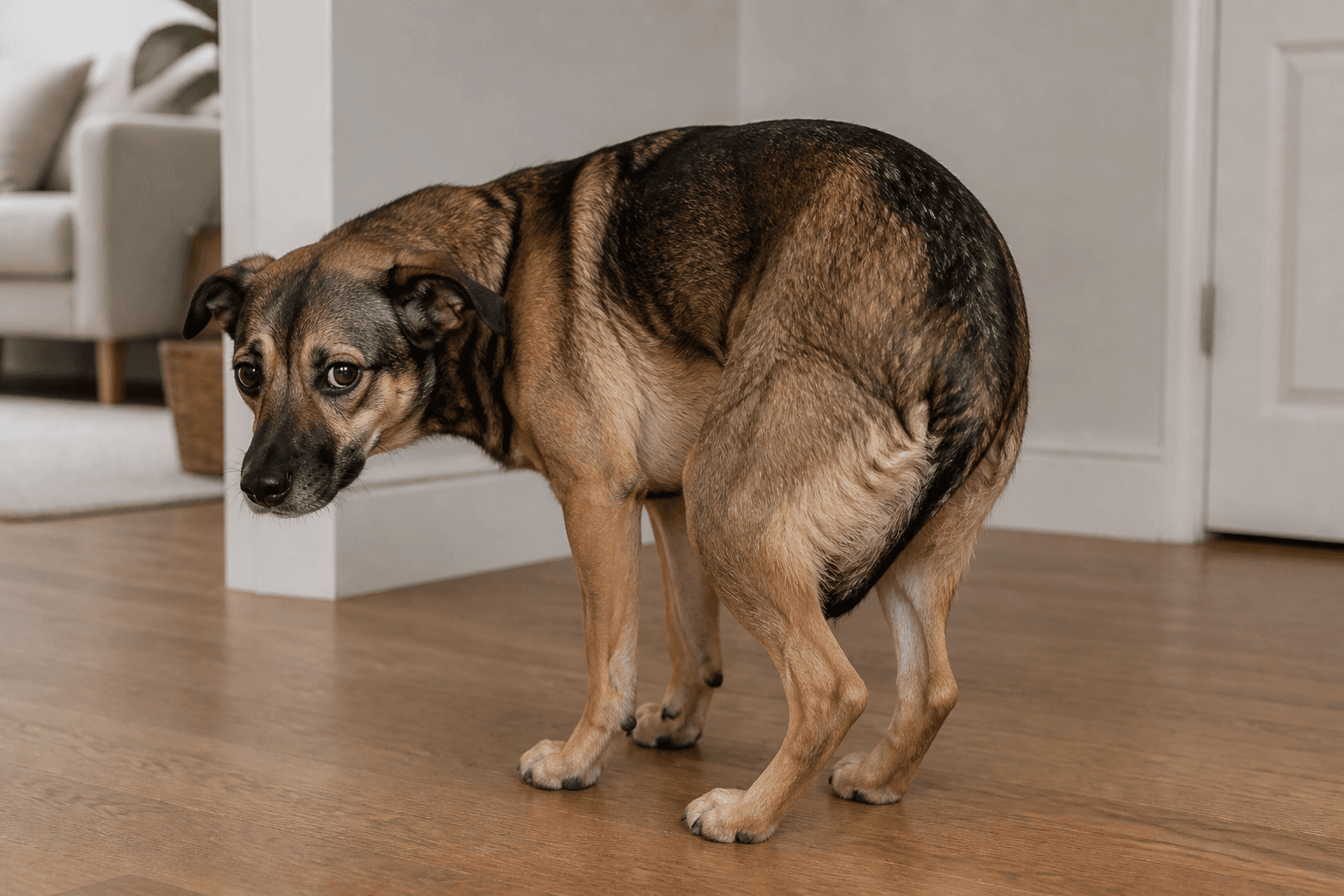
Cão em pé com o rabo bem encolhido entre as patas traseiras

Image credit: Acervo pessoal: DogWise

Behavior9 min readPublished on August 28, 2026

Dog with tail between its legs: fear, pain or another warning?

You call the dog by name and he comes... but his tail disappears between his legs. On another day, the same gesture appears only when he gets into the car. Sometimes it disappears with the thunder. Sometimes for no apparent reason. Doubt presses: is it fear, is it pain, or is he just “like that”?

A tail between the legs is a clear sign that the body is in protection mode. It’s not “fresh” and it also doesn’t make a diagnosis on its own. What changes the reading is the context: what was happening at that moment, what changed most in the body and whether the pattern is new.

This text is educational and does not replace evaluation, examinations or guidance from a veterinarian (including, when indicated, behavioral assessment).

The direct answer

  • Fear / anxiety / stress: tucked tail usually comes with ears back, body low, avoiding contact, shaking, yawning out of turn, licking lips or hiding — and there is almost always a trigger (noise, visitor, street, clinic).
  • Physical pain/discomfort: the tail may be low or “stuck” along with a rigid posture, hesitation to move, limping, growling when touched in an area, or a change in mood without an obvious trigger.
  • Other warnings: intense cold, extreme tiredness, social intimidation with other dogs, or breeds/tails that “hide” the sign (naturally short or curled tail).

At home, you don't need to choose a perfect label. You need to observe, write down and decide whether to make an appointment. On the pain side, the article on how to know if your dog is in pain helps to notice discreet signs.

Why does the tail “disappear”

The tail is part of body language. When the dog feels threatened, insecure or uncomfortable, lowering and tucking the tail reduces social “size” and protects the region. In studies and veterinary guidance on fear, reduced posture — head down, ears back and tail down or between the legs — appears frequently in stressful situations, such as clinical examination.

The American Veterinary Medical Association, in material on anxiety and aggression, reinforces that scared dogs tend to move away and lower their body. This does not authorize a home diagnosis — it just reminds you that the sign is serious and deserves careful reading.

Fear: what usually accompanies

Think of fear when the tail disappears along with a trigger and other signs of tension:

  • ears back or glued together;
  • look sideways, avoid eye contact;
  • body curled up, weight back;
  • shaking, drooling, panting without heat;
  • hide, retreat, “stick” to you or, on the contrary, run away;
  • urinating in fear, short barking, growling if pressed.

Common triggers: thunder, fireworks, vacuum cleaner, visitor, another dog, noisy street, car, clinic. If your dog loses its tail mainly in the rain, the text about fear of rain and desensitization matches this scenario.

What not to do in fear: scream, pull the collar hard, force affection, “show that there is nothing”, punish fear. Pressure increases panic. Provide distance from the trigger when you can, a predictable environment and professional guidance if it is frequent or intense.

Pain: when the shrunken tail asks for another look

Think about pain (or mix fear + pain) when:

  • the default is new and without a clear trigger;
  • the dog hesitates to sit, lie down, climb up, jump;
  • limps, drags gait or avoids smooth flooring;
  • growls or moves away if you touch their back, hips, tail or paws;
  • mood has changed (quieter or more irritable);
  • the tail seems “stuck” or painful when moving.

Pain in the spine, hip, anus, tail or abdomen can make the dog protect its rear. Sometimes the fear appears because it hurt at another time (e.g.: touching at the clinic).

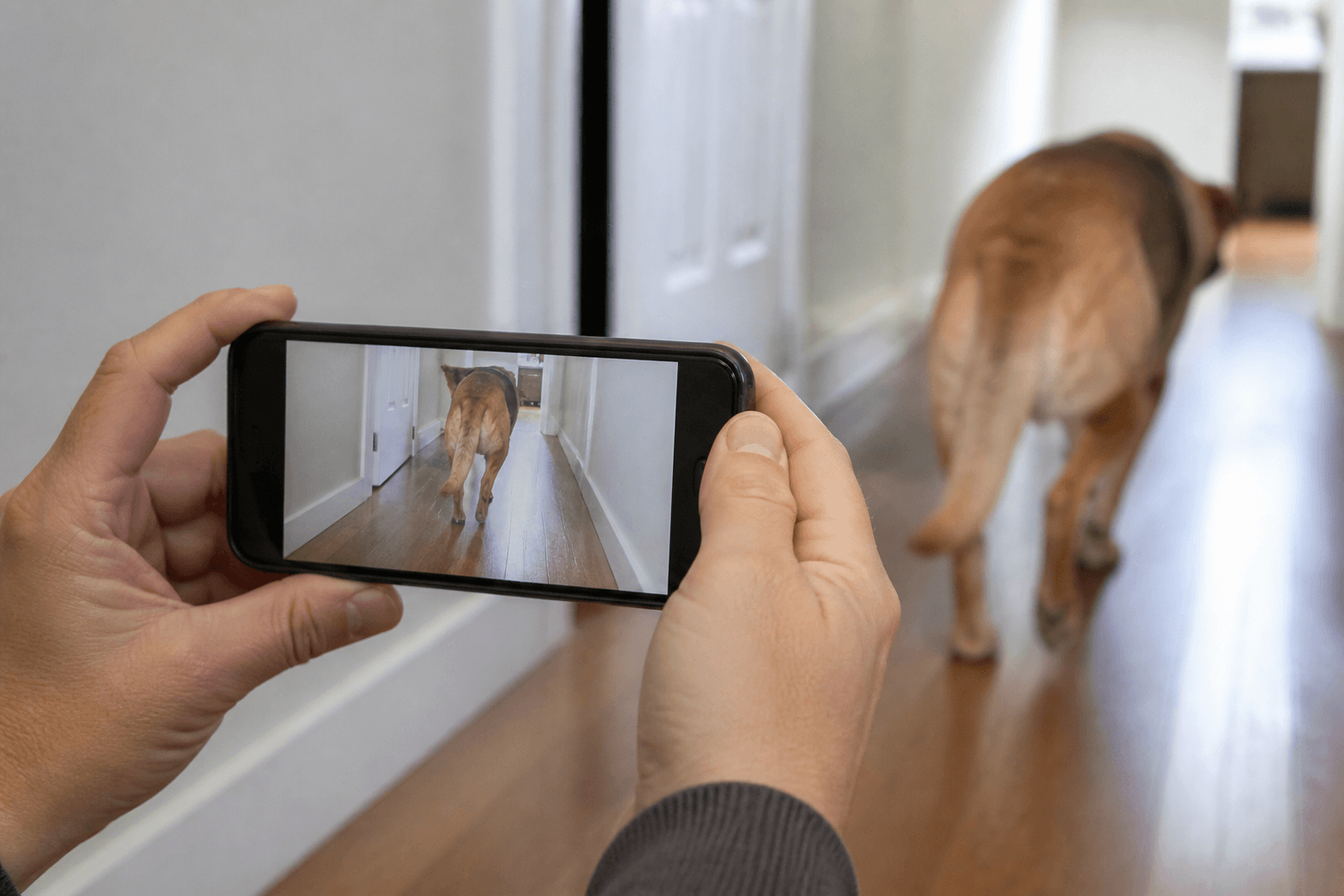
Do not force a home examination of the tail. Film the march and take it to the appointment. The article on signs of pain and what to do reinforces the practical path.

Other reasons that the tutor confuses

  • Cold: many dogs shrink their body and tail.
  • Tiredness or social submission: encounter with a more confident dog.
  • Short / curled / tailless tails: the sign becomes more difficult to see — look at ears, body weight and tension.
  • Breeds “always with a low tail”: compare with their standard, not with the photo on the internet.

The useful question is not “is all low tails fear?” It's: is this different from this dog's normal?

Cão nervoso escondido atrás do sofá com orelhas para trás
Image credit: Acervo pessoal: DogWise

How to observe in 5 minutes (without inventing a diagnosis)

  1. When did it start? Suddenly or little by little?
  2. Is there a trigger? Noise, person, place, other animal?
  3. What else has changed? Appetite, walking, sleeping, touching, limping?
  4. Does it improve away from the trigger? If the stimulus disappears and the tail comes back quickly, fear/stress gains weight.
  5. Does it get worse with movement or touch? Pain gains weight.

Film 10–20 seconds: standing, walking, sitting, reacting to the call. The veterinarian sees what the memory edits.

What to do now (without getting worse)

If it looks like fear:

  • calmly move away from the trigger;
  • offer an escape route and safe place;
  • avoid punishment and “rough training”;
  • maintain a predictable routine;
  • ask for guidance if it is daily, intense or aggressive.

If it feels like pain:

  • reduce jumps and stairs;
  • short walks;
  • do not give human medicine;
  • book evaluation;
  • write down since when and what gets worse.

If you don't know: treat it as a serious sign. A “no drama” consultation is better than ignoring growing pain or fear.

When to make an appointment — and when it’s urgent

Mark in the short term if your tail is between your legs:

  • it is new and frequent;
  • comes with changes in mobility or mood;
  • prevents walking, sleeping or socializing;
  • appears with a growl when touched;
  • the fear is getting worse (more hiding, more reactivity).

Urgent assistance if available:

  • trauma, being run over, falling, strong tail pull;
  • inability to move, scream when moving;
  • hard abdomen, repeated vomiting, very pale gums;
  • difficulty breathing, collapse;
  • sudden intense aggression with risk to people;
  • suspected tail injury or blood.

Fear + pain: the two together exist

A dog in pain may become more reactive. A scared dog may tense its body and appear “stuck”. That's why the veterinarian asks for a complete history — and, in some cases, recommends behavioral assessment along with a physical examination.

Don’t choose “just psychological” or “just physical” out of guesswork. Take facts: triggers, videos, medications, recent changes.

Everyday scenarios (so you don't get lost)

At home, with a visitor: his tail disappears at the door, his body retreats, he hides behind the sofa. Away from the visitors, relax. Closer reading of social fear/stress. Ask visitors to ignore the dog at first and let him approach.

On a walk: the tail only disappears near a gate, a specific dog or a noise. Walk away calmly, shorten the walk if necessary and take note of the location. Do not force “passing straight” as a test of courage.

When getting on the couch or in the car: hesitation + low tail + discreet moaning can indicate pain. Compare with good days. If it gets worse after the jump, protect your joints and schedule an evaluation.

After sudden play or tail pulling: sudden change deserves a look of pain/trauma. Do not “test” the tail at home.

At the clinic: many dogs tuck their tails in the office out of fear — and this is common. Even so, tell your veterinarian if the pattern at home has also changed, so as not to attribute everything to the nervousness of the moment.

Mãos filmando com celular a caminhada de um cão no corredor
Image credit: Acervo pessoal: DogWise

How to align the family (without cross scolding)

Combine simple rules:

  • no one punishes the shrunken tail;
  • no one forces affection on the back or hips;
  • one person writes down triggers and times;
  • short videos in the same corridor, with good light;
  • if someone “thinks it’s nonsense”, show them the diary — facts are more convincing than discussion.

Children need clear guidance: don't run after the scared dog and don't pull its tail. A dog in fear or pain may bite in defense, even if he is “good”.

After the consultation: what to ask

Leave the clinic with an objective plan:

  • what seems most likely now (fear, pain, both, still undefined);
  • which exams or returns;
  • what you can do at home safely;
  • what to avoid (stairs, pull toys, trigger exposure);
  • if you need a behavior professional;
  • signs that request urgent return.

If pain is being treated, ask how many days you should notice a change. If the focus is fear, ask how to structure desensitization without running over the dog.

What doesn't solve (and usually gets worse)

  • shout “stop the drama”;
  • drag the dog to the stimulus;
  • punishment, shock or dry pull collar;
  • human medicine “to calm” or “for pain”;
  • isolate the dog in the dark as punishment;
  • change ten things in the house on the same day without method.

Calmness, distance from the trigger and good information for the veterinarian go further than improvising.

Frequently asked questions

Is a tail between your legs always fear?

No. It is a sign of protection that appears in fear, pain, cold and social tension. The context and associated signs decide the reading.

Can I force the dog to “get brave”?

No. Exposing it to force (thunder, visitors, street) without a plan usually makes it worse. Desensitization work requires a method and, often, a professional one.

My dog ​​wags and tucks his tail. Does this confuse?

He can. Shaking isn't just happiness; it can be excitement or conflict. Look at the entire body: ears, weight, mouth, distance from the stimulus.

Does an elderly dog ​​with a young low tail deserve a consultation?

Yes, with more priority. Age increases the chance of joint pain and other discomforts — without accepting everything as “an age thing”.

Do I need a trainer or veterinarian?

Start with your veterinarian if there is any doubt about pain, sudden changes, or physical signs. For chronic fear, the professional may recommend ethical behavior/training. The two paths can complement each other.

Does punishing resolve?

No. Punishment in fear or pain increases stress and risk of defensive biting.

Conclusion

A dog with a tail between its legs is asking for reading, not scolding. Separate: is there a fear trigger? Are there signs of pain? Is it a new standard? Write it down, film it and avoid human punishment or medicine.

If the sign is frequent, comes with altered mobility or the fear is growing, schedule an evaluation. Understanding early warning protects the dog — and coexistence at home.